

Abraham Lincoln

Abraham Lincoln (12 February 1809 – 15 April 1865) was the 16th president of the United States, serving from March 1861 until his assassination in April 1865. Initially entering politics as a Whig, he became a member of the US congress from Illinois, and later the first Republican president, leading Union forces throughout the moral, constitutional, political and military crises of the American Civil War, during which he abolished slavery and strengthened the U.S. government.

Quotes
[edit]


.jpg)


.png)


1820s
[edit]- Abraham Lincoln
his hand and pen
he will be good but
god knows When- Manuscript poem, as a teenager (ca. 1824–1826), in "Lincoln as Poet" at Library of Congress : Presidents as Poets also in The Collected Works of Abraham Lincoln (1953) edited by Roy. P. Basler, Vol. 1
- Abraham Lincoln is my name
And with my pen I wrote the same
I wrote in both hast and speed
and left it here for fools to read- Manuscript poem, as a teenager (ca. 1824–1826), in "Lincoln as Poet" at Library of Congress : Presidents as Poets, as published in The Collected Works of Abraham Lincoln (1953) edited by Roy. P. Basler, Vol. 1
1830s
[edit]- Upon the subject of education, not presuming to dictate any plan or system respecting it, I can only say that I view it as the most important subject which we as a people can be engaged in. That every man may receive at least a moderate education, and thereby be enabled to read the histories of his own and other countries, by which he may duly appreciate the value of our free institutions, appears to be an object of vital importance, even on this account alone, to say nothing of the advantages and satisfaction to be derived from all being able to read the Scriptures, and other works both of a religious and moral nature, for themselves.
- Address Delivered in Candidacy for the State Legislature (9 March 1832)
- Every man is said to have his peculiar ambition. Whether it be true or not, I can say, for one, that I have no other so great as that of being truly esteemed of my fellow-men, by rendering myself worthy of their esteem.
- Address Delivered in Candidacy for the State Legislature (9 March 1832)
- These capitalists generally act harmoniously and in concert to fleece the people, and now that they have got into a quarrel with themselves, we are called upon to appropriate the people's money to settle the quarrel.
- Speech to Illinois legislature (January 1837); This is "Lincoln's First Reported Speech", found in the Sangamo Journal (28 January 1837) according to McClure's Magazine (March 1896); also in Lincoln's Complete Works (1905) ed. by Nicolay and Hay, Vol. 1, p. 24
- I am mighty near one.
- Whatever Spiteful fools may Say —
Each jealous, ranting yelper —
No woman ever played the whore
Unless She had a man to help her.- A stanza of Lincoln's "On Seduction" (1837-39) as conveyed by James H. Matheny (1865 or 1866)
- I have now come to the conclusion never again to think of marrying, and for this reason; I can never be satisfied with anyone who would be blockhead enough to have me.
- Letter to Mrs. Orville H. Browning (1 April 1838), Collected Works, vol. 1. p. 119
- Broken by it, I, too, may be; bow to it I never will. The probability that we may fall in the struggle ought not to deter us from the support of a cause we believe to be just; it shall not deter me. If ever I feel the soul within me elevate and expand to those dimensions not wholly unworthy of its Almighty Architect, it is when I contemplate the cause of my country, deserted by all the world beside, and I standing up boldly and alone and hurling defiance at her victorious oppressors. Here, without contemplating consequences, before High Heaven, and in the face of the world, I swear eternal fidelity to the just cause, as I deem it, of the land of my life, my liberty and my love. And who, that thinks with me, will not fearlessly adopt the oath that I take? Let none falter, who thinks he is right, and we may succeed. But, if after all, we shall fail, be it so. We still shall have the proud consolation of saying to our consciences, and to the departed shade of our country's freedom, that the cause approved of our judgment, and adored of our hearts, in disaster, in chains, in torture, in death, we NEVER faltered in defending.
- Speech of the Sub-Treasury (1839), Collected Works 1:178-9
- Variant (misspelling): The probability that we may fail in the struggle ought not to deter us from the support of a cause we believe to be just; and it shall not deter me.
Illinois House Journal (1837)
[edit]- Protest entered, pages 817-818 of the House Journal, March 3, by Lincoln with Dan Stone, another representative of Sangomon, briefly defined his position on the slavery question. According to his autobiography, written June, 1860, and following his nomination for President, "...his position on the slavery question ...so far as it goes, it was then the same that it is now." Quoted from A Short Autobiography, Written in June 1860, at the Request of a Friend to use in preparing a Popular Campaign Biography at the Election of that Year, in The Autobiography of Abraham Lincoln (1905) pp. 19-21.
- Resolutions upon the subject of domestic slavery having passed both branches of the General Assembly at its present session, the undersigned hereby protest against the passage of the same.
- They believe that the institution of slavery is founded on both injustice and bad policy, but that the promulgation of Abolition doctrines tends rather to increase than abate its evils.
- They believe that the Congress of the United States has no power under the Constitution to interfere with the institution of slavery in the different States.
The Lyceum Address (1838)
[edit]- The Perpetuation of Our Political Institutions : Lincoln's address to the Young Men's Lyceum of Springfield, Illinois (27 January 1838)


_(LOC).jpg)
- We find ourselves under the government of a system of political institutions, conducing more essentially to the ends of civil and religious liberty, than any of which the history of former times tells us. We, when mounting the stage of existence, found ourselves the legal inheritors of these fundamental blessings. We toiled not in the acquirement or establishment of them; they are a legacy bequeathed us by a once hardy, brave, and patriotic, but now lamented and departed, race of ancestors. Theirs was the task (and nobly they performed it) to possess themselves, and through themselves us, of this goodly land, and to uprear upon its hills and its valleys a political edifice of liberty and equal rights; 'tis ours only to transmit these — the former unprofaned by the foot of an invader, the latter undecayed by the lapse of time and untorn by usurpation — to the latest generation that fate shall permit the world to know. This task gratitude to our fathers, justice to ourselves, duty to posterity, and love for our species in general, all imperatively require us faithfully to perform.
- At what point shall we expect the approach of danger? By what means shall we fortify against it? — Shall we expect some transatlantic military giant, to step the Ocean, and crush us at a blow? Never! — All the armies of Europe, Asia and Africa combined, with all the treasure of the earth (our own excepted) in their military chest; with a Bonaparte for a commander, could not by force, take a drink from the Ohio, or make a track on the Blue Ridge, in a trial of a thousand years.
At what point then is the approach of danger to be expected? I answer, if it ever reach us, it must spring up amongst us. It cannot come from abroad. If destruction be our lot, we must ourselves be its author and finisher. As a nation of freemen, we must live through all time, or die by suicide.
- I hope I am over wary; but if I am not, there is, even now, something of ill-omen, amongst us. I mean the increasing disregard for law which pervades the country; the growing disposition to substitute the wild and furious passions, in lieu of the sober judgment of Courts; and the worse than savage mobs, for the executive ministers of justice. This disposition is awfully fearful in any and that it now exists in ours, though grating to our feelings to admit, it would be a violation of truth and an insult to our intelligence to deny.
- Accounts of outrages committed by mobs form the every-day news of the times. They have pervaded the country from New England to Louisiana, they are neither peculiar to the eternal snows of the former nor the burning suns of the latter; they are not the creature of climate, neither are they confined to the slaveholding or the non-slaveholding States. Alike they spring up among the pleasure-hunting masters of Southern slaves, and the order-loving citizens of the land of steady habits. Whatever then their cause may be, it is common to the whole country. [...] Such are the effects of mob law, and such are the scenes becoming more and more frequent in this land so lately famed for love of law and order, and the stories of which have even now grown too familiar to attract anything more than an idle remark. But you are perhaps ready to ask, "What has this to do with the perpetuation of our political institutions?" I answer, "It has much to do with it." Its direct consequences are, comparatively speaking, but a small evil, and much of its danger consists in the proneness of our minds to regard its direct as its only consequences.
- When men take it in their heads to-day, to hang gamblers, or burn murderers, they should recollect, that, in the confusion usually attending such transactions, they will be as likely to hang or burn some one who is neither a gambler nor a murderer as one who is; and that, acting upon the example they set, the mob of to-morrow, may, and probably will, hang or burn some of them by the very same mistake. And not only so; the innocent, those who have ever set their faces against violations of law in every shape, alike with the guilty, fall victims to the ravages of mob law; and thus it goes on, step by step, till all the walls erected for the defense of the persons and property of individuals, are trodden down, and disregarded.
- But all this even, is not the full extent of the evil. — By such examples, by instances of the perpetrators of such acts going unpunished, the lawless in spirit, are encouraged to become lawless in practice; and having been used to no restraint, but dread of punishment, they thus become, absolutely unrestrained. — Having ever regarded Government as their deadliest bane, they make a jubilee of the suspension of its operations; and pray for nothing so much, as its total annihilation. While, on the other hand, good men, men who love tranquillity, who desire to abide by the laws and enjoy their benefits, who would gladly spill their blood in the defense of their country, seeing their property destroyed, their families insulted, and their lives endangered, their persons injured, and seeing nothing in prospect that forebodes a change for the better, become tired of and disgusted with a government that offers them no protection, and are not much averse to a change in which they imagine they have nothing to lose. Thus, then, by the operation of this mobocratic spirit which all must admit is now abroad in the land, the strongest bulwark of any government, and particularly of those constituted like ours, may effectually be broken down and destroyed — I mean the attachment of the People.
- Whenever this effect shall be produced among us; whenever the vicious portion of [our] population shall be permitted to gather in bands of hundreds and thousands, and burn churches, ravage and rob provision stores, throw printing-presses into rivers, shoot editors, and hang and burn obnoxious persons at pleasure and with impunity, depend upon it, this government cannot last. By such things the feelings of the best citizens will become more or less alienated from it, and thus it will be left without friends, or with too few, and those few too weak to make their friendship effectual. At such a time, and under such circumstances, men of sufficient talent and ambition will not be wanting to seize the opportunity, strike the blow, and overturn that fair fabric which for the last half century has been the fondest hope of the lovers of freedom throughout the world.
- Let every American, every lover of liberty, every well-wisher to his posterity swear by the blood of the Revolution never to violate in the least particular the laws of the country, and never to tolerate their violation by others. As the patriots of seventy-six did to the support of the Declaration of Independence, so to the support of the Constitution and laws let every American pledge his life, his property, and his sacred honor — let every man remember that to violate the law is to trample on the blood of his father, and to tear the charter of his own and his children's liberty. Let reverence for the laws be breathed by every American mother to the lisping babe that prattles on her lap; let it be taught in schools, in seminaries, and in colleges; let it be written in primers, spelling-books, and in almanacs; let it be preached from the pulpit, proclaimed in legislative halls, and enforced in courts of justice. And, in short, let it become the political religion of the nation; and let the old and the young, the rich and the poor, the grave and the gay of all sexes and tongues and colors and conditions, sacrifice unceasingly upon its altars. While ever a state of feeling such as this shall universally or even very generally prevail throughout the nation, vain will be every effort, and fruitless every attempt, to subvert our national freedom.
- When I so pressingly urge a strict observance of all the laws, let me not be understood as saying there are no bad laws, or that grievances may not arise for the redress of which no legal provisions have been made. I mean to say no such thing. But I do mean to say that although bad laws, if they exist, should be repealed as soon as possible, still, while they continue in force, for the sake of example they should be religiously observed. So also in unprovided cases. If such arise, let proper legal provisions be made for them with the least possible delay, but till then let them, if not too intolerable, be borne with.
- There is no grievance that is a fit object of redress by mob law. In any case that arises, as for instance, the promulgation of abolitionism, one of two positions is necessarily true; that is, the thing is right within itself, and therefore deserves the protection of all law and all good citizens; or, it is wrong, and therefore proper to be prohibited by legal enactments; and in neither case, is the interposition of mob law, either necessary, justifiable, or excusable.
- We hope all danger may be overcome; but to conclude that no danger may ever arise would itself be extremely dangerous.
- That our government should have been maintained in its original form from its establishment until now, is not much to be wondered at. It had many props to support it through that period, which now are decayed, and crumbled away. Through that period, it was felt by all, to be an undecided experiment; now, it is understood to be a successful one.
- It is to deny, what the history of the world tells us is true, to suppose that men of ambition and talents will not continue to spring up amongst us. And, when they do, they will as naturally seek the gratification of their ruling passion, as others have so done before them. The question then, is, can that gratification be found in supporting and maintaining an edifice that has been erected by others? Most certainly it cannot. Many great and good men sufficiently qualified for any task they should undertake, may ever be found, whose ambition would inspire to nothing beyond a seat in Congress, a gubernatorial or a presidential chair; but such belong not to the family of the lion, or the tribe of the eagle. What! think you these places would satisfy an Alexander, a Caesar, or a Napoleon? — Never! Towering genius disdains a beaten path. It seeks regions hitherto unexplored. — It sees no distinction in adding story to story, upon the monuments of fame, erected to the memory of others. It denies that it is glory enough to serve under any chief. It scorns to tread in the footsteps of any predecessor, however illustrious. It thirsts and burns for distinction; and, if possible, it will have it, whether at the expense of emancipating slaves, or enslaving freemen. Is it unreasonable then to expect, that some man possessed of the loftiest genius, coupled with ambition sufficient to push it to its utmost stretch, will at some time, spring up among us? And when such a one does, it will require the people to be united with each other, attached to the government and laws, and generally intelligent, to successfully frustrate his designs. Distinction will be his paramount object, and although he would as willingly, perhaps more so, acquire it by doing good as harm, yet, that opportunity being past, and nothing left to be done in the way of building up, he would set boldly to the task of pulling down.
- Often the portion of this passage on "Towering genius..." is quoted without any mention or acknowledgment that Lincoln was speaking of the need to sometimes hold the ambitions of such genius in check, when individuals aim at their own personal aggrandizement rather than the common good.
- I mean the powerful influence which the interesting scenes of the Revolution had upon the passions of the people as distinguished from their judgment. By this influence, the jealousy, envy, and avarice incident to our nature and so common to a state of peace, prosperity, and conscious strength, were for the time in a great measure smothered and rendered inactive, while the deep-rooted principles of hate, and the powerful motive of revenge, instead of being turned against each other, were directed exclusively against the British nation. And thus, from the force of circumstances, the basest principles of our nature, were either made to lie dormant, or to become the active agents in the advancement of the noblest cause — that of establishing and maintaining civil and religious liberty. But this state of feeling must fade, is fading, has faded, with the circumstances that produced it. I do not mean to say that the scenes of the Revolution are now or ever will be entirely forgotten, but that, like everything else, they must fade upon the memory of the world, and grow more and more dim by the lapse of time. In history, we hope, they will be read of, and recounted, so long as the Bible shall be read; but even granting that they will, their influence cannot be what it heretofore has been. Even then they cannot be so universally known nor so vividly felt as they were by the generation just gone to rest. At the close of that struggle, nearly every adult male had been a participator in some of its scenes. The consequence was that of those scenes, in the form of a husband, a father, a son, or a brother, a living history was to be found in every family — a history bearing the indubitable testimonies of its own authenticity, in the limbs mangled, in the scars of wounds received, in the midst of the very scenes related — a history, too, that could be read and understood alike by all, the wise and the ignorant, the learned and the unlearned. But those histories are gone. They can be read no more forever. They were a fortress of strength; but what invading foeman could never do, the silent artillery of time has done — the leveling of its walls. They are gone. They were a forest of giant oaks; but the all-restless hurricane has swept over them, and left only here and there a lonely trunk, despoiled of its verdure, shorn of its foliage, unshading and unshaded, to murmur in a few more gentle breezes, and to combat with its mutilated limbs a few more ruder storms, then to sink and be no more. They were pillars of the temple of liberty; and now that they have crumbled away that temple must fall unless we, their descendants, supply their places with other pillars, hewn from the solid quarry of sober reason.
- Passion has helped us; but can do so no more. It will in future be our enemy. Reason, cold, calculating, unimpassioned reason, must furnish all the materials for our future support and defence. — Let those materials be moulded into general intelligence, sound morality, and in particular, a reverence for the constitution and laws: and, that we improved to the last; that we remained free to the last; that we revered his name to the last; that, during his long sleep, we permitted no hostile foot to pass over or desecrate his resting place; shall be that which to learn the last trump shall awaken our WASHINGTON.
Upon these let the proud fabric of freedom rest, as the rock of its basis; and as truly as has been said of the only greater institution, "the gates of hell shall not prevail against it".
1840s
[edit]- I am now the most miserable man living. If what I feel were equally distributed to the whole human family, there would not be one cheerful face on the earth. Whether I shall ever be better I can not tell; I awfully forebode I shall not. To remain as I am is impossible; I must die or be better, it appears to me.
- Letter to John T. Stuart (23 January 1841), Collected Works 1:229-30
- ... none seemed to think the injury arose from the use of a bad thing, but from the abuse of a very good thing.
- Address to the Springfield Washingtonian Temperance Society (22 February 1842). Frequently misquoted as "It has long been recognized that the problems with alcohol relate not to the use of a bad thing, but to the abuse of a good thing." [1]
- I believe, if we take habitual drunkards as a class, their heads and their hearts will bear an advantageous comparison with those of any other class. There seems ever to have been a proneness in the brilliant and warm-blooded to fall into this vice.
- Address to the Springfield Washingtonian Temperance Society (22 February 1842), quoted at greater length in John Carroll Power (1889) Abraham Lincoln: His Life, Public Services, Death and Funeral Cortege
- For several years past the revenues of the government have been unequal to its expenditures, and consequently loan after loan, sometimes direct and sometimes indirect in form, has been resorted to. By this means a new national debt has been created, and is still growing on us with a rapidity fearful to contemplate — a rapidity only reasonably to be expected in a time of war. This state of things has been produced by a prevailing unwillingness either to increase the tariff or resort to direct taxation. But the one or the other must come. Coming expenditures must be met, and the present debt must be paid; and money cannot always be borrowed for these objects. The system of loans is but temporary in its nature, and must soon explode. It is a system not only ruinous while it lasts, but one that must soon fail and leave us destitute. As an individual who undertakes to live by borrowing soon finds his original means devoured by interest, and, next, no one left to borrow from, so must it be with a government. We repeat, then, that a tariff sufficient for revenue, or a direct tax, must soon be resorted to; and, indeed, we believe this alternative is now denied by no one.
- Whig Circular (1843), reported in Richard Watson Gilder and Daniel Fish Complete Works of Abraham Lincoln, Volume 1 (1905)
- Believing that these propositions, and the [conclusions] I draw from them can not be successfully controverted, I, for the present, assume their correctness, and proceed to try to show, that the abandonment of the protective policy by the American Government, must result in the increase of both useless labour, and idleness; and so, in pro[por]tion, must produce want and ruin among our people.
- "Fragments of a Tariff Discussion", Collected Works of Abraham Lincoln, Vol. 1, p. 415; according to the source Lincoln's "scraps about protection were written by Lincoln, between his election to Congress in 1846, and taking his seat in Dec. 1847".
- It has so happened in all ages of the world, that some have laboured, and others have, without labour, enjoyed a large proportion of the fruits. This is wrong, and should not continue. To each labourer the whole product of his labour, or as nearly as possible, is a most worthy object of any good government.
- The Collected Works of Abraham Lincoln edited by Roy P. Basler, Volume I, "Fragments of a Tariff Discussion" (1 December 1847)
- I believe it is an established maxim in morals that he who makes an assertion without knowing whether it is true or false, is guilty of falsehood; and the accidental truth of the assertion, does not justify or excuse him.
- Letter to Allen N. Ford (11 August 1846), reported in Roy Prentice Basler, ed., Abraham Lincoln: His Speeches and Writings (1990 [1946])
- Any people anywhere being inclined and having the power have the right to rise up and shake off the existing government, and form a new one that suits them better. This is a most valuable, a most sacred right — a right which we hope and believe is to liberate the world. Nor is this right confined to cases in which the whole people of an existing government may choose to exercise it. Any portion of such people that can may revolutionize and make their own of so much of the territory as they inhabit.
- Speech in the United States House of Representatives (12 January 1848)
- Military glory, — that attractive rainbow that rises in showers of blood.
- Speech in the United States House of Representatives opposing the Mexican war (12 January 1848)
- Allow the President to invade a neighboring nation, whenever he shall deem it necessary to repel an invasion, and you allow him to do so, whenever he may choose to say he deems it necessary for such purpose, and you allow him to make war at pleasure. Study to see if you can fix any limit to his power in this respect, after having given him so much as you propose. If, to-day, he should choose to say he thinks it necessary to invade Canada, to prevent the British from invading us, how could you stop him? You may say to him, "I see no probability of the British invading us" but he will say to you, "Be silent; I see it, if you don't."
The provision of the Constitution giving the war making power to Congress was dictated, as I understand it, by the following reasons. Kings had always been involving and impoverishing their people in wars, pretending generally, if not always, that the good of the people was the object. This, our Convention understood to be the most oppressive of all Kingly oppressions; and they resolved to so frame the Constitution that no one man should hold the power of bringing this oppression upon us. But your view destroys the whole matter, and places our President where kings have always stood.- Letter, while US Congressman, to his friend and law-partner William H. Herndon, opposing the Mexican-American War (15 February 1848)
- In law it is a good policy never to plead what you need not, lest you oblige yourself to prove what you cannot.
- Letter to former Illinois Attorney General Usher F. Linder (20 February 1848)
- The true rule, in determining to embrace, or reject any thing, is not whether it have any evil in it; but whether it have more of evil, than of good. There are few things wholly evil, or wholly good. Almost every thing, especially of governmental policy, is an inseparable compound of the two; so that our best judgment of the preponderance between them is continually demanded.
- Speech in the House of Representatives (20 June 1848)
- Determine that the thing can and shall be done, and then we shall find the way.
- Speech in the House of Representatives (20 June 1848)
- The way for a young man to rise, is to improve himself every way he can, never suspecting that any body wishes to hinder him.
- Letter to William H Herndon (10 July 1848)
- The better part of one's life consists of his friendships.
- Letter to Joseph Gillespie (13 July 1849)
My Childhood's Home I See Again (1844 - 1846)
[edit]- "My Childhood's Home I See Again" as written in letters to Andrew Johnston (24 February, 18 April 18, and 26 September 1846); Lincoln wrote in the first letter: "In the fall of 1844, thinking I might aid some to carry the State of Indiana for Mr. Clay, I went into the neighborhood in that State in which I was raised, where my mother and only sister were buried, and from which I had been absent about fifteen years. That part of the country is, within itself, as unpoetical as any spot of the earth; but still, seeing it and its objects and inhabitants aroused feelings in me which were certainly poetry; though whether my expression of those feelings is poetry is quite another question. When I got to writing, the change of subjects divided the thing into four little divisions or cantos, the first only of which I send you now and may send the others hereafter." In a letter of 6 September Lincoln stated: "The subject of the present one [canto] is an insane man. His name is Matthew Gentry. He is three years older than I, and when we were boys we went to school together. He was rather a bright lad, and the son of the rich man of our very poor neighbourhood. At the age of nineteen he unaccountably became furiously mad, from which condition he gradually settled down into harmless insanity."
- My childhood's home I see again,
And sadden with the view;
And still, as memory crowds my brain,
There's pleasure in it too.- Canto I
- As leaving some grand waterfall,
We, lingering, list its roar —
So memory will hallow all
We've known, but know no more.- Canto I
- I range the fields with pensive tread,
And pace the hollow rooms;
And feel (companion of the dead)
I'm living in the tombs.- Canto I
But here's an object more of dread
Than ought the grave contains —
A human form with reason fled,
While wretched life remains.Poor Matthew! Once of genius bright,
A fortune-favored child —
Now locked for aye, in mental night,
A haggard mad-man wild.- Canto II
But this is past; and nought remains,
That raised thee o'er the brute.
Thy piercing shrieks, and soothing strains,
Are like, forever mute.Now fare thee well — more thou the cause,
Than subject now of woe.
All mental pangs, by time's kind laws,
Hast lost the power to know.O death! Thou awe-inspiring prince,
That keepst the world in fear;
Why dost thou tear more blest ones hence,
And leave him ling'ring here?- Canto II
1850s
[edit]- The leading rule for the lawyer, as for the man of every other calling, is diligence. Leave nothing for to-morrow which can be done to-day. Never let your correspondence fall behind. Whatever piece of business you have in hand, before stopping, do all the labor pertaining to it which can then be done.
- Fragment, Notes for a Law Lecture (1 July 1850), cited in Abraham Lincoln: Complete Works, Comprising his Speeches, Letters, State Papers, and Miscellaneous Writings, Vol. 2 (1894)
- Discourage litigation. Persuade your neighbors to compromise whenever you can. Point out to them how the nominal winner is often a real loser — in fees, expenses, and waste of time. As a peacemaker the lawyer has a superior opportunity of being a good man. There will still be business enough.
Never stir up litigation. A worse man can scarcely be found than one who does this. Who can be more nearly a fiend than he who habitually overhauls the register of deeds in search of defects in titles, whereon to stir up strife, and put money in his pocket? A moral tone ought to be infused into the profession which should drive such men out of it.- Fragment, Notes for a Law Lecture (1 July 1850?), cited in Abraham Lincoln: Complete Works, Comprising his Speeches, Letters, State Papers, and Miscellaneous Writings, Vol. 2 (1894)
- There is a vague popular belief that lawyers are necessarily dishonest. I say vague, because when we consider to what extent confidence and honors are reposed in and conferred upon lawyers by the people, it appears improbable that their impression of dishonesty is very distinct and vivid. Yet the impression is common, almost universal. Let no young man choosing the law for a calling for a moment yield to the popular belief — resolve to be honest at all events; and if in your own judgment you cannot be an honest lawyer, resolve to be honest without being a lawyer. Choose some other occupation, rather than one in the choosing of which you do, in advance, consent to be a knave.
- Fragment, Notes for a Law Lecture (1 July 1850), cited in Abraham Lincoln: Complete Works, Comprising his Speeches, Letters, State Papers, and Miscellaneous Writings, Vol. 2 (1894)
- If A. can prove, however conclusively, that he may, of right, enslave B. Why may not B. snatch the same argument, and prove equally, that he may enslave A? You say A. is white, and B. is black. It is color, then; the lighter, having the right to enslave the darker? Take care. By this rule, you are to be slave to the first man you meet, with a fairer skin than your own. You do not mean color exactly? You mean the whites are intellectually the superiors of the blacks, and, therefore have the right to enslave them? Take care again. By this rule, you are to be slave to the first man you meet, with an intellect superior to your own. But, say you, it is a question of interest; and, if you can make it your interest, you have the right to enslave another. Very well. And if he can make it his interest, he has the right to enslave you.
- Fragment on slavery (1 April 1854?), as quoted in Collected Works of Abraham Lincoln (1953), Vol. 2, pp. 222-223
- The legitimate object of government, is to do for a community of people, whatever they need to have done, but can not do, at all, or can not, so well do, for themselves - in their separate, and individual capacities. In all that the people can individually do as well for themselves, government ought not to interfere. The desirable things which the individuals of a people can not do, or can not well do, for themselves, fall into two classes: those which have relation to wrongs, and those which have not. Each of these branch off into an infinite variety of subdivisions. The first - that in relation to wrongs - embraces all crimes, misdemeanors, and nonperformance of contracts. The other embraces all which, in its nature, and without wrong, requires combined action, as public roads and highways, public schools, charities, pauperism, orphanage, estates of the deceased, and the machinery of government itself. From this it appears that if all men were just, there still would be some, though not so much, need for government.
- Fragment on Government (1 July 1854?) in "The Collected Works of Abraham Lincoln", ed. Roy P. Basler, Vol. 2, pp. 220-221
- The Autocrat of all the Russias will resign his crown, and proclaim his subjects free republicans sooner than will our American masters voluntarily give up their slaves.
- Letter to George Robertson (15 August 1855)
- If you are resolutely determined to make a lawyer of yourself, the thing is more than half done already. It is but a small matter whether you read with anyone or not. I did not read with anyone. Get the books, and read and study them till you understand them in their principal features; and that is the main thing. It is of no consequence to be in a large town while you are reading. I read at New Salem, which never had three hundred people living in it. The books, and your capacity for understanding them, are just the same in all places.... Always bear in mind that your own resolution to succeed, is more important than any other one thing.
- Letter to Isham Reavis (5 November 1855)
- We live in the midst of alarms; anxiety beclouds the future; we expect some new disaster with each newspaper we read.
- Speech at Bloomington (29 May 1856)
- Don't interfere with anything in the Constitution. That must be maintained, for it is the only safeguard of our liberties. And not to Democrats alone do I make this appeal, but to all who love these great and true principles.
- Speech at Kalamazoo, Michigan (27 August 1856), Collected Works 1:391
- Our government rests in public opinion. Whoever can change public opinion, can change the government, practically just so much.
- Speech at a Republican Banquet, Chicago, Illinois, December 10, 1856; see Roy P. Basler, ed., The Collected Works of Abraham Lincoln, vol. 2 (New Brunswick, N.J.: Rutgers University Press, 1953), p. 532
- Some more in this convention came from Kentucky to Illinois (instead of going to Missouri), not only to better their conditions, but also to get away from slavery. They have said so to me, and it is understood among us Kentuckians that we don't like it one bit. Now, can we, mindful of the blessings of liberty which the early men of Illinois left to us, refuse a like privilege to the free men who seek to plant Freedom's banner on our Western outposts? Should we not stand by our neighbors who seek to better their conditions in Kansas and Nebraska? Can we as Christian men, and strong and free ourselves, wield the sledge or hold the iron which is to manacle anew an already oppressed race ? "Woe unto them," it is written, "that decree unrighteous decrees and that write grievousness which they have prescribed." Can we afford to sin any more deeply against human liberty?
- From the Speech Delivered Before the First Republican State Convention of Illinois, Held at Bloomington (1856); found in Speeches & Letters of Abraham Lincoln, 1809-1865 (1894), J. M. Dent & Company, p. 56.
- Also quoted by Ida Tarbell, The Life of Abraham Lincoln: Drawn from Original Sources and Containing Many Speeches, Letters, and Telegrams Hitherto Unpublished, and Illustrated with Many Reproductions from Original Paintings, Photographs, etc, Volume 4 (1902), Lincoln History Society; and by William C. Whitney; in 'The Writings of Abraham Lincoln, v. 2' . (1905) Lapsley, Arthur Brooks, New York: G.P. Putnam's Sons
- As I would not be a slave, so I would not be a master. This expresses my idea of democracy. Whatever differs from this, to the extent of the difference, is no democracy.
- Definition of Democracy; see Roy P. Basler, ed., The Collected Works of Abraham Lincoln, vol. 2 (New Brunswick, N.J.: Rutgers University Press, 1953), p. 532
- Will springs from the two elements of moral sense and self-interest.
- Speech at Springfield, Illinois (26 June 1857)
- They have seen in his round, jolly fruitful face, post-offices, land-offices, marshalships and cabinet-appointments, charge-ships and foreign missions, bursting out in wonderful exuberance, ready to be laid hold of by their greedy hands. Nobody has ever expected me to be president. In my poor, lean lank face nobody has ever seen that any cabbages were sprouting.
- Speech in Springfield, Illinois (17 July 1858), referring to Stephen Douglas. Quoted in Charles Sumner (1861), The Promises of the Declaration of Independence
- All I ask for the negro is that if you not like him, let him alone. If God gave him but little let him enjoy.
- Speech in Springfield, Illinois (17 July 1858)
- What constitutes the bulwark of our own liberty and independence? It is not our frowning battlements, our bristling sea coasts, the guns of our war steamers, or the strength our gallant and disciplined army? These are not our reliance against a resumption of tyranny in our fair land. All of those may be turned against our liberties, without making us weaker or stronger for the struggle. Our reliance is in the love of liberty which God has planted in our bosoms. Our defense is in the preservation of the spirit which prizes liberty as the heritage of all men, in all lands, everywhere. Destroy this spirit, and you have planted the seeds of despotism around your own doors. Familiarize yourselves with the chains of bondage and you are preparing your own limbs to wear them. Accustomed to trample on the rights of those around you, you have lost the genius of your own independence, and become the fit subjects of the first cunning tyrant who rises.
- Speech at Edwardsville, Illinois (11 September 1858); quoted in Lincoln, Abraham; Mario Matthew Cuomo, Harold Holzer, G. S. Boritt, Lincoln on Democracy (Fordham University Press, September 1, 2004), 128. ISBN 978-0823223459.
- Variant of the above quote: What constitutes the bulwark of our own liberty and independence? It is not our frowning battlements, our bristling sea coasts, our army and our navy. These are not our reliance against tyranny All of those may be turned against us without making us weaker for the struggle. Our reliance is in the love of liberty which God has planted in us. Our defense is in the spirit which prizes liberty as the heritage of all men, in all lands everywhere. Destroy this spirit and you have planted the seeds of despotism at your own doors. Familiarize yourselves with the chains of bondage and you prepare your own limbs to wear them. Accustomed to trample on the rights of others, you have lost the genius of your own independence and become the fit subjects of the first cunning tyrant who rises among you.
- Fragment of Speech at Edwardsville, Ill., September 13, 1858; quoted in Lincoln, Abraham; The Writings of Abraham Lincoln V05) p. 6-7
- Variant of the above quote: What constitutes the bulwark of our own liberty and independence? It is not our frowning battlements, our bristling sea coasts, our army and our navy. These are not our reliance against tyranny All of those may be turned against us without making us weaker for the struggle. Our reliance is in the love of liberty which God has planted in us. Our defense is in the spirit which prizes liberty as the heritage of all men, in all lands everywhere. Destroy this spirit and you have planted the seeds of despotism at your own doors. Familiarize yourselves with the chains of bondage and you prepare your own limbs to wear them. Accustomed to trample on the rights of others, you have lost the genius of your own independence and become the fit subjects of the first cunning tyrant who rises among you.
- Speech at Edwardsville, Illinois (11 September 1858); quoted in Lincoln, Abraham; Mario Matthew Cuomo, Harold Holzer, G. S. Boritt, Lincoln on Democracy (Fordham University Press, September 1, 2004), 128. ISBN 978-0823223459.
- Understanding the spirit of our institutions to aim at the elevation of men, I am opposed to whatever tends to degrade them.
- Letter to Dr. Theodore Canisius (17 May 1859)
- Negro equality! Fudge!! How long, in the government of a God, great enough to make and maintain this Universe, shall there continue to be knaves to vend, and fools to gulp, so low a piece of demagougeism as this?
- Fragments: Notes for Speeches, September 1859, The Collected Works of Abraham Lincoln (1953) Vol. III; No transcripts or reports exist indicating that he ever actually used this expression in any of his speeches.
- We know, Southern men declare that their slaves are better off than hired laborers amongst us. How little they know, whereof they speak! There is no permanent class of hired laborers amongst us. Twentyfive years ago, I was a hired laborer. The hired laborer of yesterday, labors on his own account to-day; and will hire others to labor for him to-morrow. Advancement — improvement in condition — is the order of things in a society of equals. As Labor is the common burthen of our race, so the effort of some to shift their share of the burthen on to the shoulders of others, is the great, durable, curse of the race. Originally a curse for transgression upon the whole race, when, as by slavery, it is concentrated on a part only, it becomes the double-refined curse of God upon his creatures.
- Fragmentary manuscript of a speech on free labor (17 September 1859?); The Collected Works of Abraham Lincoln, ed. Roy P. Basler (1953), vol. 3, p. 463
- Free labor has the inspiration of hope; pure slavery has no hope. The power of hope upon human exertion, and happiness, is wonderful. The slave-master himself has a conception of it; and hence the system of tasks among slaves. The slave whom you can not drive with the lash to break seventy-five pounds of hemp in a day, if you will task him to break a hundred, and promise him pay for all he does over, he will break you a hundred and fifty. You have substituted hope, for the rod. And yet perhaps it does not occur to you, that to the extent of your gain in the case, you have given up the slave system, and adopted the free system of labor.
- Fragmentary manuscript of a speech on free labor (17 September 1859?); The Collected Works of Abraham Lincoln, ed. Roy P. Basler (1953), vol. 3, pp. 463–464
- I say that we must not interfere with the institution of slavery in the States where it exists, because the Constitution forbids it, and the general welfare does not require us to do so. We must not withhold an efficient Fugitive Slave law, because the Constitution requires us, as I understand it, not to withhold such a law. But we must prevent the outspreading of the institution, because neither the Constitution nor general welfare requires us to extend it. We must prevent the revival of the African slave trade, and the enacting by Congress of a Territorial slave code. We must prevent each of these things being done by either Congresses or courts. The people of these United States are the rightful masters of both Congresses and courts, not to overthrow the Constitution, but to overthrow the men who pervert the Constitution.
- Speech at Cincinnati, Ohio, September 17, 1859; in "The Papers And Writings Of Abraham Lincoln, Volume Five, Constitutional Edition", edited by Arthur Brooks Lapsley and released as "The Project Gutenberg EBook of The Papers And Writings Of Abraham Lincoln, Volume Five, by Abraham Lincoln" by Project Gutenberg on July 5, 2009
- If I should do so now it occurs that he places himself somewhat upon the ground of the parable of the lost sheep which went astray upon the mountains, and when the owner of the hundred sheep found the one that was lost and threw it upon his shoulders, and came home rejoicing, it was said that there was more rejoicing over the one sheep that was lost and had been found than over the ninety and nine in the fold. The application is made by the Saviour in this parable thus: 'Verily I say unto you, there is more rejoicing in heaven over one sinner that repenteth than over ninety and nine just persons that need no repentance.' Repentance before forgiveness is a provision of the Christian system, and on that condition alone will the Republicans grant his forgiveness.
- Regarding his debate with Judge S. A. Douglas, in his Springfield address (17 July 1858), published in The Life, Speeches, and Public Services of Abraham Lincoln: Together with a Sketch of the Life of Hannibal Hamlin: Republican candidates for the offices of President and Vice-President of the United States (1860), p. 50
- Lincoln was alluding to the words of Jesus in Luke 15:7
- The Republican principle, the unalterable principle, never to be lost sight of, is that slavery is wrong.
- Speech (1859)
Speech at Peoria, Illinois (1854)
[edit]


- Speech at Peoria, Illinois, in Reply to Senator Douglas (16 October 1854); published in The Complete Works of Abraham Lincoln (1894) Vol. 2
- The foregoing history may not be precisely accurate in every particular; but I am sure it is sufficiently so, for all the uses I shall attempt to make of it, and in it, we have before us, the chief material enabling us to correctly judge whether the repeal of the Missouri Compromise is right or wrong.
I think, and shall try to show, that it is wrong; wrong in its direct effect, letting slavery into Kansas and Nebraska — and wrong in its prospective principle, allowing it to spread to every other part of the wide world, where men can be found inclined to take it.
This declared indifference, but as I must think, covert real zeal for the spread of slavery, I can not but hate. I hate it because of the monstrous injustice of slavery itself. I hate it because it deprives our republican example of its just influence in the world — enables the enemies of free institutions, with plausibility, to taunt us as hypocrites — causes the real friends of freedom to doubt our sincerity, and especially because it forces so many really good men amongst ourselves into an open war with the very fundamental principles of civil liberty — criticising the Declaration of Independence, and insisting that there is no right principle of action but self-interest.
- When Southern people tell us they are no more responsible for the origin of slavery than we are, I acknowledge the fact. When it is said that the institution exists, and that it is very difficult to get rid of it in any satisfactory way, I can understand and appreciate the saying. I surely will not blame them for not doing what I should not know how to do myself. If all earthly power were given me, I should not know what to do as to the existing institution. My first impulse would be to free all the slaves, and send them to Liberia, to their own native land. But a moment's reflection would convince me that whatever of high hope (as I think there is) there may be in this in the long run, its sudden execution is impossible. If they were all landed there in a day, they would all perish in the next ten days; and there are not surplus shipping and surplus money enough to carry them there in many times ten days. What then? Free them all, and keep them among us as underlings? Is it quite certain that this betters their condition? I think I would not hold one in slavery at any rate, yet the point is not clear enough for me to denounce people upon. What next? Free them, and make them politically and socially our equals. My own feelings will not admit of this, and if mine would, we well know that those of the great mass of whites will not. Whether this feeling accords with justice and sound judgment is not the sole question, if indeed it is any part of it. A universal feeling, whether well or ill founded, cannot be safely disregarded. We cannot then make them equals. It does seem to me that systems of gradual emancipation might be adopted, but for their tardiness in this I will not undertake to judge our brethren of the South.
- Wherever slavery is, it has been first introduced without law. The oldest laws we find concerning it, are not laws introducing it; but regulating it, as an already existing thing.
- The negative principle that no law is free law, is not much known except among lawyers.
- "Fools rush in where angels fear to tread." At the hazard of being thought one of the fools of this quotation, I meet that argument — I rush in — I take that bull by the horns. I trust I understand and truly estimate the right of self-government. My faith in the proposition that each man should do precisely as he pleases with all which is exclusively his own lies at the foundation of the sense of justice there is in me. I extend the principle to communities of men as well as to individuals. I so extend it because it is politically wise, as well as naturally just: politically wise in saving us from broils about matters which do not concern us. Here, or at Washington, I would not trouble myself with the oyster laws of Virginia, or the cranberry laws of Indiana. The doctrine of self-government is right, — absolutely and eternally right, — but it has no just application as here attempted. Or perhaps I should rather say that whether it has such application depends upon whether a negro is not or is a man. If he is not a man, in that case he who is a man may as a matter of self-government do just what he pleases with him.
But if the negro is a man, is it not to that extent a total destruction of self-government to say that he too shall not govern himself. When the white man governs himself, that is self-government; but when he governs himself and also governs another man, that is more than self-government — that is despotism. If the negro is a man, why then my ancient faith teaches me that "all men are created equal," and that there can be no moral right in connection with one man's making a slave of another.
- Judge Douglas frequently, with bitter irony and sarcasm, paraphrases our argument by saying: "The white people of Nebraska are good enough to govern themselves, but they are not good enough to govern a few miserable negroes!"
Well! I doubt not that the people of Nebraska are and will continue to be as good as the average of people elsewhere. I do not say the contrary. What I do say is that no man is good enough to govern another man without that other's consent. I say this is the leading principle, the sheet-anchor of American republicanism. Our Declaration of Independence says: "We hold these truths to be self-evident: That all men are created equal; that they are endowed by their Creator with certain inalienable rights; that among these are life, liberty and the pursuit of happiness. That to secure these rights, governments are instituted among men, deriving their just powers from the consent of the governed."
I have quoted so much at this time merely to show that, according to our ancient faith, the just powers of governments are derived from the consent of the governed. Now the relation of master and slave is pro tanto a total violation of this principle. The master not only governs the slave without his consent, but he governs him by a set of rules altogether different from those which he prescribes for himself. Allow ALL the governed an equal voice in the government, and that, and that only, is self-government.
- I insist, that if there is ANY THING which it is the duty of the WHOLE PEOPLE to never entrust to any hands but their own, that thing is the preservation and perpetuity, of their own liberties, and institutions.
- Slavery is founded in the selfishness of man's nature — opposition to it, in his love of justice. These principles are an eternal antagonism; and when brought into collision so fiercely, as slavery extension brings them, shocks, and throes, and convulsions must ceaselessly follow. Repeal the Missouri Compromise — repeal all compromises — repeal the Declaration of Independence — repeal all past history, you still can not repeal human nature. It still will be the abundance of man's heart, that slavery extension is wrong; and out of the abundance of his heart, his mouth will continue to speak.
- Stand with anybody that stands RIGHT. Stand with him while he is right and PART with him when he goes wrong.
- Little by little, but steadily as man's march to the grave, we have been giving up the OLD for the NEW faith. Near eighty years ago we began by declaring that all men are created equal; but now from that beginning we have run down to the other declaration, that for SOME men to enslave OTHERS is a “sacred right of self-government.” These principles can not stand together. They are as opposite as God and mammon; and whoever holds to the one, must despise the other. [...] Let no one be deceived. The spirit of seventy-six and the spirit of Nebraska, are utter antagonisms; and the former is being rapidly displaced by the latter.
- Already the liberal party throughout the world, express the apprehension “that the one retrograde institution in America, is undermining the principles of progress, and fatally violating the noblest political system the world ever saw.” This is not the taunt of enemies, but the warning of friends. Is it quite safe to disregard it — to despise it? Is there no danger to liberty itself, in discarding the earliest practice, and first precept of our ancient faith? In our greedy chase to make profit of the negro, let us beware, lest we “cancel and tear to pieces” even the white man's charter of freedom.
- Our republican robe is soiled, and trailed in the dust. Let us repurify it. Let us turn and wash it white, in the spirit, if not the blood, of the Revolution. Let us turn slavery from its claims of “moral right,” back upon its existing legal rights, and its arguments of 'necessity'. Let us return it to the position our fathers gave it; and there let it rest in peace. Let us re-adopt the Declaration of Independence, and with it, the practices, and policy, which harmonize with it. Let north and south — let all Americans — let all lovers of liberty everywhere — join in the great and good work. If we do this, we shall not only have saved the Union; but we shall have so saved it, as to make, and to keep it, forever worthy of the saving. We shall have so saved it, that the succeeding millions of free happy people, the world over, shall rise up, and call us blessed, to the latest generations.
- In the course of my main argument, Judge Douglas interrupted me to say, that the principle the Nebraska bill was very old; that it originated when God made man and placed good and evil before him, allowing him to choose for himself, being responsible for the choice he should make. At the time I thought this was merely playful; and I answered it accordingly. But in his reply to me he renewed it, as a serious argument. In seriousness then, the facts of this proposition are not true as stated. God did not place good and evil before man, telling him to make his choice. On the contrary, he did tell him there was one tree, of the fruit of which, he should not eat, upon pain of certain death.
Letter to Joshua F. Speed (1855)
[edit]- You know what a poor correspondent I am. Ever since I received your very agreeable letter of the 22nd. of May I have been intending to write you in answer to it. You suggest that in political action now, you and I would differ. I suppose we would; not quite as much, however, as you may think. You know I dislike slavery; and you fully admit the abstract wrong of it. So far there is no cause of difference. But you say that sooner than yield your legal right to the slave — especially at the bidding of those who are not themselves interested, you would see the Union dissolved. I am not aware that any one is bidding you to yield that right; very certainly I am not. I leave that matter entirely to yourself. I also acknowledge your rights and my obligations, under the constitution, in regard to your slaves. I confess I hate to see the poor creatures hunted down, and caught, and carried back to their stripes, and unrewarded toils; but I bite my lip and keep quiet. In 1841 you and I had together a tedious low-water trip, on a Steam Boat from Louisville to St. Louis. You may remember, as I well do, that from Louisville to the mouth of the Ohio, there were, on board, ten or a dozen slaves, shackled together with irons. That sight was a continued torment to me; and I see something like it every time I touch the Ohio, or any other slave-border. It is hardly fair for you to assume, that I have no interest in a thing which has, and continually exercises, the power of making me miserable. You ought rather to appreciate how much the great body of the Northern people do crucify their feelings, in order to maintain their loyalty to the Constitution and the Union.
- I do oppose the extension of slavery, because my judgment and feelings so prompt me; and I am under no obligation to the contrary. If for this you and I must differ, differ we must. You say if you were President, you would send an army and hang the leaders of the Missouri outrages upon the Kansas elections; still, if Kansas fairly votes herself a slave state, she must be admitted, or the Union must be dissolved. But how if she votes herself a slave State unfairly — that is, by the very means for which you say you would hang men? Must she still be admitted, or the Union be dissolved? That will be the phase of the question when it first becomes a practical one. In your assumption that there may be a fair decision of the slavery question in Kansas, I plainly see you and I would differ about the Nebraska-law. I look upon that enactment not as a law, but as violence from the beginning. It was conceived in violence, passed in violence, is maintained in violence, and is being executed in violence. I say it was conceived in violence, because the destruction of the Missouri Compromise, under the circumstances, was nothing less than violence. It was passed in violence, because it could not have passed at all but for the votes of many members in violence of the known will of their constituents. It is maintained in violence because the elections since, clearly demand it's repeal, and this demand is openly disregarded. You say men ought to be hung for the way they are executing that law; and I say the way it is being executed is quite as good as any of its antecedents. It is being executed in the precise way which was intended from the first; else why does no Nebraska man express astonishment or condemnation? Poor Reeder is the only public man who has been silly enough to believe that any thing like fairness was ever intended; and he has been bravely undeceived.
- You enquire where I now stand. That is a disputed point. I think I am a whig; but others say there are no whigs, and that I am an abolitionist. When I was at Washington I voted for the Wilmot Proviso as good as forty times, and I never heard of any one attempting to unwhig me for that. I now do more than oppose the extension of slavery.
I am not a Know-Nothing. That is certain. How could I be? How can any one who abhors the oppression of negroes, be in favor of degrading classes of white people? Our progress in degeneracy appears to me to be pretty rapid. As a nation, we began by declaring that "all men are created equal." We now practically read it "all men are created equal, except negroes." When the Know-Nothings get control, it will read "all men are created equal, except negroes, and foreigners, and catholics." When it comes to this I should prefer emigrating to some country where they make no pretence of loving liberty — to Russia, for instance, where despotism can be take pure, and without the base alloy of hypocracy [sic].- Letter to longtime friend and slave-holder Joshua F. Speed (24 August 1855)
Speech on the Dred Scott Decision (1857)
[edit]_(LOC).jpg)


- We believe … in obedience to, and respect for the judicial department of government. We think its decisions on Constitutional questions, when fully settled, should control, not only the particular cases decided, but the general policy of the country, subject to be disturbed only by amendments of the Constitution as provided in that instrument itself. More than this would be revolution. But we think the Dred Scott decision is erroneous. … If this important decision had been made by the unanimous concurrence of the judges, and without any apparent partisan bias, and in accordance with legal public expectation, and with the steady practice of the departments throughout our history, and had been in no part, based on assumed historical facts which are not really true; or, if wanting in some of these, it had been before the court more than once, and had there been affirmed and re-affirmed through a course of years, it then might be, perhaps would be, factious, nay, even revolutionary, to not acquiesce in it as a precedent.
- Chief Justice does not directly assert, but plainly assumes, as a fact, that the public estimate of the black man is more favorable now than it was in the days of the Revolution. This assumption is a mistake. In some trifling particulars, the condition of that race has been ameliorated; but, as a whole, in this country, the change between then and now is decidedly the other way; and their ultimate destiny has never appeared so hopeless as in the last three or four years. In two of the five states — New Jersey and North Carolina — that then gave the free negro the right of voting, the right has since been taken away; and in a third — New York — it has been greatly abridged; while it has not been extended, so far as I know, to a single additional state, though the number of the States has more than doubled.
- In those days, as I understand, masters could, at their own pleasure, emancipate their slaves; but since then, such legal restraints have been made upon emancipation, as to amount almost to prohibition. In those days, Legislatures held the unquestioned power to abolish slavery in their respective States; but now it is becoming quite fashionable for State Constitutions to withhold that power from the Legislatures. In those days, by common consent, the spread of the black man's bondage to new countries was prohibited; but now, Congress decides that it will not continue the prohibition, and the Supreme Court decides that it could not if it would. In those days, our Declaration of Independence was held sacred by all, and thought to include all; but now, to aid in making the bondage of the negro universal and eternal, it is assailed, and sneered at, and construed, and hawked at, and torn, till, if its framers could rise from their graves, they could not at all recognize it. All the powers of earth seem rapidly combining against him. Mammon is after him; ambition follows, and philosophy follows, and the Theology of the day is fast joining the cry. They have him in his prison house; they have searched his person, and left no prying instrument with him. One after another they have closed the heavy iron doors upon him, and now they have him, as it were, bolted in with a lock of a hundred keys, which can never be unlocked without the concurrence of every key; the keys in the hands of a hundred different men, and they scattered to a hundred different and distant places; and they stand musing as to what invention, in all the dominions of mind and matter, can be produced to make the impossibility of his escape more complete than it is. It is grossly incorrect to say or assume, that the public estimate of the negro is more favorable now than it was at the origin of the government.
- There is a natural disgust in the minds of nearly all white people, to the idea of an indiscriminate amalgamation of the white and black races; and Judge Douglas evidently is basing his chief hope, upon the chances of being able to appropriate the benefit of this disgust to himself. If he can, by much drumming and repeating, fasten the odium of that idea upon his adversaries, he thinks he can struggle through the storm. He therefore clings to this hope, as a drowning man to the last plank. He makes an occasion for lugging it in from the opposition to the Dred Scott decision. He finds the Republicans insisting that the Declaration of Independence includes ALL men, black as well as white; and forth-with he boldly denies that it includes negroes at all, and proceeds to argue gravely that all who contend it does, do so only because they want to vote, and eat, and sleep, and marry with negroes! He will have it that they cannot be consistent else. Now I protest against that counterfeit logic which concludes that, because I do not want a black woman for a slave I must necessarily want her for a wife. I need not have her for either, I can just leave her alone. In some respects she certainly is not my equal; but in her natural right to eat the bread she earns with her own hands without asking leave of any one else, she is my equal, and the equal of all others.
- I think the authors of that notable instrument intended to include all men, but they did not intend to declare all men equal in all respects. They did not mean to say all were equal in color, size, intellect, moral developments, or social capacity. They defined with tolerable distinctness, in what respects they did consider all men created equal; equal in "certain inalienable rights, among which are life, liberty, and the pursuit of happiness." This they said, and this meant. They did not mean to assert the obvious untruth, that all were then actually enjoying that equality, nor yet, that they were about to confer it immediately upon them. In fact they had no power to confer such a boon. They meant simply to declare the right, so that the enforcement of it might follow as fast as circumstances should permit. They meant to set up a standard maxim for free society, which should be familiar to all, and revered by all; constantly looked to, constantly labored for, and even though never perfectly attained, constantly approximated, and thereby constantly spreading and deepening its influence, and augmenting the happiness and value of life to all people of all colors everywhere. The assertion that "all men are created equal" was of no practical use in effecting our separation from Great Britain; and it was placed in the Declaration, nor for that, but for future use. Its authors meant it to be, thank God, it is now proving itself, a stumbling block to those who in after times might seek to turn a free people back into the hateful paths of despotism. They knew the proneness of prosperity to breed tyrants, and they meant when such should re-appear in this fair land and commence their vocation they should find left for them at least one hard nut to crack. I have now briefly expressed my view of the meaning and objects of that part of the Declaration of Independence which declares that "all men are created equal".
- Will springs from the two elements of moral sense and self-interest.
- The Republicans inculcate, with whatever of ability they can, that the negro is a man; that his bondage is cruelly wrong, and that the field of his oppression ought not to be enlarged. The Democrats deny his manhood; deny, or dwarf to insignificance, the wrong of his bondage; so far as possible, crush all sympathy for him, and cultivate and excite hatred and disgust against him; compliment themselves as Union-savers for doing so; and call the indefinite outspreading of his bondage "a sacred right of self-government".
The House Divided speech (1858)
[edit]- Speech at the Republican State Convention, Springfield, Illinois, accepting the Republican nomination for US Senate (16 June 1858)

,_by_John_Trumbull.jpg)
.png)
- If we could first know where we are, and whither we are tending, we could then better judge what to do, and how to do it. We are now far into the fifth year, since a policy was initiated, with the avowed object, and confident promise, of putting an end to slavery agitation. Under the operation of that policy, that agitation has not only, not ceased, but has constantly augmented. In my opinion, it will not cease, until a crisis shall have been reached, and passed.
- "A house divided against itself cannot stand." I believe this government cannot endure, permanently half slave and half free. I do not expect the Union to be dissolved — I do not expect the house to fall — but I do expect it will cease to be divided. It will become all one thing or all the other.
- In this famous statement, Lincoln is quoting the response of Jesus Christ to those who accused him of being able to cast out devils because he was empowered by the Prince of devils, recorded in Matthew 12:25: "And Jesus knew their thoughts, and said unto them, Every kingdom divided against itself is brought to desolation; and every city or house divided against itself shall not stand".
- Either the opponents of slavery, will arrest the further spread of it, and place it where the public mind shall rest in the belief that it is in the course of ultimate extinction; or its advocates will push it forward, till it shall become alike lawful in all the States, old as well as new — North as well as South.
Have we no tendency to the latter condition?
Let any one who doubts, carefully contemplate that now almost complete legal combination — piece of machinery so to speak — compounded of the Nebraska doctrine, and the Dred Scott decision.
- The new year of 1854 found slavery excluded from more than half the States by State constitutions, and from most of the national territory by congressional prohibition. Four days later commenced the struggle which ended in repealing that congressional prohibition. This opened all the national territory to slavery, and was the first point gained. But, so far, Congress only had acted; and an indorsement by the people, real or apparent, was indispensable to save the point already gained and give chance for more. This necessity had not been overlooked; but had been provided for, as well as might be, in the notable argument of "squatter sovereignty," otherwise called "sacred right of self government," which latter phrase, though expressive of the only rightful basis of any government, was so perverted in this attempted use of it as to amount to just this: That if any one man, choose to enslave another, no third man shall be allowed to object.
- Under the Dred Scott decision, "squatter sovereignty" squatted out of existence, tumbled down like temporary scaffolding — like the mould at the foundry served through one blast and fell back into loose sand — helped to carry an election, and then was kicked to the winds.
- The several points of the Dred Scott decision, in connection with Senator Douglas's "care-not" policy, constitute the piece of machinery, in its present state of advancement. This was the third point gained. The working points of that machinery are: (1) That no negro slave, imported as such from Africa, and no descendant of such slave, can ever be a citizen of any State, in the sense of that term as used in the Constitution of the United States. This point is made in order to deprive the negro in every possible event of the benefit of that provision of the United States Constitution which declares that "the citizens of each State shall be entitled to all the privileges and immunities of citizens in the several States." (2) That, "subject to the Constitution of the United States," neither Congress nor a territorial legislature can exclude slavery from any United States Territory. This point is made in order that individual men may fill up the Territories with slaves, without danger of losing them as property, and thus enhance the chances of permanency to the institution through all the future. (3) That whether the holding a negro in actual slavery in a free State makes him free as against the holder, the United States courts will not decide, but will leave to be decided by the courts of any slave State the negro may be forced into by the master. This point is made not to be pressed immediately, but, if acquiesced in for a while, and apparently indorsed by the people at an election, then to sustain the logical conclusion that what Dred Scott's master might lawfully do with Dred Scott in the free State of Illinois, every other master may lawfully do with any other one or one thousand slaves in Illinois or in any other free State.
- Auxiliary to all this, and working hand in hand with it, the Nebraska doctrine, or what is left of it, is to educate and mold public opinion, at least Northern public opinion, not to care whether slavery is voted down or voted up. This shows exactly where we now are; and partially, also, whither we are tending.
It will throw additional light on the latter, to go back, and run the mind over the string of historical facts already stated. Several things will now appear less dark and mysterious than they did when they were transpiring. The people were to be left "perfectly free," subject only to the Constitution. What the Constitution had to do with it, outsiders could not then see. Plainly enough now, it was an exactly fitted niche, for the Dred Scott decision to afterward come in, and declare the perfect free freedom of the people to be just no freedom at all. Why was the amendment, expressly declaring the right of the people, voted down? Plainly enough now: the adoption of it would have spoiled the niche for the Dred Scott decision.
- We cannot absolutely know that all these exact adaptations are the result of preconcert. But when we see a lot of framed timbers, different portions of which we know have been gotten out at different times and places, and by different workmen — Stephen, Franklin, Roger, and James, for instance — and when we see these timbers joined together, and see they exactly matte the frame of a house or a mill, all the tenons and mortices exactly fitting, and all the lengths and proportions of the different pieces exactly adapted to their respective places, and not a piece too many or too few, — not omitting even scaffolding — or, if a single piece be lacking, we see the place in the frame exactly fitted and prepared yet to bring such piece in — in such a case we find it impossible not to believe that Stephen and Franklin and Roger and James all understood one another from the beginning and all worked upon a common plan or draft drawn up before the first blow was struck.
- While the opinion of the court, by Chief-Justice Taney, in the Dred Scott case and the separate opinions of all the concurring judges, expressly declare that the Constitution of the United States neither permits Congress nor a Territorial legislature to exclude slavery from any United States Territory, they all omit to declare whether or not the same Constitution permits a State, or the people of a State, to exclude it.
- Such a decision is all that slavery now lacks of being alike lawful in all the States. Welcome, or unwelcome, such decision is probably coming, and will soon be upon us, unless the power of the present political dynasty shall be met and overthrown. We shall lie down pleasantly dreaming that the people of Missouri are on the verge of making their State free, and we shall awake to the reality instead, that the Supreme Court has made Illinois a slave State. To meet and overthrow the power of that dynasty is the work now before all those who would prevent that consummation. This is what we have to do. How can we best do it?
- There are those who denounce us openly to their own friends and yet whisper us softly, that Senator Douglas is the aptest instrument there is with which to effect that object. They wish us to infer all this from the fact that he now has a little quarrel with the present head of the dynasty; and that he has regularly voted with us on a single point upon which he and we have never differed. They remind us that he is a great man, and that the largest of us are very small ones. Let this be granted. But "a living dog is better than a dead lion." Judge Douglas, if not a dead lion, for this work, is at least a caged and toothless one. How can he oppose the advances of slavery? He does not care anything about it. His avowed mission is impressing the "public heart" to care nothing about it. A leading Douglas Democratic newspaper thinks Douglas's superior talent will be needed to resist the revival of the African slave-trade. Does Douglas believe an effort to revive that trade is approaching? He has not said so. Does he really think so? But if it is, how can he resist it? For years he has labored to prove it a sacred right of white men to take negro slaves into the new Territories. Can he possibly show that it is less a sacred right to buy them where they can be bought cheapest? And unquestionably they can be bought cheaper in Africa than in Virginia. He has done all in his power to reduce the whole question of slavery to one of a mere right of property; and as such, how can he oppose the foreign slave trade — how can he refuse that trade in that "property" shall be "perfectly free" — unless he does it as a protection to the home production? And as the home producers will probably not ask the protection, he will be wholly without a ground of opposition.
- Senator Douglas holds, we know, that a man may rightfully be wiser today than he was yesterday — that he may rightfully change when he finds himself wrong. But can we, for that reason, run ahead, and infer that he will make any particular change, of which he, himself, has given no intimation?
- Now, as ever, I wish not to misrepresent Judge Douglas's position, question his motives, or do aught that can be personally offensive to him. Whenever, if ever, he and we can come together on principle so that our cause may have assistance from his great ability, I hope to have interposed no adventitious obstacle. But clearly, he is not now with us — he does not pretend to be — he does not promise ever to be. Our cause, then, must be intrusted to, and conducted by, its own undoubted friends — those whose hands are free, whose hearts are in the work — who do care for the result.
- Of strange, discordant, and even hostile elements, we gathered from the four winds, and formed and fought the battle through, under the constant hot fire of a disciplined, proud, and pampered enemy. Did we brave all them to falter now? — now, when that same enemy is wavering, dissevered, and belligerent? The result is not doubtful. We shall not fail — if we stand firm, we shall not fail. Wise counsels may accelerate, or mistakes delay it, but, sooner or later, the victory is sure to come.
Speech at Chicago (1858)
[edit]- Address to Chicagoan abolitionists (10 July 1858); quoted in Roy P. Basler, ed., The Collected Works of Abraham Lincoln (New Brunswick, N.J.: Rutgers University Press, 1953), p. 501.ee also: Abraham Lincoln (July 10, 1858): Speech at Chicago, Illinois. Published by Teaching American History. Archived from the original on April 11, 2021.
- I have always hated slavery, I think as much as any Abolitionist.
- I believe each individual is naturally entitled to do as he pleases with himself and the fruit of his labor, so far as it in no wise interferes with any other man's rights, that each community, as a State, has a right to do exactly as it pleases with all the concerns within that State that interfere with the right of no other State, and that the general government, upon principle, has no right to interfere with anything other than that general class of things that does concern the whole.
- It is better, then, to save the work while it is begun. You have done the labor; maintain it—keep it. If men choose to serve you, go with them; but as you have made up your organization upon principle, stand by it; for, as surely as God reigns over you, and has inspired your mind, and given you a sense of propriety and continues to give you hope, so surely you will still cling to these ideas, and you will at last come back again after your wanderings, merely to do your work over again.
- We are now a mighty nation, we are thirty — or about thirty millions of people, and we own and inhabit about one‑fifteenth part of the dry land of the whole earth. We run our memory back over the pages of history for about eighty‑two years and we discover that we were then a very small people in point of numbers, vastly inferior to what we are now, with a vastly less extent of country, with vastly less of everything we deem desirable among men, we look upon the change as exceedingly advantageous to us and to our posterity, and we fix upon something that happened away back, as in some way or other being connected with this rise of prosperity. We find a race of men living in that day whom we claim as our fathers and grandfathers; they were iron men, they fought for the principle that they were contending for; and we understood that by what they then did it has followed that the degree of prosperity that we now enjoy has come to us. We hold this annual celebration to remind ourselves of all the good done in this process of time of how it was done and who did it, and how we are historically connected with it; and we go from these meetings in better humor with ourselves — we feel more attached the one to the other, and more firmly bound to the country we inhabit. In every way we are better men in the age, and race, and country in which we live for these celebrations. But after we have done all this we have not yet reached the whole.
- There is something else connected with it. We have besides these men — descended by blood from our ancestors — among us perhaps half our people who are not descendants at all of these men, they are men who have come from Europe — German, Irish, French and Scandinavian — men that have come from Europe themselves, or whose ancestors have come hither and settled here, finding themselves our equals in all things. If they look back through this history to trace their connection with those days by blood, they find they have none, they cannot carry themselves back into that glorious epoch and make themselves feel that they are part of us, but when they look through that old Declaration of Independence they find that those old men say that 'We hold these truths to be self-evident, that all men are created equal,' and then they feel that that moral sentiment taught in that day evidences their relation to those men, that it is the father of all moral principle in them, and that they have a right to claim it as though they were blood of the blood, and flesh of the flesh of the men who wrote that Declaration, and so they are. That is the electric cord in that Declaration that links the hearts of patriotic and liberty-loving men together, that will link those patriotic hearts as long as the love of freedom exists in the minds of men throughout the world.
- I should like to know if taking this old Declaration of Independence, which declares that all men are equal upon principle and making exceptions to it where will it stop. If one man says it does not mean a negro, why not another say it does not mean some other man? If that declaration is not the truth, let us get the Statute book, in which we find it and tear it out! Who is so bold as to do it! If it is not true let us tear it out! Let us stick to it then, let us stand firmly by it then.
- It may be argued that there are certain conditions that make necessities and impose them upon us, and to the extent that a necessity is imposed upon a man he must submit to it. I think that was the condition in which we found ourselves when we established this government. We had slavery among us, we could not get our constitution unless we permitted them to remain in slavery, we could not secure the good we did secure if we grasped for more, and having by necessity submitted to that much, it does not destroy the principle that is the charter of our liberties. Let that charter stand as our standard.
- It is said in one of the admonitions of the Lord, “As your Father in Heaven is perfect, be ye also perfect.” The Savior, I suppose, did not expect that any human creature could be perfect as the Father in Heaven; but He said, “As your Father in Heaven is perfect, be ye also perfect.” He set that up as a standard, and he who did most towards reaching that standard, attained the highest degree of moral perfection. So I say in relation to the principle that all men are created equal, let it be as nearly reached as we can. If we cannot give freedom to every creature, let us do nothing that will impose slavery upon any other creature. Let us then turn this government back into the channel in which the framers of the Constitution originally placed it.et us stand firmly by each other. If we do not do so we are turning in the contrary direction, that our friend Judge Douglas proposes—not intentionally—as working in the traces tend to make this one universal slave nation.
- Let us discard all this quibbling about this man and the other man, this race and that race and the other race being inferior and therefore they must be placed in an inferior position. Let us discard all these things, and unite as one people throughout this land, until we shall once more stand up declaring that all men are created equal.
- I leave you, hoping that the lamp of liberty will burn in your bosoms until there shall no longer be a doubt that all men are created free and equal.
Lincoln–Douglas debates (1858)
[edit]


- Now, it happens that we meet together once every year, sometimes about the fourth of July, for some reason or other. These fourth of July gatherings I suppose have their uses. … We are now a mighty nation; we are thirty, or about thirty, millions of people, and we own and inhabit about one-fifteenth part of the dry land of the whole earth. We run our memory back over the pages of history for about eighty-two years, and we discover that we were then a very small people in point of numbers, vastly inferior to what we are now, with a vastly less extent of country, with vastly less of everything we deem desirable among men; we look upon the change as exceedingly advantageous to us and to our posterity, and we fix upon something that happened away back, as in some way or other being connected with this rise of prosperity. We find a race of men living in that day whom we claim as our fathers and grandfathers; they were iron men; they fought for the principle that they were contending for; and we understood that by what they then did it has followed that the degree of prosperity which we now enjoy has come to us. We hold this annual celebration to remind ourselves of all the good done in this process of time, of how it was done and who did it, and how we are historically connected with it; and we go from these meetings in better humor with ourselves, we feel more attached the one to the other, and more firmly bound to the country we inhabit. In every way we are better men in the age, and race, and country in which we live, for these celebrations. But after we have done all this we have not yet reached the whole. There is something else connected with it. We have besides these, men descended by blood from our ancestors — among us, perhaps half our people, who are not descendants at all of these men; they are men who have come from Europe — German, Irish, French and Scandinavian — men that have come from Europe themselves, or whose ancestors have come hither and settled here, finding themselves our equals in all things. If they look back through this history to trace their connection with those days by blood, they find they have none, they cannot carry themselves back into that glorious epoch and make themselves feel that they are part of us, but when they look through that old Declaration of Independence, they find that those old men say that "We hold these truths to be self-evident, that all men are created equal" and then they feel that that moral sentiment taught in that day evidences their relation to those men, that it is the father of all moral principle in them, and that they have a right to claim it as though they were blood of the blood, and flesh of the flesh, of the men who wrote that Declaration; and so they are. That is the electric cord in that Declaration that links the hearts of patriotic and liberty-loving men together, that will link those patriotic hearts as long as the love of freedom exists in the minds of men throughout the world.
- Speech in Reply to Senator Stephen Douglas in the Lincoln-Douglas debates of the 1858 campaign for the U.S. Senate, at Chicago, Illinois (10 July 1858)
- Those arguments that are made, that the inferior race are to be treated with as much allowance as they are capable of enjoying; that as much is to be done for them as their condition will allow. What are these arguments? They are the arguments that kings have made for enslaving the people in all ages of the world. You will find that all the arguments in favor of king-craft were of this class; they always bestrode the necks of the people, not that they wanted to do it, but because the people were better off for being ridden. That is their argument, and this argument of the Judge is the same old serpent that says you work and I eat, you toil and I will enjoy the fruits of it. Turn in whatever way you will, whether it come from the mouth of a King, an excuse for enslaving the people of this country, or from the mouth of men of one race as a reason for enslaving the men of another race, it is all the same old serpent, and I hold if that course of argumentation that is made for the purpose of convincing the public mind that we should not care about this, should be granted, it does not stop with the negro. I should like to know if, taking this old Declaration of Independence, which declares that all men are equal upon principle, and making exceptions to it, where will it stop? If one man says it does not mean a negro, why not another say it does not mean some other man? If that declaration is not the truth, let us get the Statute book, in which we find it, and tear it out! Who is so bold as to do it? If it is not true let us tear it out! [Cries of "No, No."] Let us stick to it, then; let us stand firmly by it, then. It may be argued that there are certain conditions that make necessities and impose them upon us, and to the extent that a necessity is imposed upon a man, he must submit to it. I think that was the condition in which we found ourselves when we established this Government. We had slavery among us, we could not get our Constitution unless we permitted them to remain in slavery, we could not secure the good we did secure if we grasped for more; and having by necessity submitted to that much, it does not destroy the principle that is the charter of our liberties. Let that charter stand as our standard.
- Speech in reply to Senator Stephen Douglas in the Lincoln-Douglas debates of the 1858 campaign for the U.S. Senate, at Chicago, Illinois (10 July 1858)
- My friend has said to me that I am a poor hand to quote Scripture. I will try it again, however. It is said in one of the admonitions of our Lord, "As your Father in Heaven is perfect, be ye also perfect." The Saviour, I suppose, did not expect that any human creature could be perfect as the Father in Heaven; but He said, "As your Father in Heaven is perfect, be ye also perfect." He set that up as a standard; and he who did most toward reaching that standard, attained the highest degree of moral perfection. So I say in relation to the principle that all men are created equal, let it be as nearly reached as we can. If we cannot give freedom to every creature, let us do nothing that will impose slavery upon any other creature. Let us then turn this Government back into the channel in which the framers of the Constitution originally placed it. Let us stand firmly by each other. If we do not do so we are turning in the contrary direction, that our friend Judge Douglas proposes — not intentionally — as working in the traces tend to make this one universal slave nation. He is one that runs in that direction, and as such I resist him. My friends, I have detained you about as long as I desired to do, and I have only to say, let us discard all this quibbling about this man and the other man; this race and that race and the other race being inferior, and therefore they must be placed in an inferior position; discarding our standard that we have left us. Let us discard all these things, and unite as one people throughout this land, until we shall once more stand up declaring that all men are created equal. My friends, I could not, without launching off upon some new topic, which would detain you too long, continue to-night. I thank you for this most extensive audience that you have furnished me to-night. I leave you, hoping that the lamp of liberty will burn in your bosoms until there shall no longer be a doubt that all men are created free and equal.
- Speech in reply to Senator Stephen Douglas in the Lincoln-Douglas debates of the 1858 campaign for the U.S. Senate, at Chicago, Illinois (10 July 1858)
- I have no purpose, directly or indirectly, to interfere with the institution of slavery in the states where it exists. I believe I have no lawful right to do so, and I have no inclination to do so.
- First Debate with Stephen Douglas in the Lincoln-Douglas debates of the 1858 campaign for the U.S. Senate, at Ottawa, Illinois (21 August 1858). Lincoln later quoted himself and repeated this statement in his first Inaugural Address (4 March 1861) to emphasize that any acts of secession were over-reactions to his election. During the war which followed his election he eventually declared the Emancipation Proclamation, freeing the slaves in those states in rebellion against the union, arguably as a war measure rather than as an entirely political or moral initiative.
- With public sentiment, nothing can fail; without it nothing can succeed. Consequently he who moulds public sentiment, goes deeper than he who enacts statutes or pronounces decisions. He makes statutes and decisions possible or impossible to be executed.
- First debate with Stephen Douglas Ottawa, Illinois (21 August 1858)
- While I was at the hotel to-day, an elderly gentleman called upon me to know whether I was really in favor of producing perfect equality between the negroes and white people. While I had not proposed to myself on this occasion to say much on that subject, yet as the question was asked me, I thought I would occupy perhaps five minutes in saying something in regard to it. I will say then that I am not, nor ever have been, in favor of bringing about in any way the social and political equality of the white and black races, that I am not, nor ever have been, in favor of making voters or jurors of negroes, nor of qualifying them to hold office, nor to intermarry with white people; and I will say in addition to this that there is a physical difference between the white and black races which I believe will forever forbid the two races living together on terms of social and political equality. And inasmuch as they cannot so live, while they do remain together there must be the position of superior and inferior, and I as much as any other man am in favor of having the superior position assigned to the white race. I say upon this occasion I do not perceive that because the white man is to have the superior position the negro should be denied every thing. I do not understand that because I do not want a negro woman for a slave I must necessarily want her for a wife. My understanding is that I can just let her alone. I am now in my fiftieth year, and I certainly never had a black woman for either a slave or a wife. So it seems to me quite possible for us to get along without making either slaves or wives of negroes. I will add to this that I have never seen, to my knowledge, a man, woman, or child who was in favor of producing a perfect equality, social and political, between negroes and white men... I have never had the least apprehension that I or my friends would marry negroes if there was no law to keep them from it, but as Judge Douglas and his friends seem to be in great apprehension that they might, if there were no law to keep them from it, I give him the most solemn pledge that I will to the very last stand by the law of this State, which forbids the marrying of white people with negroes.
- Fourth Lincoln-Douglas Debate (Charleston, 18 September 1858)
- The Judge has alluded to the Declaration of Independence, and insisted that negroes are not included in that Declaration; and that it is a slander upon the framers of that instrument, to suppose that negroes were meant therein; and he asks you: Is it possible to believe that Mister Jefferson, who penned the immortal paper, could have supposed himself applying the language of that instrument to the negro race, and yet held a portion of that race in slavery? Would he not at once have freed them? I only have to remark upon this part of the Judge's speech, and that, too, very briefly, for I shall not detain myself, or you, upon that point for any great length of time, that I believe the entire records of the world, from the date of the Declaration of Independence up to within three years ago, may be searched in vain for one single affirmation, from one single man, that the negro was not included in the Declaration of Independence; I think I may defy Judge Douglas to show that he ever said so, that Washington ever said so, that any President ever said so, that any member of Congress ever said so, or that any living man upon the whole earth ever said so, until the necessities of the present policy of the Democratic Party, in regard to slavery, had to invent that affirmation. And I will remind Judge Douglas and this audience that while Mister Jefferson was the owner of slaves, as undoubtedly he was, in speaking upon this very subject he used the strong language that “he trembled for his country when he remembered that God was just;” and I will offer the highest premium in my power to Judge Douglas if he will show that he, in all his life, ever uttered a sentiment at all akin to that of Jefferson.
- Fifth Lincoln-Douglas Debate (7 October 1858), regarding Stephen A. Douglas and the antebellum Democratic Party's claim that African Americans were exempt from Thomas Jefferson's assertion that all men were created equal.
- Has it not got down as thin as the homeopathic soup that was made by boiling the shadow of a pigeon that had starved to death?
- On popular sovereignty; rejoinder in the Sixth Lincoln-Douglas Debate (13 October 1858); reported in The Collected Works of Abraham Lincoln, ed. Roy P. Basler (1953), vol. 3, p. 279
- Now, I have upon all occasions declared as strongly as Judge Douglas against the disposition to interfere with the existing institution of slavery. You hear me read it from the same speech from which he takes garbled extracts for the purpose of proving upon me a disposition to interfere with the institution of slavery, and establish a perfect social and political equality between negroes and white people. Allow me while upon this subject briefly to present one other extract from a speech of mine, more than a year ago, at Springfield, in discussing this very same question, soon after Judge Douglas took his ground that negroes were not included in the Declaration of Independence: I think the authors of that notable instrument intended to include all men, but they did not mean to declare all men equal in all respects. They did not mean to say all men were equal in color, size, intellect, moral development, or social capacity. They defined with tolerable distinctness in what they did consider all men created equal — equal in "certain inalienable rights, among which are life, liberty, and the pursuit of happiness." This they said, and this they meant. They did not mean to assert the obvious untruth that all were then actually enjoying that equality, or yet that they were about to confer it immediately upon them. In fact, they had no power to confer such a boon. They meant simply to declare the right, so that the enforcement of it might follow as fast as circumstances should permit. They meant to set up a standard maxim for free society which should be familiar to all, constantly looked to, constantly labored for, and even, though never perfectly attained, constantly approximated, and thereby constantly spreading and deepening its influence, and augmenting the happiness and value of life to all people, of all colors, everywhere... That is the real issue. That is the issue that will continue in this country when these poor tongues of Judge Douglas and myself shall be silent. It is the eternal struggle between these two principles — right and wrong — throughout the world. They are the two principles that have stood face to face from the beginning of time; and will ever continue to struggle. The one is the common right of humanity, and the other the divine right of kings. It is the same principle in whatever shape it develops itself. It is the same spirit that says, "You toil and work and earn bread, and I'll eat it." No matter in what shape it comes, whether from the mouth of a king who seeks to bestride the people of his own nation and live by the fruit of their labor, or from one race of men as an apology for enslaving another race, it is the same tyrannical principle.
- Seventh and Last Joint Debate with Steven Douglas, at Alton, Illinois (15 October 1858)
Speech at Lewistown, Illinois (1858)
[edit]- The Declaration of Independence was formed by the representatives of American liberty from thirteen States of the confederacy; twelve of which were slaveholding communities. We need not discuss the way or the reason of their becoming slaveholding communities. It is sufficient for our purpose that all of them greatly deplored the evil and that they placed a provision in the Constitution which they supposed would gradually remove the disease by cutting off its source. This was the abolition of the slave trade. So general was conviction, the public determination, to abolish the African slave trade, that the provision which I have referred to as being placed in the Constitution, declared that it should not be abolished prior to the year 1808. A constitutional provision was necessary to prevent the people, through Congress, from putting a stop to the traffic immediately at the close of the war. Now, if slavery had been a good thing, would the Fathers of the Republic have taken a step calculated to diminish its beneficent influences among themselves, and snatch the boon wholly from their posterity? These communities, by their representatives in old Independence Hall, said to the whole world of men: "We hold these truths to be self evident: that all men are created equal; that they are endowed by their Creator with certain unalienable rights; that among these are life, liberty and the pursuit of happiness." This was their majestic interpretation of the economy of the Universe. This was their lofty, and wise, and noble understanding of the justice of the Creator to His creatures... Yes, gentlemen, to all His creatures, to the whole great family of man. In their enlightened belief, nothing stamped with the Divine image and likeness was sent into the world to be trodden on, and degraded, and imbruted by its fellows. They grasped not only the whole race of man then living, but they reached forward and seized upon the farthest posterity. They erected a beacon to guide their children and their children's children, and the countless myriads who should inhabit the earth in other ages. Wise statesmen as they were, they knew the tendency of prosperity to breed tyrants, and so they established these great self-evident truths, that when in the distant future some man, some faction, some interest, should set up the doctrine that none but rich men, or none but white men, were entitled to life, liberty and the pursuit of happiness, their posterity might look up again to the Declaration of Independence and take courage to renew the battle which their fathers began, so that truth, and justice, and mercy, and all the humane and Christian virtues might not be extinguished from the land; so that no man would hereafter dare to limit and circumscribe the great principles on which the temple of liberty was being built...
- Now, my countrymen if you have been taught doctrines conflicting with the great landmarks of the Declaration of Independence; if you have listened to suggestions which would take away from its grandeur, and mutilate the fair symmetry of its proportions; if you have been inclined to believe that all men are not created equal in those inalienable rights enumerated by our chart of liberty, let me entreat you to come back. Return to the fountain whose waters spring close by the blood of the Revolution. Think nothing of me, take no thought for the political fate of any man whomsoever; but come back to the truths that are in the Declaration of Independence. You may do anything with me you choose, if you will but heed these sacred principles. You may not only defeat me for the Senate, but you may take me and put me to death. While pretending no indifference to earthly honors, I do claim to be actuated in this contest by something higher than an anxiety for office. I charge you to drop every paltry and insignificant thought for any man's success. It is nothing; I am nothing; Judge Douglas is nothing. But do not destroy that immortal emblem of Humanity; the Declaration of American Independence.
Letter to Henry L. Pierce (1859)
[edit]- The Democracy of to-day hold the liberty of one man to be absolutely nothing, when in conflict with another man's right of property. Republicans, on the contrary, are both for the man and the dollar, but, in case of conflict, the man before the dollar. I remember once being much amused at seeing two partially intoxicated men engaged in a fight with their great-coats on, which fight, after a long and rather harmless contest, ended in each having fought himself out of his own coat, and into that of the other. If the two leading parties of this day are really identical with the two in the days of Jefferson and Adams, they have performed the same feat as the two drunken men.
- p. 375
- The principles of Jefferson are the definitions and axioms of free society. And yet they are denied and evaded, with no small show of success. One dashingly calls them ”glittering generalities.” Another bluntly calls them “self-evident lies.” And others insidiously argue that they apply to “superior races.” These expressions, different in form, are identical in object and effect — the supplanting the principles of free government, and restoring those of classification, caste and legitimacy. They would delight a convocation of crowned heads plotting against the people. They are the vanguard, the miner and sappers, of returning despotism. We must repulse them, or they will subjugate us.
- p. 376
- This is a world of compensation; and he would be no slave must consent to have no slaves. Those who deny freedom to others, deserve it not for themselves; and, under a just God, can not long retain it.
- p. 377
Address before the Wisconsin State Agricultural Society (1859)
[edit]- An address given before the Wisconsin State Agricultural Society, in Milwaukee, on (30 September 1859) • Full text online at Wikisource
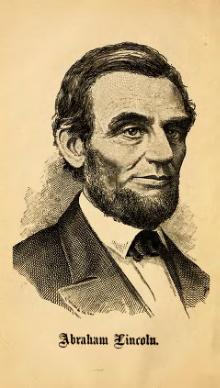
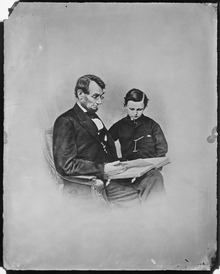
- If any continue through life in the condition of the hired laborer, it is not the fault of the system, but because of either a dependent nature which prefers it, or improvidence, folly, or singular misfortune.
- Some of you will be successful, and such will need but little philosophy to take them home in cheerful spirits; others will be disappointed, and will be in a less happy mood. To such, let it be said, “Lay it not too much to heart.” Let them adopt the maxim, “Better luck next time”; and then, by renewed exertion, make that better luck for themselves.
- From the first appearance of man upon the earth, down to very recent times, the words "stranger" and "enemy" were quite or almost, synonymous. Long after civilized nations had defined robbery and murder as high crimes, and had affixed severe punishments to them, when practiced among and upon their own people respectively, it was deemed no offence, but even meritorious, to rob, and murder, and enslave strangers, whether as nations or as individuals. Even yet, this has not totally disappeared. The man of the highest moral cultivation, in spite of all which abstract principle can do, likes him whom he does know, much better than him whom he does not know. To correct the evils, great and small, which spring from want of sympathy, and from positive enmity, among strangers, as nations, or as individuals, is one of the highest functions of civilization.
- Every man is proud of what he does well; and no man is proud of what he does not do well. With the former, his heart is in his work; and he will do twice as much of it with less fatigue. The latter performs a little imperfectly, looks at it in disgust, turns from it, and imagines himself exceedingly tired. The little he has done, comes to nothing, for want of finishing.
- The ambition for broad acres leads to poor farming, even with men of energy. I scarcely ever knew a mammoth farm to sustain itself; much less to return a profit upon the outlay. I have more than once known a man to spend a respectable fortune upon one; fail and leave it; and then some man of more modest aims, get a small fraction of the ground, and make a good living upon it. Mammoth farms are like tools or weapons, which are too heavy to be handled. Ere long they are thrown aside, at a great loss.
- The world is agreed that labor is the source from which human wants are mainly supplied. There is no dispute upon this point. From this point, however, men immediately diverge. Much disputation is maintained as to the best way of applying and controlling the labor element. By some it is assumed that labor is available only in connection with capital — that nobody labors, unless somebody else, owning capital, somehow, by the use of that capital, induces him to do it. Having assumed this, they proceed to consider whether it is best that capital shall hire laborers, and thus induce them to work by their own consent; or buy them, and drive them to it without their consent. Having proceeded so far they naturally conclude that all laborers are necessarily either hired laborers, or slaves. They further assume that whoever is once a hired laborer, is fatally fixed in that condition for life; and thence again that his condition is as bad as, or worse than that of a slave. This is the "mud-sill" theory. … By the "mud-sill" theory it is assumed that labor and education are incompatible; and any practical combination of them impossible. According to that theory, a blind horse upon a tread-mill, is a perfect illustration of what a laborer should be — all the better for being blind, that he could not tread out of place, or kick understandingly. According to that theory, the education of laborers, is not only useless, but pernicious, and dangerous. In fact, it is, in some sort, deemed a misfortune that laborers should have heads at all.
- The old general rule was that educated people did not perform manual labor. They managed to eat their bread, leaving the toil of producing it to the uneducated. This was not an insupportable evil to the working bees, so long as the class of drones remained very small. But now, especially in these free States, nearly all are educated — quite too nearly all, to leave the labor of the uneducated, in any wise adequate to the support of the whole. It follows from this that henceforth educated people must labor. Otherwise, education itself would become a positive and intolerable evil. No country can sustain, in idleness, more than a small percentage of its numbers. The great majority must labor at something productive.
- I suppose, however, I shall not be mistaken, in assuming as a fact, that the people of Wisconsin prefer free labor, with its natural companion, education. This leads to the further reflection, that no other human occupation opens so wide a field for the profitable and agreeable combination of labor with cultivated thought, as agriculture. I know of nothing so pleasant to the mind, as the discovery of anything which is at once new and valuable — nothing which so lightens and sweetens toil, as the hopeful pursuit of such discovery. And how vast, and how varied a field is agriculture, for such discovery. The mind, already trained to thought, in the country school, or higher school, cannot fail to find there an exhaustless source of profitable enjoyment.
- Every blade of grass is a study; and to produce two, where there was but one, is both a profit and a pleasure.
- A capacity, and taste, for reading, gives access to whatever has already been discovered by others. It is the key, or one of the keys, to the already solved problems. And not only so. It gives a relish, and facility, for successfully pursuing the [yet] unsolved ones.
- It is said an Eastern monarch once charged his wise men to invent him a sentence, to be ever in view, and which should be true and appropriate in all times and situations. They presented him the words: "And this, too, shall pass away." How much it expresses! How chastening in the hour of pride! How consoling in the depths of affliction!
Autobiographical Sketch Written for Jesse W. Fell (1859)
[edit]- Written on December 20, 1859; as published in The Autobiography of Abraham Lincoln (1905) pp. 31-36.
- My dear Sir: Herewith is a little sketch, as you requested. There is not much of it, for the reason, I suppose, that there is not much of me. If anything be made out of it, I wish it to be modest, and not to go beyond the material. If it were thought necessary to incorporate anything from any of my speeches, I suppose there would be no objection. Of course it must not appear to have been written by myself.
- My parents were both born in Virginia of undistinguished families... My mother, who died in my tenth year, was of a family of the name of Hanks...
- My paternal grandfather, Abraham Lincoln, emigrated from Rockingham County, Virginia, to Kentucky about 1781 or 1782, where a year or two later he was killed by the Indians, not in battle, but by stealth, when he was laboring to open a farm in the forest. His ancestors, who were Quakers, went to Virginia from Berks County, Pennsylvania.
- My father, at the death of his father, was but six years of age, and he grew up literally without education. He removed from Kentucky to what is now Spencer County, Indiana, in my eighth year. We reached our new home about the time the State came into the Union. It was a wild region, with many bears and other wild animals still in the woods. There I grew up.
- There were some schools, so called, but no qualification was ever required of a teacher beyond "readin', writin', and cipherin' " to the rule of three. If a straggler supposed to understand Latin happened to sojourn in the neighborhood, he was looked upon as a wizard. There was absolutely nothing to excite ambition for education. Of course, when I came of age I did not know much. Still, somehow, I could read, write, and cipher to the rule of three, but that was all. I have not been to school since. The little advance I now have upon this store of education, I have picked up from time to time under the pressure of necessity.
- I was raised to farm work, which I continued till I was twenty-two. At twenty-one I came to Illinois, Macon County. Then I got to New Salem, at that time in Sangamon, now in Menard County, where I remained a year as a sort of clerk in a store.
- Then came the Black Hawk war; and I was elected a captain of volunteers, a success which gave me more pleasure than any I have had since. I went the campaign, was elated, ran for the legislature the same year (1832), and was beaten — the only time I ever have been beaten by the people. The next and three succeeding biennial elections I was elected to the legislature. I was not a candidate afterwards. During this legislative period I had studied law, and removed to Springfield to practice it.
- In 1846 I was once elected to the lower House of Congress. Was not a candidate for reëlection. From 1849 to 1854, both inclusive, practiced law more assiduously than ever before. Always a Whig in politics; and generally on the Whig electoral tickets making active canvasses. I was losing interest in politics when the repeal of the Missouri Compromise aroused me again. What I have done since then is pretty well known.
- If any personal description of me is thought desirable, it may be said I am, in height, six feet four inches, nearly; lean in flesh, weighing on an average one hundred and eighty pounds; dark complexion, with coarse black hair and gray eyes. No other marks or brands recollected.
1860s
[edit]

.jpg)

.svg)


.JPG)
- I have scarcely felt greater pain in my life than on learning yesterday from Bob's letter, that you had failed to enter Harvard University. And yet there is very little in it, if you will allow no feeling of discouragement to seize, and prey upon you. It is a certain truth, that you can enter, and graduate in, Harvard University; and having made the attempt, you must succeed in it. ``Must´´ is the word. I know not how to aid you, save in the assurance of one of mature age, and much severe experience, that you can not fail, if you resolutely determine, that you will not.
- Letter to George C. Latham (22 July 1860); published in The Collected Works of Abraham Lincoln (1953) by Roy P. Basler, vol. 4, p. 4
- I thank you, in common with all others, who have thought fit, by their votes, to indorse the Republican cause. I rejoice with you in the success which has, so far, attended that cause. Yet in all our rejoicing let us neither express, nor cherish, any harsh feeling towards any citizen who, by his vote, has differed with us. Let us at all times remember that all American citizens are brothers of a common country, and should dwell together in the bonds of fraternal feeling.
- Remarks at Springfield, Illinois (20 November 1860); published in The Collected Works of Abraham Lincoln (1953) by Roy P. Basler, vol. 4, p. 142
- I think very much of the people, as an old friend said he thought of woman. He said when he lost his first wife, who had been a great help to him in his business, he thought he was ruined — that he could never find another to fill her place. At length, however, he married another, who he found did quite as well as the first, and that his opinion now was that any woman would do well who was well done by. So I think of the whole people of this nation — they will ever do well if well done by. We will try to do well by them in all parts of the country, North and South, with entire confidence that all will be well with all of us.
- Remarks at Bloomington, Illinois (21 November 1860); published in The Collected Works of Abraham Lincoln (1953) by Roy P. Basler, vol. 4, p. 143
- More rogues than honest men find shelter under habeas corpus.
- Quoted on PBS The Civil War, September 23, 1990. Source: Liam Walsh (Fall 2022): Terms and Conditions Apply: Constitutional Rights in Wartime. Publisher: Worcester State University. Archived from the original on October 8, 2023. See also: Amara Subtitling: The Civil War — Episode 1: The Cause 1861 — Ken Burns. Archived from the original on October 8, 2023.
- All this is not the result of accident. It has a philosophical cause. Without the Constitution and the Union, we could not have attained the result; but even these, are not the primary cause of our great prosperity. There is something back of these, entwining itself more closely about the human heart. That something, is the principle of "Liberty to all" — the principle that clears the path for all — gives hope to all — and, by consequence, enterprize, and industry to all. The expression of that principle, in our Declaration of Independence, was most happy, and fortunate. Without this, as well as with it, we could have declared our independence of Great Britain; but without it, we could not, I think, have secured our free government, and consequent prosperity. No oppressed, people will fight, and endure, as our fathers did, without the promise of something better, than a mere change of masters. The assertion of that principle, at that time, was the word, "fitly spoken" which has proved an "apple of gold" to us. The Union, and the Constitution, are the picture of silver, subsequently framed around it. The picture was made, not to conceal, or destroy the apple; but to adorn, and preserve it. The picture was made for the apple — not the apple for the picture. So let us act, that neither picture, or apple shall ever be blurred, or bruised or broken. That we may so act, we must study, and understand the points of danger.
- Fragment on the Constitution and the Union (c. January, 1861); published in The Collected Works of Abraham Lincoln (1953) by Roy P. Basler, vol. 4, p. 168
- Mr. Clay, during my whole political life, I have loved and revered as a teacher and leader.
- Letter to Daniel Ullmann (1 February 1861); quoted in "Why Abraham Lincoln Was a Whig" by Daniel Walker Howe, The Journal of the Abraham Lincoln Association, Volume 16, Issue 1 (Winter 1995); also in We Have the War Upon Us: The Onset of the Civil War, November 1860-April 1861 (2013) by William J. Cooper, p. 72
- While I do not expect, upon this occasion, or on any occasion, till after I get to Washington, to attempt any lengthy speech, I will only say that to the salvation of this Union there needs but one single thing — the hearts of a people like yours. When the people rise in masses in behalf of the Union and the liberties of their country, truly may it be said, "the gates of hell shall not prevail against it." In all the trying positions in which I shall be placed, and doubtless I shall be placed in many trying ones, my reliance will be placed upon you and the people of the United States — and I wish you to remember now and forever, that it is your business, and not mine; that if the union of these States, and the liberties of this people, shall be lost, it is but little to any one man of fifty-two years of age, but a great deal to the thirty millions of people who inhabit these United States, and to their posterity in all coming time. It is your business to rise up and preserve the Union and liberty, for yourselves, and not for me. I desire they shall be constitutionally preserved. I, as already intimated, am but an accidental instrument, temporary, and to serve but for a limited time, but I appeal to you again to constantly bear in mind that with you, and not with politicians, not with Presidents, not with office-seekers, but with you, is the question, ``Shall the Union and shall the liberties of this country be preserved to the latest generation?``
- Reply to Oliver P. Morton at Indianapolis, Indiana (February 11, 1861); published in The Collected Works of Abraham Lincoln (1953) by Roy P. Basler, vol. 4, p. 202, p. 193-194
- I agree with you, Mr. Chairman, that the working men are the basis of all governments, for the plain reason that they are the most numerous, and as you added that those were the sentiments of the gentlemen present, representing not only the working class, but citizens of other callings than those of the mechanic, I am happy to concur with you in these sentiments, not only of the native born citizens, but also of the Germans and foreigners from other countries. Mr. Chairman, I hold that while man exists, it is his duty to improve not only his own condition, but to assist in ameliorating mankind; and therefore, without entering upon the details of the question, I will simply say, that I am for those means which will give the greatest good to the greatest number.
- Speech to Germans at Cincinnati, Ohio (February 12, 1861); published in The Collected Works of Abraham Lincoln (1953) by Roy P. Basler, vol. 4, p. 202
- The phrase "I am for those means which will give the greatest good to the greatest number." is allusion to British jurist, philosopher, and legal and social reformer Jeremy Bentham who wrote in his "Extracts from Bentham's Commonplace Book", in Collected Works, x, p. 142: "Priestley was the first (unless it was Beccaria) who taught my lips to pronounce this sacred truth — that the greatest happiness of the greatest number is the foundation of morals and legislation."
- I am rather inclined to silence, and whether that be wise or not, it is at least more unusual nowadays to find a man who can hold his tongue than to find one who cannot.
- Remarks at the Monogahela House (14 February 1861); as published in The Collected Works of Abraham Lincoln (1953) by Roy P. Basler, vol. 4, p. 209
- I appeal to all loyal citizens to favor, facilitate and aid this effort to maintain the honor, the integrity, and the existence of our National Union, and the perpetuity of popular government; and to redress wrongs already long enough endured.
- And whereas it is fit and becoming in all people, at all times, to acknowledge and revere the Supreme Government of God; to bow in humble submission to his chastisements; to confess and deplore their sins and transgressions in the full conviction that the fear of the Lord is the beginning of wisdom; and to pray, with all fervency and contrition, for the pardon of their past offences, and for a blessing upon their present and prospective action... And whereas, when our own beloved Country, once, by the blessing of God, united, prosperous and happy, is now afflicted with faction and civil war, it is peculiarly fit for us to recognize the hand of God in this terrible visitation, and in sorrowful remembrance of our own faults and crimes as a nation and as individuals, to humble ourselves before Him, and to pray for His mercy, — to pray that we may be spared further punishment, though most justly deserved; that our arms may be blessed and made effectual for the re-establishment of law, order and peace, throughout the wide extent of our country; and that the inestimable boon of civil and religious liberty, earned under His guidance and blessing, by the labors and sufferings of our fathers, may be restored in all its original excellence: —
- Therefore, I, Abraham Lincoln, President of the United States, do appoint the last Thursday in September next, as a day of humiliation, prayer and fasting for all the people of the nation. And I do earnestly recommend to all the People, and especially to all ministers and teachers of religion of all denominations, and to all heads of families, to observe and keep that day according to their several creeds and modes of worship, in all humility and with all religious solemnity, to the end that the united prayer of the nation may ascend to the Throne of Grace and bring down plentiful blessings upon our Country.
- I think to lose Kentucky is nearly the same as to lose the whole game. Kentucky gone, we can not hold Missouri, nor, as I think, Maryland.
- Letter to Orville Hickman Browning (22 September 1861)
- The Confederacy stands for slavery and the Union for freedom.
- Private conversation (January 1862)
- The severest justice may not always be the best policy.
- Veto message, eventually not executed, written as a response to the Second Confiscation Act passed by Congress. (17 July 1862)
- The Emancipation Proclamation, by John Hope Franklin, Doubleday Anchor Books, New York, NY, 1963, p. 19
- I am a patient man — always willing to forgive on the Christian terms of repentance; and also to give ample time for repentance. Still I must save this government if possible.
- Letter to Reverdy Johnson (26 July 1862)
- Broken eggs cannot be mended; but Louisiana has nothing to do now but to take her place in the Union as it was, barring the already broken eggs. The sooner she does so, the smaller will be the amount of that which will be past mending. This government cannot much longer play a game in which it stakes all, and its enemies stake nothing. Those enemies must understand that they cannot experiment for ten years trying to destroy the government, and if they fail still come back into the Union unhurt.
- Letter to August Belmont (31 July 1832) in "The Collected Works of Abraham Lincoln" edited by Roy P. Basler, Volume V, p. 350-351
- You and I are different races. We have between us a broader difference than exists between almost any other races. Whether it be right or wrong, I need not discuss; but this physical difference is a great disadvantage to us both, as I think. Your race suffer very greatly, many of them by living amongst us, while ours suffer from your presence. In a word, we suffer on each side. If this is admitted, it affords a reason at least why we should be separated.
- Statement to the Deputation of Free Negroes (14 August 1862), in The Collected Works of Abraham Lincoln, edited by Roy P. Baler, Rutgers University Press, 1953, Vol. V, p. 371
- May our children and our children's children to a thousand generations, continue to enjoy the benefits conferred upon us by a united country, and have cause yet to rejoice under those glorious institutions bequeathed us by Washington and his compeers.
- Second Speech at Frederick, Maryland (4 October 1862)
- In this sad world of ours, sorrow comes to all; and, to the young, it comes with bitterest agony, because it takes them unawares. The older have learned to ever expect it. I am anxious to afford some alleviation of your present distress. Perfect relief is not possible, except with time. You can not now realize that you will ever feel better. Is not this so? And yet it is a mistake. You are sure to be happy again. To know this, which is certainly true, will make you some less miserable now. I have had experience enough to know what I say; and you need only to believe it, to feel better at once.
- Letter to Fanny McCullough (23 December 1862); Collected Works of Abraham Lincoln, edited by Roy P. Basler
- I have heard, in such way as to believe it, of your recently saying that both the Army and the Government needed a Dictator. Of course it was not for this, but in spite of it, that I have given you the command. Only those generals who gain successes, can set up dictators. What I now ask of you is military success, and I will risk the dictatorship. The government will support you to the utmost of its ability, which is neither more nor less than it has done and will do for all commanders. I much fear that the spirit which you have aided to infuse into the Army, of criticizing their Commander, and withholding confidence from him, will now turn upon you. I shall assist you as far as I can, to put it down. Neither you, nor Napoleon, if he were alive again, could get any good out of an army, while such a spirit prevails in it.
- Letter to Major General Joseph Hooker (26 January 1863)
- Beware of rashness, but with energy and sleepless vigilance go forward and give us victories.
- Letter to Major General Joseph Hooker (26 January 1863)
- We have been the recipients of the choicest bounties of Heaven. We have been preserved, these many years, in peace and prosperity. We have grown in numbers, wealth and power, as no other nation has ever grown. But we have forgotten God. We have forgotten the gracious hand which preserved us in peace, and multiplied and enriched and strengthened us; and we have vainly imagined, in the deceitfulness of our hearts, that all these blessings were produced by some superior wisdom and virtue of our own. Intoxicated with unbroken success, we have become too self-sufficient to feel the necessity of redeeming and preserving grace, too proud to pray to the God that made us!
- Upon proclaiming a National Fast Day (30 March 1863)
- The man who stands by and says nothing, when the peril of his government is discussed, can not be misunderstood. If not hindered, he is sure to help the enemy.
- to Erastus Corning and Others (12 June 1863) in "The Collected Works of Abraham Lincoln, vol.6" (The Abraham Lincoln Association, 1953), p. 265
- Long experience has shown that armies can not be maintained unless desertion shall be punished by the severe penalty of death. The case requires, and the law and the constitution, sanction this punishment. Must I shoot a simple-minded soldier boy who deserts, while I must not touch a hair of a wiley agitator who induces him to desert? This is none the less injurious when effected by getting a father, or brother, or friend, into a public meeting, and there working upon his feeling, till he is persuaded to write the soldier boy, that he is fighting in a bad cause, for a wicked administration of a contemptable government, too weak to arrest and punish him if he shall desert. I think that in such a case, to silence the agitator, and save the boy, is not only constitutional, but, withal, a great mercy.
- Letter to Erastus Corning and Others (12 June 1863) in "The Collected Works of Abraham Lincoln, vol. 6" (The Abraham Lincoln Association, 1953), p. 266
- I do not remember that you and I ever met personally. I write this now as a grateful acknowledgment for the almost inestimable service you have done the country. I wish to say a word further. When you first reached the vicinity of Vicksburg, I thought you should do, what you finally did, march the troops across the neck, run the batteries with the transports, and thus go below; and I never had any faith, except a general hope that you knew better than I, that the Yazoo Pass expedition, and the like, could succeed. When you got below, and took Port-Gibson, Grand Gulf, and vicinity, I thought you should go down the river and join General Banks; and when you turned Northward East of the Big Black, I feared it was a mistake. I now wish to make the personal acknowledgment that you were right, and I was wrong.
- Letter to Ulysses S. Grant (13 July 1863), Washington, D.C.
- It is the duty of every government to give protection to its citizens, of whatever class, color, or condition, and especially to those who are duly organized as soldiers in the public service. The law of nations and the usages and customs of war as carried on by civilized powers, permit no distinction as to color in the treatment of prisoners of war as public enemies. To sell or enslave any captured person, on account of his color, and for no offence against the laws of war, is a relapse into barbarism and a crime against the civilization of the age. The government of the United States will give the same protection to all its soldiers, and if the enemy shall sell or enslave anyone because of his color, the offense shall be punished by retaliation upon the enemy's prisoners in our possession. It is therefore ordered that for every soldier of the United States killed in violation of the laws of war, a rebel soldier shall be executed; and for every one enslaved by the enemy or sold into slavery, a rebel soldier shall be placed at hard labor on the public works and continued at such labor until the other shall be released and receive the treatment due to a prisoner of war
- Order of Retaliation (30 July 1863); quoted in Roy P. Basler, ed., The Collected Works of Abraham Lincoln, vol. 7 (New Brunswick, N.J.: Rutgers University Press, 1953), p. 357
- Sir; You are directed to have a transport.. sent to the colored colony of San Domingo to bring back to this country such of the colonists there as desire to return.
- Orders to the Secretary of War (1 February 1864)
- The world has never had a good definition of the word liberty, and the American people, just now, are much in want of one. We all declare for liberty; but in using the same word we do not all mean the same thing. With some the word liberty may mean for each man to do as he pleases with himself, and the product of his labor; while with others, the same word may mean for some men to do as they please with other men, and the product of other men's labor. Here are two, not only different, but incompatible things, called by the same name — liberty. And it follows that each of the things is, by the respective parties, called by two different and incompatible names — liberty and tyranny.
- Lecture on Liberty : An Address in Baltimore, Maryland (18 April 1864)
- The shepherd drives the wolf from the sheep's throat, for which the sheep thanks the shepherd as his liberator, while the wolf denounces him for the same act, as the destroyer of liberty, especially as the sheep was a black one. Plainly, the sheep and the wolf are not agreed upon a definition of the word liberty; and precisely the same difference prevails to-day among us human creatures, even in the North, and all professing to love liberty. Hence we behold the process by which thousands are daily passing from under the yoke of bondage hailed by some as the advance of liberty, and bewailed by others as the destruction of all liberty. Recently, as it seems, the people of Maryland have been doing something to define liberty, and thanks to them that, in what they have done, the wolf's dictionary has been repudiated.
- Lecture on Liberty : An Address in Baltimore, Maryland (18 April 1864)
- None are so deeply interested to resist the present rebellion as the working people. Let them beware of prejudice, working division and hostility among themselves. The most notable feature of a disturbance in your city last summer, was the hanging of some working people by other working people. It should never be so. The strongest bond of human sympathy, outside of the family relation, should be one uniting all working people, of all nations, and tongues, and kindreds. Nor should this lead to a war upon property, or the owners of property. Property is the fruit of labor — property is desirable — is a positive good in the world. That some should be rich, shows that others may become rich, and hence is just encouragement to industry and enterprise. Let not him who is houseless pull down the house of another; but let him labor diligently and build one for himself, thus by example assuring that his own shall be safe from violence when built.
- Reply to New York Workingmen's Democratic Republican Association (21 March 1864), Collected Works, Vol. 7, p. 259-260 1:566
- I have not permitted myself, gentlemen, to conclude that I am the best man in the country; but I am reminded, in this connection, of a story of an old Dutch farmer, who remarked to a companion once that it was not best to swap horses when crossing streams.
- Reply to delegation from the National Union League approving and endorsing "the nominations made by the Union National Convention at Baltimore." New York Times, Herald, and Tribune (10 June 1864) Collected Works of Abraham Lincoln. Volume 7
- Variant: I do not allow myself to suppose that either the convention or the League, have concluded to decide that I am either the greatest or the best man in America, but rather they have concluded it is not best to swap horses while crossing the river, and have further concluded that I am not so poor a horse that they might not make a botch of it in trying to swap.
- To a delegation of the National Union League who congratulated him on his nomination as the Republican candidate for President, June 9, 1864. As given by J. F. Rhodes—Hist. of the U. S. from the Compromise of 1850, Volume IV, p. 370. Same in Nicolay and Hay Lincoln's Complete Works, Volume II, p. 532. Different version in Appleton's Cyclopedia. Raymond—Life and Public Services of Abraham Lincoln, Chapter XVIII, p. 500. (Ed. 1865) says Lincoln quotes an old Dutch farmer, "It was best not to swap horses when crossing a stream".
- I am a slow walker, but I never walk back.
- Likely spurious quote, UNVERIFIED ATTRIBUTE - Quoted in The Lexington Observer & Reporter (16 June 1864)
- Truth is generally the best vindication against slander.
- Letter to Edwin Stanton (14 July 1864); published in Abraham Lincoln: A History (1890) by John Hay
- I am much indebted to the good christian people of the country for their constant prayers and consolations; and to no one of them, more than to yourself. The purposes of the Almighty are perfect, and must prevail, though we erring mortals may fail to accurately perceive them in advance. We hoped for a happy termination of this terrible war long before this; but God knows best, and has ruled otherwise. We shall yet acknowledge His wisdom and our own error therein. Meanwhile we must work earnestly in the best light He gives us, trusting that so working still conduces to the great ends He ordains. Surely He intends some great good to follow this mighty convulsion, which no mortal could make, and no mortal could stay.
- Letter to Eliza Gurney (4 September 1864); quoted in Roy P. Basler, ed., The Collected Works of Abraham Lincoln, vol. 7 (New Brunswick, N.J.: Rutgers University Press, 1953), p. 535
- In regard to this Great Book, I have but to say, it is the best gift God has given to man. All the good the Saviour gave to the world was communicated through this book.
- Words on being presented with a Bible, as reported in the Washington Daily Morning Chronicle (8 September 1864)
- I desire so to conduct the affairs of this administration that if at the end, when I come to lay down the reins of power, I have lost every other friend on earth, I shall at least have one friend left, and that friend shall be down inside of me.
- Reply to Missouri Committee of Seventy (30 September 1864)
- When armed rebels come among them their houses and other property are spared while Union men's houses are burned and their property pillaged. Still, we may not be able to specifically prove that the sympathizers protected and supplied the raiders in turn, or designated their Union neighbors for plunder and devastation. Yet we know all this exists, even better than we could know an isolated fact upon the sworn testimony of one or two witnesses; just as we better know there is fire whence we see much smoke rising than we could know it by one or two witnesses swearing to it. The witnesses may commit perjury, but the smoke cannot.
- Unfinished draft of a letter to J.R. Underwood and Henry Grinder (October 26, 1864), in Complete Works of Abraham Lincoln - Volume 10 (1894), p. 254.
- I earnestly believe that the consequences of this day's work, if it be as you assume, and as now seems probable, will be to the lasting advantage, if not to the very salvation, of the country. I cannot at this hour say what has been the result of the election. But, whatever it may be, I have no desire to modify this opinion: that all who have labored to-day in behalf of the Union have wrought for the best interests of the country and the world; not only for the present, but for all future ages. I am thankful to God for this approval of the people; but, while deeply grateful for this mark of their confidence in me, if I know my heart, my gratitude is free from any taint of personal triumph. I do not impugn the motives of any one opposed to me. It is no pleasure to me to triumph over any one, but I give thanks to the Almighty for this evidence of the people's resolution to stand by free government and the rights of humanity.
- Response to a Serenade, November 9, 1864 (one day after the United States presidential election of 1864; in "The Papers And Writings Of Abraham Lincoln, Volume Seven, Constitutional Edition", edited by Arthur Brooks Lapsley and released as "The Project Gutenberg EBook of The Papers And Writings Of Abraham Lincoln, Volume Seven, by Abraham Lincoln" (2009) by Project Gutenberg
- Dear Madam, I have been shown in the files of the War Department a statement of the Adjutant-General of Massachusetts, that you are the mother of five sons who have died gloriously on the field of battle. I feel how weak and fruitless must be any words of mine which should attempt to beguile you from the grief of a loss so overwhelming. But I cannot refrain from tendering to you the consolation that may be found in the thanks of the Republic they died to save. I pray that our Heavenly Father may assuage the anguish of your bereavement, and leave you only the cherished memory of the loved and lost, and the solemn pride that must be yours, to have laid so costly a sacrifice upon the altar of Freedom. Yours, very sincerely and respectfully, Abraham Lincoln
- Letter to Mrs. Bixby in Boston (21 November 1864); some scholars suggest that John Hay, a secretary of President Lincoln's, actually wrote this letter. The Files of the war department were inaccurate: Mrs. Bixby lost two sons.
- In a great national crisis like ours unanimity of action among those seeking a common end is very desirable — almost indispensable. And yet no approach to such unanimity is attainable unless some deference shall be paid to the will of the majority simply because it is the will of the majority.
- Fourth State of the Union Address (December 6, 1864)
- It is no fault in others that the Methodist Church sends more soldiers to the field, more nurses to the hospital, and more prayers to Heaven than any. God bless the Methodist Church — bless all the churches — and blessed be to God, who, in this our great trial, giveth us the churches.
- To the 1864 general conference of the Methodist Episcopal Church, as quoted in Abraham Lincoln : A History Vol. 6 (1890) by John George Nicolay and John Hay, Ch. 15, p. 324
- Men are not flattered by being shown that there has been a difference of purpose between the Almighty and them.
- Letter to Thurlow Weed (15 March 1865), reproduced in Lord Charnwood (1916), Abraham Lincoln: A Biography
- I have always thought that all men should be free; but if any should be slaves, it should be first those who desire it for themselves, and secondly, those who desire it for others. When I hear anyone arguing for slavery, I feel a strong impulse to see it tried on him personally.
- Statement to an Indiana Regiment passing through Washington (17 March 1865); The Collected Works of Abraham Lincoln Volume VIII
- Stop, you political tramp. You, the aider and abettor of those who have brought all this ruin upon your country, without the courage to risk your person in defense of the principles you profess to espouse! A fellow who stood by to gather up the loaves and fishes, if any should fall to you! A man who had no principles in the North, and took none South with him! A political hyena who robbed the graves of the dead, and adopted their language as his own! You talk of the North cutting the throats of the Southern people. You have all cut your own throats, and, unfortunately, have cut many of those of the North. Miserable impostor, vile intruder! Go, before I forget myself and the high position I hold! Go, I tell you, and don't desecrate this national vessel another minute!
- To Duff Green, aboard the USS Malvern (4 April 1865), as quoted in Incidents and Anecdotes of the Civil War (1885), by David Dixon Porter, p. 308
- I propose now closing up by requesting you play a certain piece of music or a tune. I thought "Dixie" one of the best tunes I ever heard... I had heard our adversaries over the way had attempted to appropriate it. I insisted yesterday that we had fairly captured it... I presented the question to the Attorney-General, and he gave his opinion that it is our lawful prize... I ask the Band to give us a good turn upon it.
- At the end of the Civil War, asking that a military band play "Dixie" (10 April 1865) as quoted in Dan Emmett and the Rise of Early Negro Minstrelsy (1962) by Hans Nathan. Variant account: "I have always thought "Dixie" one of the best tunes I have ever heard. Our adversaries over the way attempted to appropriate it, but I insisted yesterday that we fairly captured it... I now request the band to favor me with its performance".
- Did Stanton say I was a damned fool? Then I dare say I must be one, for Stanton is generally right and he always says what he means.
- As quoted in Lincoln; An Account of his Personal Life, Especially of its Springs of Action as Revealed and Deepened by the Ordeal of War (1922) by Nathaniel Wright Stephenson.
- When you have got an elephant by the hind leg, and he is trying to run away, it's best to let him run.
- Quoted by Charles A. Dana in his book [http://books.google.com/books?id=rxpCAAAAIAAJ&pg=PA274&q=elephant
Recollections of the Civil War] (1898)
- In my opinion the religion that makes men rebel and fight against their government is not the genuine article, nor is the religion the right sort which reconciles them to the idea of eating their bread in the sweat of other men's faces. It is not the kind to get to heaven on.
- As quoted in Recollections of Abraham Lincoln, 1847-1865 (1895), by Ward Hill Lamon, p. 90
- He's the quietest little fellow you ever saw. He makes the least fuss of any man you ever knew. I believe he had been in this room a minute or so before I knew he was here. Grant is the first general I have had. You know how it's been with all the rest. As soon as I put a man in command of the army, they all wanted me to be the general. Now it isn't so with Grant. He hasn't told me what his plans are. I don't know and I don't want to know. I am glad to find a man who can go ahead without me. He doesn't ask impossibilities of me, and he's the first general I've had that didn't.
- About General U.S. Grant, as quoted in The Every-day Life of Abraham Lincoln: A Narrative and Descriptive Biography, by Francis Fisher Brown, p. 520
Cooper Union speech (1860)
[edit]- Speech to the Cooper Institute, New York, New York (27 February 1860) - Full text online at Wikisource; similar remarks to many of these were made in later speeches elsewhere.

- I do not mean to say we are bound to follow implicitly in whatever our fathers did. To do so, would be to discard all the lights of current experience — to reject all progress — all improvement. What I do say is, that if we would supplant the opinions and policy of our fathers in any case, we should do so upon evidence so conclusive, and argument so clear, that even their great authority, fairly considered and weighed, cannot stand; and most surely not in a case whereof we ourselves declare they understood the question better than we.
- Let all who believe that "our fathers, who framed the Government under which we live, understood this question just as well, and even better, than we do now," speak as they spoke, and act as they acted upon it. This is all Republicans ask — all Republicans desire — in relation to slavery. As those fathers marked it, so let it be again marked, as an evil not to be extended, but to be tolerated and protected only because of and so far as its actual presence among us makes that toleration and protection a necessity. Let all the guarantees those fathers gave it, be, not grudgingly, but fully and fairly, maintained. For this Republicans contend, and with this, so far as I know or believe, they will be content.
- You say you are conservative — eminently conservative — while we are revolutionary, destructive, or something of the sort. What is conservatism? Is it not adherence to the old and tried, against the new and untried? We stick to, contend for, the identical old policy on the point in controversy which was adopted by "our fathers who framed the Government under which we live;" while you with one accord reject, and scout, and spit upon that old policy, and insist upon substituting something new. True, you disagree among yourselves as to what that substitute shall be. You are divided on new propositions and plans, but you are unanimous in rejecting and denouncing the old policy of the fathers.
- Some of you are for reviving the foreign slave trade; some for a Congressional Slave-Code for the Territories; some for Congress forbidding the Territories to prohibit Slavery within their limits; some for maintaining Slavery in the Territories through the judiciary; some for the "gur-reat pur-rinciple" that "if one man would enslave another, no third man should object," fantastically called "Popular Sovereignty"; but never a man among you is in favor of federal prohibition of slavery in federal territories, according to the practice of "our fathers who framed the Government under which we live." Not one of all your various plans can show a precedent or an advocate in the century within which our Government originated. Consider, then, whether your claim of conservatism for yourselves, and your charge or destructiveness against us, are based on the most clear and stable foundations.
- Human action can be modified to some extent, but human nature cannot be changed. There is a judgment and a feeling against slavery in this nation, which cast at least a million and a half of votes. You cannot destroy that judgment and feeling — that sentiment — by breaking up the political organization which rallies around it. You can scarcely scatter and disperse an army which has been formed into order in the face of your heaviest fire; but if you could, how much would you gain by forcing the sentiment which created it out of the peaceful channel of the ballot-box, into some other channel?
- It is exceedingly desirable that all parts of this great Confederacy shall be at peace, and in harmony, one with another. Let us Republicans do our part to have it so. Even though much provoked, let us do nothing through passion and ill temper. Even though the southern people will not so much as listen to us, let us calmly consider their demands, and yield to them if, in our deliberate view of our duty, we possibly can.
- An inspection of the Constitution will show that the right of property in a slave is not "distinctly and expressly affirmed" in it.
- But you will not abide the election of a Republican president! In that supposed event, you say, you will destroy the Union; and then, you say, the great crime of having destroyed it will be upon us! That is cool. A highwayman holds a pistol to my ear, and mutters through his teeth, "Stand and deliver, or I shall kill you, and then you will be a murderer!" To be sure, what the robber demanded of me — my money — was my own; and I had a clear right to keep it; but it was no more my own than my vote is my own; and the threat of death to me, to extort my money, and the threat of destruction to the Union, to extort my vote, can scarcely be distinguished in principle.
- If slavery is right, all words, acts, laws, and constitutions against it, are themselves wrong, and should be silenced, and swept away.
- Wrong as we think slavery is, we can yet afford to let it alone where it is, because that much is due to the necessity arising from its actual presence in the nation; but can we, while our votes will prevent it, allow it to spread into the National Territories, and to overrun us here in these Free States? If our sense of duty forbids this, then let us stand by our duty, fearlessly and effectively. Let us be diverted by none of those sophistical contrivances wherewith we are so industriously plied and belabored — contrivances such as groping for some middle ground between the right and the wrong, vain as the search for a man who should be neither a living man nor a dead man — such as a policy of "don't care" on a question about which all true men do care — such as Union appeals beseeching true Union men to yield to Disunionists, reversing the divine rule, and calling, not the sinners, but the righteous to repentance — such as invocations to Washington, imploring men to unsay what Washington said, and undo what Washington did.
- Neither let us be slandered from our duty by false accusations against us, nor frightened from it by menaces of destruction to the Government nor of dungeons to ourselves. Let us have faith that right makes might, and in that faith, let us, to the end, dare to do our duty as we understand it.
Speech at Hartford (1860)
[edit],_by_Thomas_Nast.jpg)
- Slavery is the great political question of the nation. Though all desire its settlement, it still remains the all-pervading question of the day. It has been so especially for the past six years. It is indeed older than the revolution, rising, subsiding, then rising again, till fifty-four, since which time it has been constantly augmenting. Those who occasioned the Lecompton imbroglio now admit that they see no end to it. It had been their cry that the vexed question was just about to be settled, 'the tail of this hideous creature is just going out of sight'. That cry is 'played out', and has ceased.
- Why, when all desire to have this controversy settled, can we not settle it satisfactorily? One reason is, we want it settled in different ways. Each faction has a different plan, they pull different ways, and neither has a decided majority. In my humble opinion, the importance and magnitude of the question is underrated, even by our wisest men. If I be right, the first thing is to get a just estimate of the evil — then we can provide a cure.
- One-sixth, and a little more, of the population of the United States are slaves, looked upon as property, as nothing but property. The cash value of these slaves, at a moderate estimate, is $2,000,000,000. This amount of property value has a vast influence on the minds of its owners, very naturally. The same amount of property would have an equal influence upon us if owned in the north. Human nature is the same, people at the south are the same as those at the north, barring the difference in circumstances. Public opinion is founded, to a great extent, on a property basis. What lessons the value of property is opposed, what enhances its value is favored. Public opinion at the south regards slaves as property and insists upon treating them like other property.
- On the other hand, the free states carry on their government on the principle of the equality of men. We think slavery is morally wrong, and a direct violation of that principle. We all think it wrong. It is clearly proved, I think, by natural theology, apart from revelation. Every man, black, white or yellow, has a mouth to be fed and two hands with which to feed it, and that bread should be allowed to go to that mouth without controversy.
- Slavery is wrong in its effect upon white people and free labor; it is the only thing that threatens the Union. It makes what Senator Seward has been much abused for calling an 'irrepressible conflict'. When they get ready to settle it, we hope they will let us know. Public opinion settles every question here, any policy to be permanent must have public opinion at the bottom, something in accordance with the philosophy of the human mind as it is. The property basis will have its weight. The love of property and a consciousness of right or wrong have conflicting places in our organization, which often make a man's course seem crooks, his conduct a riddle.
- Some men would make it a question of indifference, neither right nor wrong, merely a question of dollars and cents, the Almighty has drawn a line across the land, below which it must be cultivated by slave labor, above which by free labor. They would say: 'If the question is between the white man and the negro, I am for the white man; if between the negro and the crocodile, I am for the negro.' There is a strong effort to make this policy of indifference prevail, but it can not be a durable one. A 'don't care' policy won't prevail, for every body does care.
- Is there a Democrat, especially one of the Douglas wing, but will declare that the Declaration of Independence has no application to the negro? It would be safe to offer a moderate premium for such a man. I have asked this question in large audiences where they were in the habit of answering right out, but no one would say otherwise. Not one of them said it five years ago. I never heard it till I heard it from the lips of Judge Douglas. True, some men boldly took the bull by the horns and said the Declaration of Independence was not true! They didn't sneak around the question. I say I heard first from Douglas that the Declaration did not apply to black men. Not a man of them said it till then, they all say it now. This is a long stride towards establishing the policy of indifference, one more such stride, I think, would do it.
- The proposition that there is a struggle between the white man and the negro contains a falsehood. There is no struggle. If there was, I should be for the white man. If two men are adrift at sea on a plank which will bear up but one, the law justifies either in pushing the other off. I never had to struggle to keep a negro from enslaving me, nor did a negro ever have to fight to keep me from enslaving him. They say, between the crocodile and the negro they go for the negro. The logical proportion is therefore; as a white man is to a negro, so is a negro to a crocodile; or, as the negro may treat the crocodile, so the white man may treat the negro. The 'don't care' policy leads just as surely to nationalizing slavery as Jeff Davis himself, but the doctrine is more dangerous because more insidious.
- If the Republicans, who think slavery is wrong, get possession of the general government, we may not root out the evil at once, but may at least prevent its extension. If I find a venomous snake lying on the open praire, I seize the first stick and kill him at once. But if that snake is in bed with my children, I must be more cautious. I shall, in striking the snake, also strike the children, or arouse the reptile to bite the children. Slavery is the venomous snake in bed with the children. But if the question is whether to kill it on the prairie or put it in bed with other children, I think we'd kill it!
- Another illustration. When for the first time I met Mister Clay, the other day in the cars, in front of us sat an old gentleman with an enormous wen upon his neck. Everybody would say the wen was a great evil, and would cause the man's death after a while. But you couldn't cut it out, for he'd bleed to death in a minute. But would you engraft the seeds of that wen on the necks of sound and healthy men? He must endure and be patient, hoping for possible relief. The wen represents slavery on the neck of this country. This only applies to those who think slavery is wrong. Those who think it right would consider the snake a jewel, and the wen an ornament.
- We want those who think slavery wrong to quit voting with those who think it right. They don't treat it as they do other wrongs. They won't oppose it in the free states for it isn't there, nor in the slave states for it is there; don't want it in politics, for it makes agitation; not in the pulpit, for it isn't religion; not in a Tract Society, for it makes a fuss. There is no place for its discussion. Are they quite consistent in this?
- If those democrats really think slavery wrong they will be much pleased when earnest men in the slave states take up a plan of gradual emancipation and go to work energetically and very kindly to get rid of the evil. Now let us test them. Frank Blair tried it; and he ran for Congress in '58, and got beaten. Did the democracy feel bad about it? I reckon not, I guess you all flung up your hats and shouted 'Hurrah for the Democracy!'
- He went on to speak of the manner in which slavery was treated by the Constitution. The word 'slave' is no where used; the supply of slaves was to be prohibited after 1808; they stopped the spread of it in the territories; seven of the states abolished it. He argued very conclusively that it was then regarded as an evil which would eventually be got rid of, and that they desired, once rid of it, to have nothing in the constitution to remind them of it. The Republicans go back to first principles and deal with it as a wrong. Mason, of Va., said openly that the framers of our government were anti-slavery. Hammond of S.C., said 'Washington set this evil example'. Bully Brooks said: 'At the time the Constitution was formed, no one supposed slavery would last till now'. We stick to the policy of our fathers.
- The Democracy are given to 'bushwhacking'. After having their errors and mis-statements continually thrust in their faces, they pay no heed, but go on howling about Seward and the 'irrepressible conflict'. That is 'bushwhacking'. So with John Brown and Harper's Ferry. They charge it upon the Republican party and ignominiously fail in all attempts to substantiate the charge. Yet they go on with their bushwhacking, the pack in full cry after John Brown.
- The democrats had just been whipped in Ohio and Pennsylvania, and seized upon the unfortunate Harper's Ferry affair to influence other elections then pending. They said to each other, 'Jump in, now's your chance', and were sorry there were not more killed. But they didn't succeed well. Let them go on with their howling. They will succeed when by slandering women you get them to love you, and by slandering men you get them to vote for you.
- Mister Lincoln then took up the Massachusetts shoemakers' strike, treating it in a humorous and philosophical manner, and exposing to ridicule the foolish pretense of Senator Douglas, that the strike arose from 'this unfortunate sectional warfare'. Mister Lincoln thanked God that we have a system of labor where there can be a strike. Whatever the pressure, there is a point where the workman may stop.
- He didn't pretend to be familiar with the subject of the shoe strike, probably knew as little about it as Senator Douglas himself. This strike has occurred as the Senator says, or it has not. Shall we stop making war upon the South? We never have made war upon them. If any one has, better go and hang himself and save Virginia the trouble. If you give up your convictions and call slavery right as they do, you let slavery in upon you, instead of white laborers who can strike, you'll soon have black laborers who can't strike.
- I have heard that in consequence of this 'sectional warfare', as Douglas calls it, Senator Mason of Va., had appeared in a suit of homespun. Now up in New Hampshire, the woolen and cotton mills are all busy, and there is no strike. They are busy making the very goods Senator Mason has quit buying! To carry out his idea, he ought to go barefoot! If that's the plan, they should begin at the foundation, and adopt the well-known 'Georgia costume' of a shirt-collar and pair of spurs!
- It reminded him of the man who had a poor old lean, bony, spavined horse, with swelled legs. He was asked what he was going to do with such a miserable beast, the poor creature would die. 'Do?' said he. 'I'm going to fat him up; don't you see that I have got him seal fat as high as the knees?' Well, they've got the Union dissolved up to the ankle, but no farther!
- All portions of this confederacy should act in harmony and with careful deliberation. The Democrats cry John Brown invasion. We are guiltless of it, but our denial does not satisfy them. Nothing will satisfy them but disinfecting the atmosphere entirely of all opposition to slavery. They have not demanded of us to yield the guards of liberty in our state constitutions, but it will naturally come to that after a while. If we give up to them, we cannot refuse even their utmost request. If slavery is right, it ought to be extended; if not, it ought to be restricted, there is no middle ground. Wrong as we think it, we can afford to let it alone where it of necessity now exists; but we cannot afford to extend it into free territory and around our own homes. Let us stand against it!
- The 'Union' arrangements are all a humbug. They reverse the scriptural order, calling the righteous and not sinners to repentance. Let us not be slandered or intimidated to turn from our duty. Eternal right makes might. As we understand our duty, let us do it!
Allow the humblest man an equal chance (1860)
[edit].jpg)
.jpg)
.jpg)
.jpg)


- Fellow citizens of New Haven, if the Republican Party of this nation shall ever have the national house entrusted to its keeping, it will be the duty of that party to attend to all the affairs of national housekeeping. Whatever matters of importance may come up, whatever difficulties may arise in the way of its administration of the government, that party will then have to attend to. It will then be compelled to attend to other questions, besides this question which now assumes an overwhelming importance — the question of Slavery. It is true that in the organization of the Republican party this question of Slavery was more important than any other; indeed, so much more important has it become that no other national question can even get a hearing just at present. The old question of tariff — a matter that will remain one of the chief affairs of national housekeeping to all time — the question of the management of financial affairs; the question of the disposition of the public domain — how shall it be managed for the purpose of getting it well settled, and of making there the homes of a free and happy people — these will remain open and require attention for a great while yet, and these questions will have to be attended to by whatever party has the control of the government. Yet, just now, they cannot even obtain a hearing, and I do not purpose to detain you upon these topics, or what sort of hearing they should have when opportunity shall come.
- For, whether we will or not, the question of Slavery is the question, the all absorbing topic of the day. It is true that all of us, and by that I mean, not the Republican party alone, but the whole American people, here and elsewhere, all of us wish this question settled, wish it out of the way. It stands in the way, and prevents the adjustment, and the giving of necessary attention to other questions of national house-keeping. The people of the whole nation agree that this question ought to be settled, and yet it is not settled. And the reason is that they are not yet agreed how it shall be settled. All wish it done, but some wish one way and some another, and some a third, or fourth, or fifth; different bodies are pulling in different directions, and none of them having a decided majority, are able to accomplish the common object.
- In the beginning of the year 1854 a new policy was inaugurated with the avowed object and confident promise that it would entirely and forever put an end to the Slavery agitation. It was again and again declared that under this policy, when once successfully established, the country would be forever rid of this whole question. Yet under the operation of that policy this agitation has not only not ceased, but it has been constantly augmented. And this too, although, from the day of its introduction, its friends, who promised that it would wholly end all agitation, constantly insisted, down to the time that the Lecompton bill was introduced, that it was working admirably, and that its inevitable tendency was to remove the question forever from the politics of the country. Can you call to mind any Democratic speech, made after the repeal of the Missouri Compromise, down to the time of the Lecompton bill, in which it was not predicted that the Slavery agitation was just at an end; that "the abolition excitement was played out," "the Kansas question was dead," "they have made the most they can out of this question and it is now forever settled." But since the Lecompton bill no Democrat, within my experience, has ever pretended that he could see the end. That cry has been dropped. They themselves do not pretend, now, that the agitation of this subject has come to an end yet.
- The truth is, that this question is one of national importance, and we cannot help dealing with it: we must do something about it, whether we will or not. We cannot avoid it; the subject is one we cannot avoid considering; we can no more avoid it than a man can live without eating. It is upon us; it attaches to the body politic as much and as closely as the natural wants attach to our natural bodies. Now I think it important that this matter should be taken up in earnest, and really settled. And one way to bring about a true settlement of the question is to understand its true magnitude.
- Look at the magnitude of this subject! One sixth of our population, in round numbers — not quite one sixth, and yet more than a seventh, — about one sixth of the whole population of the United States are slaves! The owners of these slaves consider them property. The effect upon the minds of the owners is that of property, and nothing else — it induces them to insist upon all that will favorably affect its value as property, to demand laws and institutions and a public policy that shall increase and secure its value, and make it durable, lasting and universal. The effect on the minds of the owners is to persuade them that there is no wrong in it. The slaveholder does not like to be considered a mean fellow, for holding that species of property, and hence he has to struggle within himself and sets about arguing himself into the belief that Slavery is right. The property influences his mind. [...] Certain it is, that this two thousand million of dollars, invested in this species of property, all so concentrated that the mind can grasp it at once — this immense pecuniary interest, has its influence upon their minds.
- To us it appears natural to think that slaves are human beings; men, not property; that some of the things, at least, stated about men in the Declaration of Independence apply to them as well as to us. I say, we think, most of us, that this Charter of Freedom applies to the slave as well as to ourselves, that the class of arguments put forward to batter down that idea, are also calculated to break down the very idea of a free government, even for white men, and to undermine the very foundations of free society. We think Slavery a great moral wrong, and while we do not claim the right to touch it where it exists, we wish to treat it as a wrong in the Territories, where our votes will reach it. We think that a respect for ourselves, a regard for future generations and for the God that made us, require that we put down this wrong where our votes will properly reach it. We think that species of labor an injury to free white men — in short, we think Slavery a great moral, social and political evil, tolerable only because, and so far as its actual existence makes it necessary to tolerate it, and that beyond that, it ought to be treated as a wrong.
- No policy that does not rest upon some philosophical public opinion can be permanently maintained. And hence, there are but two policies in regard to Slavery that can be at all maintained. The first, based on the property view that Slavery is right, conforms to that idea throughout, and demands that we shall do everything for it that we ought to do if it were right. We must sweep away all opposition, for opposition to the right is wrong; we must agree that Slavery is right, and we must adopt the idea that property has persuaded the owner to believe — that Slavery is morally right and socially elevating. This gives a philosophical basis for a permanent policy of encouragement. The other policy is one that squares with the idea that Slavery is wrong, and it consists in doing everything that we ought to do if it is wrong. [...] I don't mean that we ought to attack it where it exists. To me it seems that if we were to form a government anew, in view of the actual presence of Slavery we should find it necessary to frame just such a government as our fathers did; giving to the slaveholder the entire control where the system was established, while we possessed the power to restrain it from going outside those limits. From the necessities of the case we should be compelled to form just such a government as our blessed fathers gave us; and, surely, if they have so made it, that adds another reason why we should let Slavery alone where it exists.
- If I saw a venomous snake crawling in the road, any man would say I might seize the nearest stick and kill it; but if I found that snake in bed with my children, that would be another question. I might hurt the children more than the snake, and it might bite them. Much more if I found it in bed with my neighbor's children, and I had bound myself by a solemn compact not to meddle with his children under any circumstances, it would become me to let that particular mode of getting rid of the gentleman alone. But if there was a bed newly made up, to which the children were to be taken, and it was proposed to take a batch of young snakes and put them there with them, I take it no man would say there was any question how I ought to decide! That is just the case! The new Territories are the newly made bed to which our children are to go, and it lies with the nation to say whether they shall have snakes mixed up with them or not. It does not seem as if there could be much hesitation what our policy should be!
- There is a falsehood wrapped up in that statement. "In the struggle between the white man and the negro" assumes that there is a struggle, in which either the white man must enslave the negro or the negro must enslave the white. There is no such struggle! It is merely an ingenious falsehood, to degrade and brutalize the negro. Let each let the other alone, and there is no struggle about it. If it was like two wrecked seamen on a narrow plank, when each must push the other off or drown himself, I would push the negro off or a white man either, but it is not; the plank is large enough for both. This good earth is plenty broad enough for white man and negro both, and there is no need of either pushing the other off.
- So that saying, "in the struggle between the negro and the crocodile," &c., is made up from the idea that down where the crocodile inhabits a white man can't labor; it must be nothing else but crocodile or negro; if the negro does not the crocodile must possess the earth; [Laughter;] in that case he declares for the negro. The meaning of the whole is just this: As a white man is to a negro so is a negro to a crocodile; and as the negro may rightfully treat the crocodile, so may the white man rightfully treat the negro. This very dear phrase coined by its author, and so dear that he deliberately repeats it in many speeches, has a tendency to still further brutalize the negro, and to bring public opinion to the point of utter indifference whether men so brutalized are enslaved or not.
- But those who say they hate slavery, and are opposed to it, but yet act with the Democratic party — where are they? Let us apply a few tests. You say that you think slavery is wrong, but you denounce all attempts to restrain it. Is there anything else that you think wrong, that you are not willing to deal with as a wrong? Why are you so careful, so tender of this one wrong and no other? You will not let us do a single thing as if it was wrong; there is no place where you will allow it to be even called wrong! We must not call it wrong in the Free States, because it is not there, and we must not call it wrong in the Slave States because it is there; we must not call it wrong in politics because that is bringing morality into politics, and we must not call it wrong in the pulpit because that is bringing politics into religion; we must not bring it into the Tract Society or the other societies, because those are such unsuitable places, and there is no single place, according to you, where this wrong thing can properly be called wrong!
- It is easy to demonstrate that "our Fathers, who framed this government under which we live," looked on Slavery as wrong, and so framed it and everything about it as to square with the idea that it was wrong, so far as the necessities arising from its existence permitted. In forming the Constitution they found the slave trade existing; capital invested in it; fields depending upon it for labor, and the whole system resting upon the importation of slave-labor. They therefore did not prohibit the slave trade at once, but they gave the power to prohibit it after twenty years. Why was this? What other foreign trade did they treat in that way? Would they have done this if they had not thought slavery wrong? Another thing was done by some of the same men who framed the Constitution, and afterwards adopted as their own act by the first Congress held under that Constitution, of which many of the framers were members; they prohibited the spread of Slavery into Territories. Thus the same men, the framers of the Constitution, cut off the supply and prohibited the spread of Slavery, and both acts show conclusively that they considered that the thing was wrong. If additional proof is wanting it can be found in the phraseology of the Constitution. When men are framing a supreme law and chart of government, to secure blessings and prosperity to untold generations yet to come, they use language as short and direct and plain as can be found, to express their meaning. In all matters but this of Slavery the framers of the Constitution used the very clearest, shortest, and most direct language. But the Constitution alludes to Slavery three times without mentioning it once! The language used becomes ambiguous, roundabout, and mystical. They speak of the "immigration of persons," and mean the importation of slaves, but do not say so. In establishing a basis of representation they say "all other persons," when they mean to say slaves — why did they not use the shortest phrase? In providing for the return of fugitives they say "persons held to service or labor." If they had said slaves it would have been plainer, and less liable to misconstruction. Why didn't they do it. We cannot doubt that it was done on purpose. Only one reason is possible, and that is supplied us by one of the framers of the Constitution — and it is not possible for man to conceive of any other — they expected and desired that the system would come to an end, and meant that when it did, the Constitution should not show that there ever had been a slave in this good free country of ours!
- One of the reasons why I am opposed to Slavery is just here. What is the true condition of the laborer? I take it that it is best for all to leave each man free to acquire property as fast as he can. Some will get wealthy. I don't believe in a law to prevent a man from getting rich; it would do more harm than good. So while we do not propose any war upon capital, we do wish to allow the humblest man an equal chance to get rich with everybody else. When one starts poor, as most do in the race of life, free society is such that he knows he can better his condition; he knows that there is no fixed condition of labor, for his whole life. I am not ashamed to confess that twenty five years ago I was a hired laborer, mauling rails, at work on a flat-boat — just what might happen to any poor man's son! I want every man to have the chance — and I believe a black man is entitled to it — in which he can better his condition — when he may look forward and hope to be a hired laborer this year and the next, work for himself afterward, and finally to hire men to work for him! That is the true system.
- You have done nothing, and have protested that you have done nothing, to injure the South. And yet, to get back the shoe trade, you must leave off doing something that you are now doing. What is it? You must stop thinking slavery wrong! Let your institutions be wholly changed; let your State Constitutions be subverted, glorify slavery, and so you will get back the shoe trade — for what? You have brought owned labor with it to compete with your own labor, to underwork you, and to degrade you! Are you ready to get back the trade on those terms?
- Let us notice some more of the stale charges against Republicans. You say we are sectional. We deny it. That makes an issue; and the burden of proof is upon you. You produce your proof; and what is it? Why, that our party has no existence in your section — gets no votes in your section. The fact is substantially true; but does it prove the issue? If it does, then in case we should, without change of principle, begin to get votes in your section, we should thereby cease to be sectional. You cannot escape this conclusion; and yet, are you willing to abide by it? If you are, you will probably soon find that we have ceased to be sectional, for we shall get votes in your section this very year. The fact that we get no votes in your section is a fact of your making, and not of ours. And if there be fault in that fact, that fault is primarily yours, and remains so until you show that we repel you by some wrong principle or practice. If we do repel you by any wrong principle or practice, the fault is ours; but this brings you to where you ought to have started — to a discussion of the right or wrong of our principle. If our principle, put in practice, would wrong your section for the benefit of ours, or for any other object, then our principle, and we with it, are sectional, and are justly opposed and denounced as such. Meet us, then, on the question of whether our principle, put in practice, would wrong your section; and so meet it as if it were possible that something may be said on our side. Do you accept the challenge? No? Then you really believe that the principle which our fathers who framed the Government under which we live thought so clearly right as to adopt it, and indorse it again and again, upon their official oaths, is, in fact, so clearly wrong as to demand your condemnation without a moment's consideration.
- But you say you are conservative — eminently conservative while we are revolutionary, destructive, or something of the sort. What is conservatism? Is it not adherence to the old and tried, against the new and untried? We stick to, contend for, the identical old policy on the point in controversy which was adopted by our fathers who framed the Government under which we live; while you with one accord reject, and scout, and spit upon that old policy, and insist upon substituting something new. True, you disagree among yourselves as to what that substitute shall be. You have considerable variety of new propositions and plans, but you are unanimous in rejecting and denouncing the old policy of the fathers. Some of you are for reviving the foreign slavetrade; some for a Congressional Slave-Code for the Territories; some for Congress forbidding the Territories to prohibit Slavery within their limits; some for maintaining Slavery in the Territories through the Judiciary; some for the "gur-reat pur-rin-ciple" that "if one man would enslave another, no third man should object," fantastically called "Popular Sovereignty;" [great laughter,] but never a man among you in favor of Federal prohibition of Slavery in Federal Territories, according to the practice of our fathers who framed the Government under which we live. Not one of all your various plans can show a precedent or an advocate in the century within which our Government originated. And yet you draw yourselves up and say "We are eminently conservative!"
- It is exceedingly desirable that all parts of this great Confederacy shall be at peace, and in harmony, one with another. Let us Republicans do our part to have it so. Even though much provoked, let us do nothing through passion and ill temper. Even though the Southern people will not so much as listen to us, let us calmly consider their demands, and yield to them if, in our deliberate view of our duty, we possibly can. [...] we must not only let them alone, but we must, somehow, convince them that we do let them alone. This, we know by experience is no easy task. We have been so trying to convince them from the very beginning of our organization, but with no success. In all our platforms and speeches, we have constantly protested our purpose to let them alone; but this has had no tendency to convince them, Alike unavailing to convince them is the fact that they have never detected a man of us in any attempt to disturb them.
- These natural and apparently adequate means all failing, what will convince them? This, and this only; cease to call slavery wrong, and join them in calling it right. And this must be done thoroughly — done in acts as well as in words. Silence will not be tolerated — we must place ourselves avowedly with them. Douglas's new sedition law must be enacted and enforced, suppressing all declarations that Slavery is wrong, whether made in politics, in presses, in pulpits, or in private. We must arrest and return their fugitive slaves with greedy pleasure. We must pull down our Free State Constitutions. The whole atmosphere must be disinfected of all taint of opposition to Slavery, before they will cease to believe that all their troubles proceed from us. So long as we call Slavery wrong, whenever a slave runs away they will overlook the obvious fact that he ran because he was oppressed, and declare he was stolen off. Whenever a master cuts his slaves with the lash, and they cry out under it, he will overlook the obvious fact that the negroes cry out because they are hurt, and insist that they were put up to it by some rascally abolitionist.
- Slavery is wrong. If Slavery is right, all words, acts, laws, and Constitutions against it, are themselves wrong, and should be silenced, and swept away. If it is right, we cannot justly object to its nationality — its universality; if it is wrong they cannot justly insist upon its extension — its enlargement. All they ask, we could readily grant, if we thought Slavery right; all we ask, they could as readily grant, if they thought it wrong. Their thinking it right, and our thinking it wrong, is the precise fact upon which depends the whole controversy. Thinking it right as they do, they are not to blame for desiring its full recognition, as being right; but, thinking it wrong, as we do, can we yield to them? Can we cast our votes with their view, and against our own? In view of our moral, social, and political responsibilities, can we do this?
Wrong as we think Slavery is, we can yet afford to let it alone where it is, because that much is due to the necessity arising from its actual presence in the nation; but can we, while our votes will prevent it, allow it to spread into the National Territories, and to overrun us here in these Free States?
If our sense of duty forbids this, then let us stand by our duty, fearlessly and effectively. Let us be diverted by none of those sophistical contrivances wherewith we are so industriously plied and belabored — contrivances such as groping for middle ground between the right and the wrong, vain as the search for a man who should be neither a living man nor a dead man — such as a policy of "don't care" on a question about which all true men do care — such as Union appeals beseeching true Union men to yield to Disunionists, reversing the divine rule, and calling, not the sinners, but the righteous to repentance — such as invocations of Washington, imploring men to unsay what Washington did.
- Neither let us be slandered from our duty by false accusations against us, nor frightened from it by menaces of destruction to the Government, nor of dungeons to ourselves. Let us have faith that right makes might; and in that faith, let us, to the end, dare to do our duty, as we understand it.
A Short Autobiography (1860)
[edit]
- A Short Autobiography, Written in June 1860, at the Request of a Friend to use in preparing a Popular Campaign Biography at the Election of that Year, from The Autobiography of Abraham Lincoln (1905) by Abraham Lincoln
- From this place he removed to what is now Spencer County, Indiana, in the autumn of 1816. Abraham then being in his eighth year. ...though very young, was large for his age, and had an ax put into his hands at once; and from that till within his twenty-third year he was almost constantly handling that most useful instrument — less, of course, in plowing and harvesting seasons.
- Abraham took an early start as a hunter, which was never much improved afterwards. A few days before the completion of his eighth year, in the absence of his father, a flock of wild turkeys approached the new log cabin, and Abraham with a rifle-gun standing inside, shot through a crack and killed one of them. He has never since pulled a trigger on any larger game.
- Abraham now thinks that the aggregate of all his schooling did not amount to one year. He was never in a college or academy as a student, and never inside of a college or academy building till since he had a law license. What he has in the way of education he has picked up. After he was twenty-three and had separated from his father, he studied English grammar — imperfectly of course, but so as to speak and write as well as he now does. He studied and nearly mastered the six books of Euclid since he was a member of Congress. He regrets his want of education, and does what he can to supply the want. In his tenth year he was kicked by a horse, and apparently killed for a time.
- March 1, 1830, Abraham having just completed his twenty-first year, his father and family, with the families of the two daughters and sons-in-law of his stepmother, left the old homestead in Indiana and came to Illinois. ...Here they built a log cabin, into which they removed, and made sufficient of rails to fence ten acres of ground, fenced and broke the ground, and raised a crop of sown corn upon it the same year. These are, or are supposed to be, the rails about which so much is being said just now, though these are far from being the first or only rails ever made by Abraham.
- The Black Hawk war of 1832 broke out. Abraham joined a volunteer company, and, to his own surprise, was elected captain of it. He says he has not since had any success in life which gave him so much satisfaction. He went to the campaign, served near three months, met the ordinary hardships of such an expedition, but was in no battle. He now owns, in Iowa, the land upon which his own warrants for the service were located. Returning from the campaign, and encouraged by his great popularity among his immediate neighbors, he the same year ran for the legislature, and was beaten — his own precinct, however, casting its votes 277 for and 7 against him... This was the only time Abraham was ever beaten on a direct vote of the people.
- A man offered to sell, and did sell, to Abraham and another as poor as himself, an old stock of goods, upon credit. They opened as merchants; and he says that was the store. Of course they did nothing but get deeper and deeper in debt. He was appointed postmaster at New Salem — the office being too insignificant to make his politics an objection. The store winked out. The surveyor of Sangamon offered to depute to Abraham that portion of his work which was within his part of the County. He accepted, procured a compass and chain, studied Flint and Gibson a little, and went at it. This procured bread, and kept soul and body together. The election of 1834 came, and he was then elected to the legislature by the highest vote cast for any candidate. Major John T. Stuart, then in full practice of the law, was also elected. During the canvass, in a private conversation, he encouraged Abraham to study law.
- After the election he borrowed books of Stuart, took them home with him, and went at it in good earnest. He studied with nobody. He still mixed in the surveying to pay board and clothing bills. When the legislature met, the law-books were dropped, but were taken up again at the end of the session. He was reëlected in 1836, 1838, and 1840. In the autumn of 1836 he obtained a law license, and on April 15, 1837, removed to Springfield, and commenced the practice — his old friend Stuart taking him into partnership.
- In 1846 he was elected to the lower House of Congress, and served one term only, commencing in December, 1847, and ending with the inauguration of General Taylor, in March, 1849. All the battles of the Mexican war had been fought before Mr. Lincoln took his seat in Congress but the American army was still in Mexico, and the treaty of peace was not fully and formally ratified till the June afterwards. ...he voted for all the supply measures that came up, and for all the measures in any way favorable to the officers, soldiers, and their families, who conducted the war through: with the exception that some of these measures passed without yeas and nays, leaving no record as to how particular men voted. The "Journal" and "Globe" also show him voting that the war was unnecessarily and unconstitutionally begun by the President of the United States.
- Mr. Lincoln's reasons for the opinion expressed by this vote were briefly that the President had sent General Taylor into an inhabited part of the country belonging to Mexico, and not to the United States, and thereby had provoked the first act of hostility, in fact the commencement of the war; that the place, being the country bordering on the east bank of the Rio Grande, was inhabited by native Mexicans born there under the Mexican Government, and had never submitted to, nor been conquered by, Texas or the United States, nor transferred to either by treaty; that although Texas claimed the Rio Grande as her boundary, Mexico had never recognized it, and neither Texas nor the United States had ever enforced it; that there was a broad desert between that and the country over which Texas had actual control; that the country where hostilities commenced, having once belonged to Mexico, must remain so until it was somehow legally transferred, which had never been done.
Mr. Lincoln thought the act of sending an armed force among the Mexicans was unnecessary, inasmuch as Mexico was in no way molesting or menacing the United States or the people thereof; and that it was unconstitutional, because the power of levying war is vested in Congress, and not in the President. He thought the principal motive for the act was to divert public attention from the surrender of "Fifty-four, forty, or fight" to Great Britain, on the Oregon boundary question.
- In 1848, during his term in Congress, he advocated General Taylor's nomination for the presidency, in opposition to all others, and also took an active part for his election after his nomination...
- Upon his return from Congress he went to the practice of the law with greater earnestness than ever before. ...In 1854 his profession had almost superseded the thought of politics in his mind, when the repeal of the Missouri Compromise aroused him as he had never been before.
In the autumn of that year he took the stump with no broader practical aim or object than to secure, if possible, the reëlection of Hon. Richard Yates to Congress. His speeches at once attracted a more marked attention than they had ever before done. ...
In the canvass of 1856 Mr. Lincoln made over fifty speeches, no one of which, so far as he remembers, was put in print. One of them was made at Galena, but Mr. Lincoln has no recollection of any part of it being printed... he thinks he could not have expressed himself as represented.
Letter to Alexander H. Stephens (1860)
[edit]- Do the people of the South really entertain fears that a Republican administration would, directly or indirectly, interfere with their slaves, or with them, about their slaves? If they do, I wish to assure you, as once a friend, and still, I hope, not an enemy, that there is no cause for such fears.
- The South would be in no more danger in this respect than it was in the days of Washington. I suppose, however, this does not meet the case. You think slavery is right and should be extended; while we think slavery is wrong and ought to be restricted. That I suppose is the rub. It certainly is the only substantial difference between us.
Illinois Farewell Address (1861)
[edit]
- Delivered at Springfield, Illinois, on February 11, 1861, before embarking on his inaugural journey to Washington. A Version of the Farewell Address as provided by Roy P. Basler, ed., The Collected Works of Abraham Lincoln, vol. 4 (New Brunswick, N.J.: Rutgers University Press, 1953), p. 190. For the Original Manuscript of Farewell Address as provided by Library of Congress see here.
- My friends — No one, not in my situation, can appreciate my feeling of sadness at this parting. To this place, and the kindness of these people, I owe every thing. Here I have lived a quarter of a century, and have passed from a young to an old man. Here my children have been born, and one is buried. I now leave, not knowing when, or whether ever, I may return, with a task before me greater than that which rested upon Washington. Without the assistance of that Divine Being, who ever attended him, I cannot succeed. With that assistance I cannot fail. Trusting in Him, who can go with me, and remain with you and be every where for good, let us confidently hope that all will yet be well. To His care commending you, as I hope in your prayers you will commend me, I bid you an affectionate farewell.
Speech to Germans at Cincinnati, Ohio (1861)
[edit]
- Speech to Germans at Cincinnati, Ohio (12 February 1861)
Commercial version
[edit]- [W]orking men are the basis of all governments, for the plain reason that they are the most numerous, and as you added that those were the sentiments of the gentlemen present, representing not only the working class, but citizens of other callings than those of the mechanic, I am happy to concur with you in these sentiments, not only of the native born citizens, but also of the Germans and foreigners from other countries.
- [W]hile man exists, it is his duty to improve not only his own condition, but to assist in ameliorating mankind; and therefore, without entering upon the details of the question, I will simply say, that I am for those means which will give the greatest good to the greatest number.
- [I]n so far as the Government lands can be disposed of, I am in favor of cutting up the wild lands into parcels, so that every poor man may have a home.
- In regard to the Germans and foreigners, I esteem them no better than other people, nor any worse. It is not my nature, when I see a people borne down by the weight of their shackles-the oppression of tyranny-to make their life more bitter by heaping upon them greater burdens; but rather would I do all in my power to raise the yoke, than to add anything that would tend to crush them.
- Inasmuch as our country is extensive and new, and the countries of Europe are densely populated, if there are any abroad who desire to make this the land of their adoption, it is not in my heart to throw aught in their way, to prevent them from coming to the United States.
Gazette version
[edit]- [W]orking men are the basis of all governments. That remark is due to them more than to any other class, for the reason that there are more of them than of any other class. And as your address is presented to me not only on behalf of workingmen, but especially of Germans, I may say a word as to classes. I hold the value of life is to improve one's condition. Whatever is calculated to advance the condition of the honest, struggling laboring man, so far as my judgment will enable me to judge of a correct thing. I am for that thing.
- [T]he wild lands of the country should be distributed so that every man should have the means and opportunity of benefitting his condition.
- In regard to Germans and foreigners, I esteem foreigners no better than other people, nor any worse. They are all of the great family of men, and if there is one shackle upon any of them, it would be far better to lift the load from them than to pile additional loads upon them. And inasmuch as the continent of America is comparatively a new country, and the other countries of the world are old countries, there is more room here, comparatively speaking, than there is there; and if they can better their condition by leaving their old homes, there is nothing in my heart to forbid them coming; and I bid them all God speed.
Speech in Independence Hall (1861)
[edit]- Speech in Independence Hall, Philadelphia, Pennsylvania (22 February 1861); quoted in Roy P. Basler, ed., The Collected Works of Abraham Lincoln, vol. 4 (New Brunswick, N.J.: Rutgers University Press, 1953), p. 204.
- I am filled with deep emotion at finding myself standing here, in this place, where were collected together the wisdom, the patriotism, the devotion to principle, from which sprang the institutions under which we live. You have kindly suggested to me that in my hands is the task of restoring peace to the present distracted condition of the country. I can say in return, Sir, that all the political sentiments I entertain have been drawn, so far as I have been able to draw them, from the sentiments which originated and were given to the world from this hall.
- I have never had a feeling politically that did not spring from the sentiments embodied in the Declaration of Independence. I have often pondered over the dangers which were incurred by the men who assembled here and adopted that Declaration of Independence; I have pondered over the toils that were endured by the officers and soldiers of the army, who achieved that Independence. I have often inquired of myself, what great principle or idea it was that kept this Confederacy so long together. It was not the mere matter of the separation of the colonies from the mother land; but something in that Declaration giving liberty, not alone to the people of this country, but hope to the world for all future time. It was that which gave promise that in due time the weights should be lifted from the shoulders of all men, and that all should have an equal chance. This is the sentiment embodied in that Declaration of Independence.
- Now, my friends, can this country be saved upon that basis? If it can, I will consider myself one of the happiest men in the world if I can help to save it. If it can't be saved upon that principle, it will be truly awful. But, if this country cannot be saved without giving up that principle. I was about to say I would rather be assassinated on this spot than to surrender it.
- Some historians have opined that the assassination quip was in response to an assassination threat Lincoln had been notified about earlier.
- Now, in my view of the present aspect of affairs, there is no need of bloodshed and war. There is no necessity for it. I am not in favor of such a course, and I may say in advance, there will be no blood shed unless it be forced' upon the Government. The Government will not use force unless force is used against it.
- My friends, this is a wholly unprepared speech. I did not expect to be called upon to say a word when I came here. I supposed I was merely to do something towards raising a flag. I may, therefore, have said something indiscreet, but I have said nothing but what I am willing to live by, and, in the pleasure of Almighty God, die by.
First Inaugural Address (1861)
[edit].jpg)


- I do but quote from one of those speeches when I declare that "I have no purpose, directly or indirectly, to interfere with the institution of slavery in the States where it exists. I believe I have no lawful right to do so, and I have no inclination to do so." Those who nominated and elected me did so with full knowledge that I had made this, and many similar declarations, and had never recanted them.
- Lincoln is quoting himself from first Debate with Stephen Douglas in the Lincoln-Douglas debates of the 1858 campaign for the U.S. Senate, at Ottawa, Illinois (21 August 1858).
- In doing this there needs to be no bloodshed or violence; and there shall be none, unless it be forced upon the national authority. The power confided to me will be used to hold, occupy, and possess the property and places belonging to the government, and to collect the duties and imposts; but beyond what may be necessary for these objects, there will be no invasion — no using of force against, or among the people anywhere.
- If by the mere force of numbers a majority should deprive a minority of any clearly written constitutional right, it might, in a moral point of view, justify revolution — certainly would if such a right were a vital one. But such is not our case. All the vital rights of minorities and of individuals are so plainly assured to them by affirmations and negations, guarantees and prohibitions, in the Constitution, that controversies never arise concerning them. But no organic law can ever be framed with a provision specifically applicable to every question which may occur in practical administration. No foresight can anticipate, nor any document of reasonable length contain, express provisions for all possible questions.
- Plainly, the central idea of secession is the essence of anarchy. A majority held in restraint by constitutional checks and limitations, and always changing easily with deliberate changes of popular opinions and sentiments, is the only true sovereign of a free people. Whoever rejects it does, of necessity, fly to anarchy or to despotism. Unanimity is impossible; the rule of a minority, as a permanent arrangement, is wholly inadmissible; so that, rejecting the majority principle, anarchy or despotism in some form is all that is left.
- I do not forget the position, assumed by some, that constitutional questions are to be decided by the Supreme Court; nor do I deny that such decisions must be binding, in any case, upon the parties to a suit, as to the object of that suit, while they are also entitled to very high respect and consideration in all parallel cases by all other departments of the government. And while it is obviously possible that such decision may be erroneous in any given case, still the evil effect following it, being limited to that particular case, with the chance that it may be overruled and never become a precedent for other cases, can better be borne than could the evils of a different practice. At the same time, the candid citizen must confess that if the policy of the government, upon vital questions affecting the whole people, is to be irrevocably fixed by decisions of the Supreme Court, the instant they are made, in ordinary litigation between parties in personal actions, the people will have ceased to be their own rulers, having to that extent practically resigned their government into the hands of that eminent tribunal. Nor is there in this view any assault upon the court or the judges. It is a duty from which they may not shrink to decide cases properly brought before them, and it is no fault of theirs if others seek to turn their decisions to political purposes.
- One section of our country believes slavery is right and ought to be extended, while the other believes it is wrong and ought not to be extended. This is the only substantial dispute. The fugitive-slave clause of the Constitution and the law for the suppression of the foreign slave trade are each as well enforced, perhaps, as any law can ever be in a community where the moral sense of the people imperfectly supports the law itself. The great body of the people abide by the dry legal obligation in both cases, and a few break over in each. This I think, can not be perfectly cured, and it would be worse in both cases after the separation of the sections than before. The foreign slave trade, now imperfectly suppressed, would be ultimately revived without restriction in one section, while fugitive slaves, now only partially surrendered, would not be surrendered at all by the other. Physically speaking, we can not separate. We can not remove our respective sections from each other nor build an impassable wall between them. A husband and wife may be divorced and go out of the presence and beyond the reach of each other, but the different parts of our country can not do this. They can not but remain face to face, and intercourse, either amicable or hostile, must continue between them, Is it possible, then, to make that intercourse more advantageous or more satisfactory after separation than before? Can aliens make treaties easier than friends can make laws? Can treaties be more faithfully enforced between aliens than laws can among friends? Suppose you go to war, you can not fight always; and when, after much loss on both sides and no gain on either, you cease fighting, the identical old questions, as to terms of intercourse, are again upon you.
- This country, with its institutions, belongs to the people who inhabit it. Whenever they shall grow weary of the existing Government, they can exercise their constitutional right of amending it or their revolutionary right to dismember or overthrow it.
- The Chief Magistrate derives all his authority from the people, and they have referred none upon him to fix terms for the separation of the States. The people themselves can do this if also they choose, but the Executive as such has nothing to do with it. His duty is to administer the present Government as it came to his hands and to transmit it unimpaired by him to his successor.
- Why should there not be a patient confidence in the ultimate justice of the people? Is there any better or equal hope in the world?
- While the people retain their virtue and vigilance, no administration, by any extreme of wickedness or folly, can very seriously injure the government in the short space of four years.
- My countrymen, one and all, think calmly and well upon this whole subject. Nothing valuable can be lost by taking time. If there be an object to hurry any of you in hot haste to a step which you would never take deliberately, that object will be frustrated by taking time; but no good object can be frustrated by it.
- Intelligence, patriotism, Christianity, and a firm reliance on Him, who has never yet forsaken this favored land, are still competent to adjust, in the best way, all our present difficulty.
- In your hands, my dissatisfied fellow-countrymen, and not in mine, is the momentous issue of civil war. The government will not assail you. You can have no conflict without being yourselves the aggressors. You have no oath registered in heaven to destroy the government, while I shall have the most solemn one to "preserve, protect, and defend it".
- I am loath to close. We are not enemies, but friends. We must not be enemies. Though passion may have strained, it must not break our bonds of affection. The mystic chords of memory, stretching from every battlefield and patriot grave to every living heart and hearthstone all over this broad land, will yet swell the chorus of the Union when again touched, as surely they will be, by the better angels of our nature.
Fourth of July Address to Congress (1861)
[edit]- Address to Congress (4 July 1861)
- Between the fall of Fort Sumter on April 13, 1861, and July of that same year, President Abraham Lincoln took a number of actions without Congressional approval including the suspension of Habeas corpus. Lincoln did these actions in response to secession by eleven southern slave states which declared their secession from the United States in response to the election of Abraham Lincoln as President of the United States and formed the Confederate States of America. In his address to Congress, Lincoln asks Congress to validate his actions by authorizing them after the fact. This address also marks Lincoln's first full explanation of the purpose of the war as "a struggle for maintaining in the world that form and substance of government whose leading object is to elevate the condition of men; to lift artificial weights from all shoulders; to clear the paths of laudable pursuit for all; to afford all an unfettered start and a fair chance in the race of life" and the "successful maintenance [of this government] against a formidable internal attempt to overthrow it."


- It is thus seen that the assault upon and reduction of Fort Sumter was in no sense a matter of self-defense on the part of the assailants. They well knew that the garrison in the fort could by no possibility commit aggression upon them. They knew-they were expressly notified-that the giving of bread to the few brave and hungry men of the garrison was all which would on that occasion be attempted, unless themselves, by resisting so much, should provoke more. They knew that this Government desired to keep the garrison in the fort, not to assail them, but merely to maintain visible possession, and thus to preserve the Union from actual and immediate dissolution, trusting, as hereinbefore stated, to time, discussion, and the ballot box for final adjustment; and they assailed and reduced the fort for precisely the reverse object — to drive out the visible authority of the Federal Union, and thus force it to immediate dissolution. That this was their object the Executive well understood; and having said to them in the inaugural address, "You can have no conflict without being yourselves the aggressors," he took pains not only to keep this declaration good, but also to keep the case so free from the power of ingenious sophistry as that the world should not be able to misunderstand it. By the affair at Fort Sumter, with its surrounding circumstances, that point was reached. Then and thereby the assailants of the Government began the conflict of arms, without a gun in sight or in expectancy to return their fire, save only the few in the fort, sent to that harbor years before for their own protection, and still ready to give that protection in whatever was lawful. In this act, discarding all else, they have forced upon the country the distinct issue, "Immediate dissolution or blood."
- And this issue embraces more than the fate of these United States. It presents to the whole family of man the question whether a constitutional republic, or democracy — a government of the people by the same people — can or can not maintain its territorial integrity against its own domestic foes. It presents the question whether discontented individuals, too few in numbers to control administration according to organic law in any case, can always, upon the pretenses made in this case, or on any other pretenses, or arbitrarily without any pretense, break up their government, and thus practically put an end to free government upon the earth. It forces us to ask, Is there in all republics this inherent and fatal weakness? Must a government of necessity be too strong for the liberties of its own people, or too weak to maintain its own existence?
- It might seem at first thought to be of little difference whether the present movement at the South be called "secession" or "rebellion." The movers, however, well understand the difference. At the beginning they knew they could never raise their treason to any respectable magnitude by any name which implies violation of law. They knew their people possessed as much of moral sense, as much of devotion to law and order, and as much pride in and reverence for the history and Government of their common country as any other civilized and patriotic people. They knew they could make no advancement directly in the teeth of these strong and noble sentiments. Accordingly, they commenced by an insidious debauching of the public mind. They invented an ingenious sophism, which, if conceded, was followed by perfectly logical steps through all the incidents to the complete destruction of the Union. The sophism itself is that any State of the Union may consistently with the National Constitution, and therefore lawfully and peacefully, withdraw from the Union without the consent of the Union or of any other State. The little disguise that the supposed right is to be exercised only for just cause, themselves to be the sole judge of its justice, is too thin to merit any notice. With rebellion thus sugar coated they have been drugging the public mind of their section for more than thirty years, and until at length they have brought many good men to a willingness to take up arms against the Government the day after some assemblage of men have enacted the farcical pretense of taking their State out of the Union who could have been brought to no such thing the day before.
- This sophism derives much, perhaps the whole, of its currency from the assumption that there is some omnipotent and sacred supremacy pertaining to a State — to each State of our Federal Union. Our States have neither more nor less power than that reserved to them in the Union by the Constitution, no one of them ever having been a State out of the Union. The original ones passed into the Union even before they cast off their British colonial dependence, and the new ones each came into the Union directly from a condition of dependence, excepting Texas; and even Texas, in its temporary independence, was never designated a State. The new ones only took the designation of States on coming into the Union, while that name was first adopted for the old ones in and by the Declaration of Independence. Therein the "United Colonies" were declared to be "free and independent States;" but even then the object plainly was not to declare their independence of one another or of the Union, but directly the contrary, as their mutual pledge and their mutual action before, at the time, and afterwards abundantly show. The express plighting of faith by each and all of the original thirteen in the Articles of Confederation, two years later, that the Union shall be perpetual is most conclusive. Having never been States, either in substance or in name, outside of the Union, whence this magical omnipotence of "State rights," asserting a claim of power to lawfully destroy the Union itself? Much is said about the "sovereignty" of the States, but the word even is not in the National Constitution, nor, as is believed, in any of the State constitutions. What is a "sovereignty" in the political sense of the term? Would it be far wrong to define it "a political community without a political superior"? Tested by this, no one of our States, except Texas, ever was a sovereignty; and even Texas gave up the character on coming into the Union, by which act she acknowledged the Constitution of the United States and the laws and treaties of the United States made in pursuance of the Constitution to be for her the supreme law of the land. The States have their status in the Union, and they have no other legal status. If they break from this, they can only do so against law and by revolution. The Union, and not themselves separately, procured their independence and their liberty. By conquest or purchase the Union gave each of them whatever of independence and liberty it has. The Union is older than any of the States, and, in fact, it created them as States. Originally some dependent colonies made the Union, and in turn the Union threw off their old dependence for them and made them States, such as they are. Not one of them ever had a State constitution independent of the Union. Of course it is not forgotten that all the new States framed their constitutions before they entered the Union, nevertheless dependent upon and preparatory to coming into the Union.
- Unquestionably the States have the powers and rights reserved to them in and by the National Constitution; but among these surely are not included all conceivable powers, however mischievous or destructive, but at most such only as were known in the world at the time as governmental powers; and certainly a power to destroy the Government itself had never been known as a governmental — as a merely administrative power. This relative matter of national power and State rights, as a principle, is no other than the principle of generality and locality . Whatever concerns the whole should be confided to the whole — to the General Government — while whatever concerns only the State should be left exclusively to the State. This is all there is of original principle about it. Whether the National Constitution in defining boundaries between the two has applied the principle with exact accuracy is not to be questioned. We are all bound by that defining without question.
- What is now combated is the position that secession is consistent with the Constitution — is lawful and peaceful . It is not contended that there is any express law for it, and nothing should ever be implied as law which leads to unjust or absurd consequences. The nation purchased with money the countries out of which several of these States were formed. Is it just that they shall go off without leave and without refunding? The nation paid very large sums (in the aggregate, I believe, nearly a hundred millions) to relieve Florida of the aboriginal tribes. Is it just that she shall now be off without consent or without making any return? The nation is now in debt for money applied to the benefit of these so-called seceding States in common with the rest. Is it just either that creditors shall go unpaid or the remaining States pay the whole? A part of the present national debt was contracted to pay the old debts of Texas. Is it just that she shall leave and pay no part of this herself?
- Again: If one State may secede, so may another; and when all shall have seceded none is left to pay the debts. Is this quite just to creditors? Did we notify them of this sage view of ours when we borrowed their money? If we now recognize this doctrine by allowing the seceders to go in peace, it is difficult to see what we can do if others choose to go or to extort terms upon which they will promise to remain.
- The seceders insist that our Constitution admits of secession. They have assumed to make a national constitution of their own, in which of necessity they have either discarded or retained the right of secession, as they insist it exists in ours. If they have discarded it, they thereby admit that on principle it ought not to be in ours. If they have retained it, by their own construction of ours they show that to be consistent they must secede from one another whenever they shall find it the easiest way of settling their debts or effecting any other selfish or unjust object. The principle itself is one of disintegration, and upon which no government can possibly endure.
- The whole of the laws which were required to be faithfully executed were being resisted and failing of execution in nearly one-third of the States. Must they be allowed to finally fail of execution, even had it been perfectly clear that by the use of the means necessary to their execution some single law, made in such extreme tenderness of the citizen's liberty that practically it relieves more of the guilty than of the innocent, should to a very limited extent be violated? To state the question more directly, Are all the laws but one to go unexecuted, and the Government itself go to pieces lest that one be violated? Even in such a case, would not the official oath be broken if the Government should be overthrown when it was believed that disregarding the single law would tend to preserve it?
- The provision of the Constitution that "the privilege of the writ of habeas corpus shall not be suspended unless when, in cases of rebellion or invasion, the public safety may require it" is equivalent to a provision — is a provision — that such privilege may be suspended when, in cases of rebellion or invasion, the public safety does require it. It was decided that we have a case of rebellion and that the public safety does require the qualified suspension of the privilege of the writ which was authorized to be made. Now it is insisted that Congress, and not the Executive, is vested with this power; but the Constitution itself is silent as to which or who is to exercise the power; and as the provision was plainly made for a dangerous emergency, it can not be believed the framers of the instrument intended that in every case the danger should run its course until Congress could be called together, the very assembling of which might be prevented, as was intended in this case, by the rebellion.
- The evidence reaching us from the country leaves no doubt that the material for the work is abundant, and that it needs only the hand of legislation to give it legal sanction and the hand of the Executive to give it practical shape and efficiency. One of the greatest perplexities of the Government is to avoid receiving troops faster than it can provide for them. In a word, the people will save their Government if the Government itself will do its part only indifferently well.
- This is essentially a people's contest. On the side of the Union it is a struggle for maintaining in the world that form and substance of government whose leading object is to elevate the condition of men; to lift artificial weights from all shoulders; to clear the paths of laudable pursuit for all; to afford all an unfettered start and a fair chance in the race of life. Yielding to partial and temporary departures, from necessity, this is the leading object of the Government for whose existence we contend.
- Our popular Government has often been called an experiment. Two points in it our people have already settled — the successful establishing and the successful administering of it. One still remains — its successful maintenance against a formidable internal attempt to overthrow it. It is now for them to demonstrate to the world that those who can fairly carry an election can also suppress a rebellion; that ballots are the rightful and peaceful successors of bullets, and that when ballots have fairly and constitutionally decided there can be no successful appeal back to bullets; that there can be no successful appeal except to ballots themselves at succeeding elections. Such will be a great lesson of peace, teaching men that what they can not take by an election neither can they take it by a war; teaching all the folly of being the beginners of a war.
- Lest there be some uneasiness in the minds of candid men as to what is to be the course of the Government toward the Southern States after the rebellion shall have been suppressed, the Executive deems it proper to say it will be his purpose then, as ever, to be guided by the Constitution and the laws, and that he probably will have no different understanding of the powers and duties of the Federal Government relatively to the rights of the States and the people under the Constitution than that expressed in the inaugural address.
- He desires to preserve the Government, that it may be administered for all as it was administered by the men who made it. Loyal citizens everywhere have the right to claim this of their government, and the government has no right to withhold or neglect it. It is not perceived that in giving it there is any coercion, any conquest, or any subjugation in any just sense of those terms.
- The Constitution provides, and all the States have accepted the provision, that "the United States shall guarantee to every State in this Union a republican form of government." But if a State may lawfully go out of the Union, having done so it may also discard the republican form of government; so that to prevent its going out is an indispensable means to the end of maintaining the guaranty mentioned; and when an end is lawful and obligatory the indispensable means to it are also lawful and obligatory.
- It was with the deepest regret that the Executive found the duty of employing the war power in defense of the Government forced upon him. He could but perform this duty or surrender the existence of the Government. No compromise by public servants could in this case be a cure; not that compromises are not often proper, but that no popular government can long survive a marked precedent that those who carry an election can only save the government from immediate destruction by giving up the main point upon which the people gave the election. The people themselves, and not their servants, can safely reverse their own deliberate decisions.
- As a private citizen the Executive could not have consented that these institutions shall perish; much less could he in betrayal of so vast and so sacred a trust as these free people had confided to him. He felt that he had no moral right to shrink, nor even to count the chances of his own life in what might follow. In full view of his great responsibility he has so far done what he has deemed his duty. You will now, according to your own judgment, perform yours. He sincerely hopes that your views and your action may so accord with his as to assure all faithful citizens who have been disturbed in their rights of a certain and speedy restoration to them under the Constitution and the laws. And having thus chosen our course, without guile and with pure purpose, let us renew our trust in God and go forward without fear and with manly hearts.
First State of the Union address (1861)
[edit]- First State of the Union Address (3 December 1861)


- A nation which endures factious domestic division is exposed to disrespect abroad, and one party, if not both, is sure sooner or later to invoke foreign intervention. Nations thus tempted to interfere are not always able to resist the counsels of seeming expediency and ungenerous ambition, although measures adopted under such influences seldom fail to be unfortunate and injurious to those adopting them.
- The principal lever relied on by the insurgents for exciting foreign nations to hostility against us, as already intimated, is the embarrassment of commerce. Those nations, however, not improbably saw from the first that it was the Union which made as well our foreign as our domestic commerce. They can scarcely have failed to perceive that the effort for disunion produces the existing difficulty, and that one strong nation promises more durable peace and a more extensive, valuable, and reliable commerce than can the same nation broken into hostile fragments.
- The war continues. In considering the policy to be adopted for suppressing the insurrection I have been anxious and careful that the inevitable conflict for this purpose shall not degenerate into a violent and remorseless revolutionary struggle. I have therefore in every case thought it proper to keep the integrity of the Union prominent as the primary object of the contest on our pan, leaving all questions which are not of vital military importance to the more deliberate action of the Legislature. In the exercise of my best discretion I have adhered to the blockade of the ports held by the insurgents, instead of putting in force by proclamation the law of Congress enacted .at the late session for closing those ports. So also, obeying the dictates of prudence, as well as the obligations of law, instead of transcending I have adhered to the act of Congress to confiscate property used for insurrectionary purposes. If a new law upon the same subject shall be proposed, its propriety will be duly considered. The Union must be preserved, and hence all indispensable means must be employed. We should not be in haste to determine that radical and extreme measures, which may reach the loyal as well as the disloyal, are indispensable.
- It has been said that one bad general is better than two good ones, and the saying is true if taken to mean no more than that an army is better directed by a single mind, though inferior, than by two superior ones at variance and cross-purposes with each other. And the same is true in all joint operations wherein those engaged can have none but a common end in view and can differ only as to the choice of means. In a storm at sea no one on board can wish the ship to sink, and yet not unfrequently all go down together because too many will direct and no single mind can be allowed to control.
- It continues to develop that the insurrection is largely, if not exclusively, a war upon the first principle of popular government — the rights of the people. Conclusive evidence of this is found in the most grave and maturely considered public documents, as well as in the general tone of the insurgents. In those documents we find the abridgment of the existing right of suffrage and the denial to the people of all right to participate in the selection of public officers except the legislative boldly advocated, with labored arguments to prove that large control of the people in government is the source of all political evil. Monarchy itself is sometimes hinted at as a possible refuge from the power of the people. In my present position I could scarcely be justified were I to omit raising a warning voice against this approach of returning despotism.
Description of his Christianity at a private dinner at the white house
[edit]- "I have never united myself to any church because I have found difficulty in giving my assent, without mental reservation, to the long, complicated statements of Christian doctrine which characterize their articles of belief and confessions of faith. When any church will inscribe over its altar, as its sole qualification for membership, the Savior's condensed statement of the substance of both law and Gospel, 'Thou shalt love the Lord thy God with all thy heart, and thy neighbor as thyself,' that church will I join with all my heart and soul." [2]
Telegram to George B. McClellan (1862)
[edit]- After you left, I ascertained that less than twenty thousand unorganized men, without a single field battery, were all you designed to be left for the defence of Washington, and Manassas Junction; and part of this even, was to go to Gen. Hooker's old position. Gen. Banks' corps, once designed for Manassas Junction, was diverted, and tied up on the line of Winchester and Strausburg, and could not leave it without again exposing the upper Potomac, and the Baltimore and Ohio Railroad. This presented, (or would present, when McDowell and Sumner should be gone) a great temptation to the enemy to turn back from the Rappahanock, and sack Washington. My explicit order that Washington should, by the judgment of all the commanders of Army corps, be left entirely secure, had been neglected. It was precisely this that drove me to detain McDowell.
- I do not forget that I was satisfied with your arrangement to leave Banks at Mannassas Junction; but when that arrangement was broken up, and nothing was substituted for it, of course I was not satisfied. I was constrained to substitute something for it myself. And now allow me to ask "Do you really think I should permit the line from Richmond, via Mannassas Junction, to this city to be entirely open, except what resistance could be presented by less than twenty thousand unorganized troops?" This is a question which the country will not allow me to evade.
- And, once more let me tell you, it is indispensable to you that you strike a blow. I am powerless to help this. You will do me the justice to remember I always insisted, that going down the Bay in search of a field, instead of fighting at or near Mannassas, was only shifting, and not surmounting, a difficulty---that we would find the same enemy, and the same, or equal, intrenchments, at either place. The country will not fail to note---is now noting---that the present hesitation to move upon an intrenched enemy, is but the story of Manassas repeated.
- I beg to assure you that I have never written you, or spoken to you, in greater kindness of feeling than now, nor with a fuller purpose to sustain you, so far as in my most anxious judgment, I consistently can. But you must act.
Letter to Horace Greeley (1862)
[edit]- Letter to Horace Greeley (22 August 1862) The Collected Works of Abraham Lincoln edited by Roy P. Basler, Volume V, p. 388-389
- With the Letter Lincoln replied to an Open Editorial in Greeley's New York Tribune in which Greeley wrote "On the face of this wide earth, Mr. President, there is not one... intelligent champion of the Union cause who does not feel... that the rebellion, if crushed tomorrow, would be renewed if slavery were left in full vigor... and that every hour of deference to slavery is an hour of added and deepened peril to the Union." see Horace Greeley, "A Prayer for Twenty Millions," New York Tribune, August 20, 1862 in "Dear Mr. Lincoln: Letters to the President" Edited by Harold Holzer (Southern Illinois University Press; 1st edition (January 20, 2006)), p. 160-161

- I would save the Union. I would save it the shortest way under the Constitution. The sooner the national authority can be restored; the nearer the Union will be ``the Union as it was.´´ If there be those who would not save the Union, unless they could at the same time save slavery, I do not agree with them. If there be those who would not save the Union unless they could at the same time destroy slavery, I do not agree with them.
- My paramount object in this struggle is to save the Union, and is not either to save or to destroy slavery. If I could save the Union without freeing any slave I would do it, and if I could save it by freeing all the slaves I would do it; and if I could save it by freeing some and leaving others alone I would also do that. What I do about slavery, and the colored race, I do because I believe it helps to save the Union; and what I forbear, I forbear because I do not believe it would help to save the Union.
- I shall do less whenever I shall believe what I am doing hurts the cause, and I shall do more whenever I shall believe doing more will help the cause. I shall try to correct errors when shown to be errors; and I shall adopt new views so fast as they shall appear to be true views.
- I have here stated my purpose according to my view of official duty; and I intend no modification of my oft-expressed personal wish that all men every where could be free.
Reply to an Emancipation Memorial (1862)
[edit]- Reply to an Emancipation Memorial presented by Chicago Christians of All Denominations (13 September 1862), published in The Life and Public Services of Abraham Lincoln (1865) edited by Henry Jarvis Raymond and Francis Bicknell Carpenter, p. 255

- The subject presented in the memorial is one upon which I have thought much for weeks past, and I may even say for months. I am approached with the most opposite opinions and advice, and that by religious men, who are equally certain that they represent the Divine will. I am sure that either the one or the other class is mistaken in that belief, and perhaps in some respects both. I hope it will not be irreverent for me to say that if it is probable that God would reveal his will to others, on a point so connected with my duty, it might be supposed he would reveal it directly to me; for, unless I am more deceived in myself than I often am, it is my earnest desire to know the will of Providence in this matter. And if I can learn what it is I will do it! These are not, however, the days of miracles, and I suppose it will be granted that I am not to expect a direct revelation. I must study the plain physical facts of the case, ascertain what is possible, and learn what appears to be wise and right.
The subject is difficult, and good men do not agree.
- What good would a proclamation of emancipation from me do, especially as we are now situated? I do not want to issue a document that the whole world will see must necessarily be inoperative, like the Pope's bull against the comet! Would my word free the slaves, when I cannot even enforce the Constitution in the rebel States? Is there a single court, or magistrate, or individual that would be influenced by it there! And what reason is there to think it would have any greater effect upon the slaves than the late law of Congress, which I approved, and which offers protection and freedom to the slaves of rebel masters who come within our lines? Yet I cannot learn that that law has caused a single slave to come over to us. And suppose they could be induced by a proclamation of freedom from me to throw themselves upon us, what should we do with them? How can we feed and care for such a multitude?
- Now, then, tell me, if you please, what possible result of good would follow the issuing of such a proclamation as you desire? Understand, I raise no objections against it on legal or constitutional grounds; for, as commander — in — chief of the army and navy, in time of war, I suppose I have a right to take any measure which may best subdue the enemy. Nor do I urge objections of a moral nature, in view of possible consequences of insurrection and massacre at the South. I view the matter as a practical war measure, to be decided upon according to the advantages or disadvantages it may offer to the suppression of the rebellion.
- I have not decided against a proclamation of liberty to the slaves, but hold the matter under advisement. And I can assure you that the subject is on my mind, by day and night, more than any other. Whatever shall appear to be God's will I will do. I trust that in the freedom with which I have canvassed your views I have not in any respect injured your feelings.
Letter to Stanton (1862)
[edit]- per AISH and Shapell, a 4 November 1862] letter to Secretary of War Edwin Stanton regarding Cheme Moise Levy (an Orthodox Jew)
I believe we have not yet appointed a Hebrew - As Cherie M. Levy, is well vouched, as a capable and faithful man, let him be appointed an Assistant Quarter. [sic] Master, with the rank of Captain.
Second State of the Union address (1862)
[edit]


- Second State of the Union Address (1 December 1862)
- A civil war occurring in a country, where foreigners reside and carry on trade under treaty stipulations is necessarily fruitful of complaints of the violation of neutral rights. All such collisions tend to excite misapprehensions, and possibly to produce mutual reclamations between nations which have a common interest in preserving peace and friendship.
- A nation may be said to consist of its territory, its people, and its laws. The territory is the only part which is of certain durability. "One generation passeth away and another generation cometh, but the earth abideth forever." It is of the first importance to duly consider and estimate this ever-enduring part.
- That portion of the earth's surface which is owned and inhabited by the people of the United States is well adapted to be the home of one national family, and it is not well adapted for two or more. Its vast extent and its variety of climate and productions are of advantage in this age for one people, whatever they might have been in former ages. Steam, telegraphs, and intelligence have brought these to be an advantageous combination for one united people.
- Our national strife springs not from our permanent part; not from the land we inhabit: not from our national homestead. There is no possible severing of this but would multiply and not mitigate evils among us. In all its adaptations and aptitudes it demands union and abhors separation. In fact, it would ere long force reunion, however much of blood and treasure the separation might have cost. Our strife pertains to ourselves — to the passing generations of men — and it can without convulsion be hushed forever with the passing of one generation.
- Without slavery the rebellion could never have existed; without slavery it could not continue.
- In a certain sense the liberation of slaves is the destruction of property — property acquired by descent or by purchase, the same as any other property.
- Certainly it is not so easy to pay something as it is to pay nothing, but it is easier to pay a large sum than it is to pay a larger one. And it is easier to pay any sum when we are able than it is to pay it before we are able.
- In times like the present, men should utter nothing for which they would not willingly be responsible through time and in eternity.
- As to the second article, I think it would be impracticable to return to bondage the class of persons therein contemplated. Some of them, doubtless, in the property sense belong to loyal owners, and hence provision is made in this article for compensating such. The third article relates to the future of the freed people. It does not oblige, but merely authorizes Congress to aid in colonizing such as may consent. This ought not to be regarded as objectionable on the one hand or on the other, insomuch as it comes to nothing unless by the mutual consent of the people to be deported and the American voters, through their representatives in Congress. I can not make it better known than it already is that I strongly favor colonization; and yet I wish to say there is an objection urged against free colored persons remaining in the country which is largely imaginary, if not sometimes malicious.
- Labor is like any other commodity in the market — increase the demand for it and you increase the price of it. Reduce the supply of black labor by colonizing the black laborer out of the country, and by precisely so much you increase the demand for and wages of white labor.
- I do not forget the gravity which should characterize a paper addressed to the Congress of the nation by the Chief Magistrate of the nation, nor do I forget that some of you are my seniors, nor that many of you have more experience than I in the conduct of public affairs. Yet I trust that in view of the great responsibility resting upon me you will perceive no want of respect to yourselves in any undue earnestness I may seem to display. Is it doubted, then, that the plan I propose, if adopted, would shorten the war, and thus lessen its expenditure of money and of blood? Is it doubted that it would restore the national authority and national prosperity and perpetuate both indefinitely? Is it doubted that we here — Congress and Executive can secure its adoption? Will not the good people respond to a united and earnest appeal from us? Can we, can they, by any other means so certainly or so speedily assure these vital objects? We can succeed only by concert. It is not "Can any of us imagine better?" but "Can we all do better?" Object whatsoever is possible, still the question recurs, "Can we do better?"
- The dogmas of the quiet past are inadequate to the stormy present. The occasion is piled high with difficulty, and we must rise with the occasion. As our case is new, so we must think anew and act anew. We must disenthrall ourselves, and then we shall save our country.
- Fellow-citizens, we can not escape history. We of this Congress and this Administration will be remembered in spite of ourselves. No personal significance or insignificance can spare one or another of us. The fiery trial through which we pass will light us down in honor or dishonor to the latest generation.
- We say we are for the Union. The world will not forget that we say this. We know how to save the Union. The world knows we do know how to save it. We, even we here, hold the power and bear the responsibility. In giving freedom to the slave we assure freedom to the free — honorable alike in what we give and what we preserve. We shall nobly save or meanly lose the last best hope of earth. Other means may succeed; this could not fail. The way is plain, peaceful, generous, just — a way which if followed the world will forever applaud and God must forever bless.
Emancipation Proclamation (1863)
[edit]
- The Emancipation Proclamation (1 January 1863) - Full text online
- Whereas, on the twenty-second day of September, in the year of our Lord one thousand eight hundred and sixty-two, a proclamation was issued by the President of the United States, containing, among other things, the following, to wit: That on the first day of January, in the year of our Lord one thousand eight hundred and sixty-three, all persons held as slaves within any State or designated part of a State, the people whereof shall then be in rebellion against the United States, shall be then, thenceforward, and forever free; and the Executive Government of the United States, including the military and naval authority thereof, will recognize and maintain the freedom of such persons, and will do no act or acts to repress such persons, or any of them, in any efforts they may make for their actual freedom. That the Executive will, on the first day of January aforesaid, by proclamation, designate the States and parts of States, if any, in which the people thereof, respectively, shall then be in rebellion against the United States; and the fact that any State, or the people thereof, shall on that day be, in good faith, represented in the Congress of the United States by members chosen thereto at elections wherein a majority of the qualified voters of such State shall have participated, shall, in the absence of strong countervailing testimony, be deemed conclusive evidence that such State, and the people thereof, are not then in rebellion against the United States.
- And by virtue of the power, and for the purpose aforesaid, I do order and declare that all persons held as slaves within said designated States, and parts of States, are, and henceforward shall be free; and that the Executive government of the United States, including the military and naval authorities thereof, will recognize and maintain the freedom of said persons. And I hereby enjoin upon the people so declared to be free to abstain from all violence, unless in necessary self-defence; and I recommend to them that, in all cases when allowed, they labor faithfully for reasonable wages. And I further declare and make known, that such persons of suitable condition, will be received into the armed service of the United States to garrison forts, positions, stations, and other places, and to man vessels of all sorts in said service. And upon this act, sincerely believed to be an act of justice, warranted by the Constitution, upon military necessity, I invoke the considerate judgment of mankind, and the gracious favor of Almighty God.
Letter to James C. Conkling (1863)
[edit]

- President Lincoln wrote this letter from August 26, 1863 to his friend James Conkling, and it is read at a rally in Springfield, Illinois, supporting the Union. In this letter, the President vigorously defends his Emancipation Proclamation. The Collected Works of Abraham Lincoln, vol. 6 (New Brunswick, N.J.: Rutgers University Press, 1953), p. 407-410. • Full text online
- There are those who are dissatisfied with me. To such I would say: You desire peace; and you blame me that we do not have it. But how can we attain it? There are but three conceivable ways. First, to suppress the rebellion by force of arms. This, I am trying to do. Are you for it? If you are, so far we are agreed. If you are not for it, a second way is, to give up the Union. I am against this. Are you for it? If you are, you should say so plainly. If you are not for force, nor yet for dissolution, there only remains some imaginable compromise. I do not believe any compromise, embracing the maintenance of the Union, is now possible. All I learn, leads to a directly opposite belief. The strength of the rebellion, is its military — its army. That army dominates all the country, and all the people, within its range. Any offer of terms made by any man or men within that range, in opposition to that army, is simply nothing for the present; because such man or men, have no power whatever to enforce their side of a compromise, if one were made with them.
- A compromise, to be effective, must be made either with those who control the rebel army, or with the people first liberated from the domination of that army, by the success of our own army. Now allow me to assure you, that no word or intimation, from that rebel army, or from any of the men controlling it, in relation to any peace compromise, has ever come to my knowledge or belief. All charges and insinuations to the contrary, are deceptive and groundless. And I promise you, that if any such proposition shall hereafter come, it shall not be rejected, and kept a secret from you. I freely acknowledge myself the servant of the people, according to the bond of service — the United States constitution; and that, as such, I am responsible to them.
- But, to be plain, you are dissatisfied with me about the negro. Quite likely there is a difference of opinion between you and myself upon that subject. I certainly wish that all men could be free, while I suppose you do not. Yet I have neither adopted, nor proposed any measure, which is not consistent with even your view, provided you are for the Union. I suggested compensated emancipation; to which you replied you wished not to be taxed to buy negroes. But I had not asked you to be taxed to buy negroes, except in such way, as to save you from greater taxation to save the Union exclusively by other means.
- You dislike the emancipation proclamation; and, perhaps, would have it retracted. You say it is unconstitutional — I think differently. I think the constitution invests its commander-in-chief, with the law of war, in time of war. The most that can be said, if so much, is, that slaves are property. Is there — has there ever been — any question that by the law of war, property, both of enemies and friends, may be taken when needed? And is it not needed whenever taking it, helps us, or hurts the enemy? Armies, the world over, destroy enemies' property when they can not use it; and even destroy their own to keep it from the enemy. Civilized belligerents do all in their power to help themselves, or hurt the enemy, except a few things regarded as barbarous or cruel. Among the exceptions are the massacre of vanquished foes, and non-combatants, male and female.
- But the proclamation, as law, either is valid, or is not valid. If it is not valid, it needs no retraction. If it is valid, it can not be retracted, any more than the dead can be brought to life. Some of you profess to think its retraction would operate favorably for the Union. Why better after the retraction, than before the issue? There was more than a year and a half of trial to suppress the rebellion before the proclamation issued, the last one hundred days of which passed under an explicit notice that it was coming, unless averted by those in revolt, returning to their allegiance. The war has certainly progressed as favorably for us, since the issue of the proclamation as before. I know as fully as one can know the opinions of others, that some of the commanders of our armies in the field who have given us our most important successes, believe the emancipation policy, and the use of colored troops, constitute the heaviest blow yet dealt to the rebellion; and that, at least one of those important successes, could not have been achieved when it was, but for the aid of black soldiers. Among the commanders holding these views are some who have never had any affinity with what is called abolitionism, or with republican party politics; but who hold them purely as military opinions. I submit these opinions as being entitled to some weight against the objections, often urged, that emancipation, and arming the blacks, are unwise as military measures, and were not adopted, as such, in good faith.
- You say you will not fight to free negroes. Some of them seem willing to fight for you; but, no matter. Fight you, then, exclusively to save the Union. I issued the proclamation on purpose to aid you in saving the Union. Whenever you shall have conquered all resistance to the Union, if I shall urge you to continue fighting, it will be an apt time, then, for you to declare you will not fight to free negroes.
- I thought that in your struggle for the Union, to whatever extent the negroes should cease helping the enemy, to that extent it weakened the enemy in his resistance to you. Do you think differently? I thought that whatever negroes can be got to do as soldiers, leaves just so much less for white soldiers to do, in saving the Union. Does it appear otherwise to you? But negroes, like other people, act upon motives. Why should they do any thing for us, if we will do nothing for them? If they stake their lives for us, they must be prompted by the strongest motive — even the promise of freedom. And the promise being made, must be kept.
- Peace does not appear so distant as it did. I hope it will come soon, and come to stay; and so come as to be worth the keeping in all future time. It will then have been proved that, among free men, there can be no successful appeal from the ballot to the bullet; and that they who take such appeal are sure to lose their case, and pay the cost. And then, there will be some black men who can remember that, with silent tongue, and clenched teeth, and steady eye, and well-poised bayonet, they have helped mankind on to this great consummation; while, I fear, there will be some white ones, unable to forget that, with malignant heart, and deceitful speech, they have strove to hinder it.
- Still let us not be over-sanguine of a speedy final triumph. Let us be quite sober. Let us diligently apply the means, never doubting that a just God, in his own good time, will give us the rightful result.
Thanksgiving Proclamation (1863)
[edit]
- The year that is drawing towards its close, has been filled with the blessings of fruitful fields and healthful skies. To these bounties, which are so constantly enjoyed that we are prone to forget the source from which they come, others have been added, which are of so extraordinary a nature, that they cannot fail to penetrate and soften even the heart which is habitually insensible to the ever watchful providence of Almighty God.
- In the midst of a civil war of unequaled magnitude and severity, which has sometimes seemed to foreign States to invite and to provoke their aggression, peace has been preserved with all nations, order has been maintained, the laws have been respected and obeyed, and harmony has prevailed everywhere except in the theater of military conflict; while that theater has been greatly contracted by the advancing armies and navies of the Union. Needful diversions of wealth and of strength from the fields of peaceful industry to the national defense, have not arrested the plough, the shuttle or the ship; the axe has enlarged the borders of our settlements, and the mines, as well of iron and coal as of the precious metals, have yielded even more abundantly than heretofore. Population has steadily increased, notwithstanding the waste that has been made in the camp, the siege and the battlefield; and the country, rejoicing in the consciousness of augmented strength and vigor, is permitted to expect continuance of years with large increase of freedom. No human counsel hath devised nor hath any mortal hand worked out these great things. They are the gracious gifts of the Most High God, who, while dealing with us in anger for our sins, hath nevertheless remembered mercy. It has seemed to me fit and proper that they should be solemnly, reverently and gratefully acknowledged as with one heart and one voice by the whole American People.
- I do therefore invite my fellow citizens in every part of the United States, and also those who are at sea and those who are sojourning in foreign lands, to set apart and observe the last Thursday of November next, as a day of Thanksgiving and Praise to our beneficent Father who dwelleth in the Heavens. And I recommend to them that while offering up the ascriptions justly due to Him for such singular deliverances and blessings, they do also, with humble penitence for our national perverseness and disobedience, commend to His tender care all those who have become widows, orphans, mourners or sufferers in the lamentable civil strife in which we are unavoidably engaged, and fervently implore the interposition of the Almighty Hand to heal the wounds of the nation and to restore it as soon as may be consistent with the Divine purposes to the full enjoyment of peace, harmony, tranquility and Union.
The Gettysburg Address (1863)
[edit]
- The Gettysburg Address, honoring Union soldiers at the dedication of the Soldiers National Cemetery at Gettysburg (19 November 1863), based on the signed "Bliss Copy" - Full text online at Wikisource
- Four score and seven years ago our fathers brought forth on this continent, a new nation, conceived in Liberty, and dedicated to the proposition that all men are created equal. Now we are engaged in a great civil war, testing whether that nation or any nation so conceived and so dedicated, can long endure. We are met on a great battle-field of that war. We have come to dedicate a portion of that field, as a final resting place for those who here gave their lives that that nation might live. It is altogether fitting and proper that we should do this. But, in a larger sense, we can not dedicate, we can not consecrate, we can not hallow, this ground. The brave men, living and dead, who struggled here, have consecrated it, far above our poor power to add or detract. The world will little note, nor long remember what we say here, but it can never forget what they did here. It is for us the living, rather, to be dedicated here to the unfinished work which they who fought here have thus far so nobly advanced. It is rather for us to be here dedicated to the great task remaining before us — that from these honored dead we take increased devotion to that cause for which they gave the last full measure of devotion — that we here highly resolve that these dead shall not have died in vain — that this nation, under God, shall have a new birth of freedom — and that government of the people, by the people, for the people, shall not perish from the earth.
Proclamation of Amnesty and Reconstruction (1863)
[edit]

- I, Abraham Lincoln, President of the United States, do proclaim, declare, and make known to all persons who have, directly or by implication, participated in the existing rebellion, except as hereinafter excepted, that a full pardon is hereby granted to them and each of them, with restoration of all rights of property, except as to slaves, and in property cases where rights of third parties shall have intervened, and upon the condition that every such person shall take and subscribe an oath, and thenceforward keep and maintain said oath inviolate; and which oath shall be registered for permanent preservation, and shall be of the tenor and effect following, to wit:
- "I, ……………, do solemnly swear, in presence of Almighty God, that I will henceforth faithfully support, protect and defend the Constitution of the United States, and the union of the States thereunder; and that I will, in like manner, abide by and faithfully support all acts of Congress passed during the existing rebellion with reference to slaves, so long and so far as not repealed, modified or held void by Congress, or by decision of the Supreme Court; and that I will, in like manner, abide by and faithfully support all proclamations of the President made during the existing rebellion having reference to slaves, so long and so far as not modified or declared void by decision of the Supreme Court. So help me God."
- The persons excepted from the benefits of the foregoing provisions are all who are, or shall have been, civil or diplomatic officers or agents of the so-called confederate government; all who have left judicial stations under the United States to aid the rebellion; all who are, or shall have been, military or naval officers of said so-called confederate government above the rank of colonel in the army, or of lieutenant in the navy; all who left seats in the United States Congress to aid the rebellion; all who resigned commissions in the army or navy of the United States, and afterwards aided the rebellion; and all who have engaged in any way in treating colored persons or white persons, in charge of such, otherwise than lawfully as prisoners of war, and which persons may have been found in the United States service, as soldiers, seamen, or in any other capacity.
- And I do further proclaim, declare, and make known, that whenever, in any of the States of Arkansas, Texas, Louisiana, Mississippi, Tennessee, Alabama, Georgia, Florida, South Carolina, and North Carolina, a number of persons, not less than one-tenth in number of the votes cast in such State at the Presidential election of the year of our Lord one thousand eight hundred and sixty, each having taken the oath aforesaid and not having since violated it, and being a qualified voter by the election law of the State existing immediately before the so-called act of secession, and excluding all others, shall re-establish a State government which shall be republican, and in no wise contravening said oath, such shall be recognized as the true government of the State, and the State shall receive thereunder the benefits of the constitutional provision which declares that "The United States shall guaranty to every State in this union a republican form of government, and shall protect each of them against invasion; and, on application of the legislature, or the executive, (when the legislature cannot be convened,) against domestic violence."
- And I do further proclaim, declare, and make known that any provision which may be adopted by such State government in relation to the freed people of such State, which shall recognize and declare their permanent freedom, provide for their education, and which may yet be consistent, as a temporary arrangement, with their present condition as a laboring, landless, and homeless class, will not be objected to by the national Executive. And it is suggested as not improper, that, in constructing a loyal State government in any State, the name of the State, the boundary, the subdivisions, the constitution, and the general code of laws, as before the rebellion, be maintained, subject only to the modifications made necessary by the conditions hereinbefore stated, and such others, if any, not contravening said conditions, and which may be deemed expedient by those framing the new State government.
- To avoid misunderstanding, it may be proper to say that this proclamation, so far as it relates to State governments, has no reference to States wherein loyal State governments have all the while been maintained. And for the same reason, it may be proper to further say that whether members sent to Congress from any State shall be admitted to seats, constitutionally rests exclusively with the respective Houses, and not to any extent with the Executive. And still further, that this proclamation is intended to present the people of the States wherein the national authority has been suspended, and loyal State governments have been subverted, a mode in and by which the national authority and loyal State governments may be re-established within said States, or in any of them; and, while the mode presented is the best the Executive can suggest with his present impressions, it must not be understood that no other possible mode would be acceptable.
"If Slavery Is Not Wrong, Nothing Is Wrong" (1864)
[edit]
- Letter (4 April 1864) to Albert G. Hodges, editor of the Frankfort, Kentucky, Commonwealth (recounting their conversation of 26 March 1864). Abraham Lincoln Online.; Manuscript at The Library of Congress; also in The Collected Works of Abraham Lincoln edited by Roy P. Basler, Volume VII, p. 281
- This letter is a summary of a conversation which President Abraham Lincoln had with three Kentuckians: Governor Thomas E. Bramlette, Albert Hodges, and Archibald Dixon. Hodges was the editor of the Frankfort Commonwealth and Dixon served in the U.S. Senate from 1852 to 1855. Bramlette had protested the recruiting of black regiments in Kentucky. The letter offers an excellent glimpse into Lincoln's thinking about his constitutional responsibility and why he changed his inaugural position of non-interference with slavery to one of emancipation. He said, "I claim not to have controlled events, but confess plainly that events have controlled me." Lincoln closed with a reference to slavery that is reminiscent of his inaugural address of 1865: "If God now wills the removal of a great wrong, and wills also that we of the North as well as you of the South, shall pay fairly for our complicity in that wrong, impartial history will find therein new cause to attest and revere the justice and goodness of God." • Abraham Lincoln Online - Section Speeches and writings: Letter to Albert G. Hodges

- I am naturally anti-slavery. If slavery is not wrong, nothing is wrong. I can not remember when I did not so think, and feel. And yet I have never understood that the Presidency conferred upon me an unrestricted right to act officially upon this judgment and feeling. It was in the oath I took that I would, to the best of my ability, preserve, protect, and defend the Constitution of the United States. I could not take the office without taking the oath. Nor was it my view that I might take an oath to get power, and break the oath in using the power. I understood, too, that in ordinary civil administration this oath even forbade me to practically indulge my primary abstract judgment on the moral question of slavery. I had publicly declared this many times, and in many ways. And I aver that, to this day, I have done no official act in mere deference to my abstract judgment and feeling on slavery. I did understand however, that my oath to preserve the constitution to the best of my ability, imposed upon me the duty of preserving, by every indispensable means, that government — that nation — of which that constitution was the organic law.
- Was it possible to lose the nation, and yet preserve the constitution? By general law life and limb must be protected; yet often a limb must be amputated to save a life; but a life is never wisely given to save a limb. I felt that measures, otherwise unconstitutional, might become lawful, by becoming indispensable to the preservation of the constitution, through the preservation of the nation. Right or wrong, I assumed this ground, and now avow it. I could not feel that, to the best of my ability, I had even tried to preserve the constitution, if, to save slavery, or any minor matter, I should permit the wreck of government, country, and Constitution all together.
- When, early in the war, Gen. Fremont attempted military emancipation, I forbade it, because I did not then think it an indispensable necessity. When a little later, Gen. Cameron, then Secretary of War, suggested the arming of the blacks, I objected, because I did not yet think it an indispensable necessity. When, still later, Gen. Hunter attempted military emancipation, I again forbade it, because I did not yet think the indispensable necessity had come. When, in March, and May, and July 1862 I made earnest, and successive appeals to the border states to favor compensated emancipation, I believed the indispensable necessity for military emancipation, and arming the blacks would come, unless averted by that measure. They declined the proposition; and I was, in my best judgment, driven to the alternative of either surrendering the Union, and with it, the Constitution, or of laying strong hand upon the colored element. I chose the latter. In choosing it, I hoped for greater gain than loss; but of this, I was not entirely confident. More than a year of trial now shows no loss by it in our foreign relations, none in our home popular sentiment, none in our white military force, — no loss by it any how or any where. On the contrary, it shows a gain of quite a hundred and thirty thousand soldiers, seamen, and laborers. These are palpable facts, about which, as facts, there can be no cavilling. We have the men; and we could not have had them without the measure.
- And now let any Union man who complains of the measure, test himself by writing down in one line that he is for subduing the rebellion by force of arms; and in the next, that he is for taking these hundred and thirty thousand men from the Union side, and placing them where they would be but for the measure he condemns. If he can not face his case so stated, it is only because he can not face the truth.
- In telling this tale I attempt no compliment to my own sagacity. I claim not to have controlled events, but confess plainly that events have controlled me. Now, at the end of three years struggle the nation's condition is not what either party, or any man devised, or expected. God alone can claim it. Whither it is tending seems plain. If God now wills the removal of a great wrong, and wills also that we of the North as well as you of the South, shall pay fairly for our complicity in that wrong, impartial history will find therein new cause to attest and revere the justice and goodness of God.
Speeches to Ohio Regiments (1864)
[edit]Speech to the One Hundred Sixty-fourth Ohio Regiment
[edit]- Delivered at Washington, D.C., on August 18, 1864


- Soldiers — You are about to return to your homes and your friends, after having, as I learn, performed in camp a comparatively short term of duty in this great contest. I am greatly obliged to you, and to all who have come forward at the call of their country.
- I wish it might be more generally and universally understood what the country is now engaged in. We have, as all will agree, a free Government, where every man has a right to be equal with every other man. In this great struggle, this form of Government and every form of human right is endangered if our enemies succeed. There is more involved in this contest than is realized by every one. There is involved in this struggle the question whether your children and my children shall enjoy the privileges we have enjoyed.
- I say this in order to impress upon you, if you are not already so impressed, that no small matter should divert us from our great purpose. There may be some irregularities in the practical application of our system. It is fair that each man shall pay taxes in exact proportion to the value of his property; but if we should wait before collecting a tax to adjust the taxes upon each man in exact proportion with every other man, we should never collect any tax at all. There may be mistakes made sometimes; things may be done wrong while the officers of the Government do all they can to prevent mistakes. But I beg of you, as citizens of this great Republic, not to let your minds to carried off from the great work we have before us. This struggle is too large for you to be diverted from it by any small matter.
- When you return to your homes rise up to the height of a generation of men worthy of a free Government, and we will carry out the great work we have commenced. I return to you my sincere thanks, soldiers, for the honor you have done me this afternoon.
Speech to the One Hundred Sixty-sixth Ohio Regiment
[edit]- Speech to the One Hundred Sixty-sixth Ohio Regiment, Washington, D.C. (22 August 1864)

- I suppose you are going home to see your families and friends. For the service you have done in this great struggle in which we are engaged I present you sincere thanks for myself and the country.
- I almost always feel inclined, when I happen to say anything to soldiers, to impress upon them in a few brief remarks the importance of success in this contest. It is not merely for to-day, but for all time to come that we should perpetuate for our children's children this great and free government, which we have enjoyed all our lives. I beg you to remember this, not merely for my sake, but for yours. I happen temporarily to occupy this big White House. I am a living witness that any one of your children may look to come here as my father's child has.
- It is in order that each of you may have through this free government which we have enjoyed, an open field and a fair chance for your industry, enterprise and intelligence; that you may all have equal privileges in the race of life, with all its desirable human aspirations. It is for this the struggle should be maintained, that we may not lose our birthright — not only for one, but for two or three years. The nation is worth fighting for, to secure such an inestimable jewel.
Speech to One Hundred Forty-eighth Ohio Regiment (1864)
[edit]- Speech to One Hundred Forty-eighth Ohio Regiment, Washington, D.C. (31 August 1864); The Collected Works of Abraham Lincoln (1953) by Roy P. Basler, vol. 7, p. 528-529

- SOLDIERS OF THE 148TH OHIO: — I am most happy to meet you on this occasion. I understand that it has been your honorable privilege to stand, for a brief period, in the defense of your country, and that now you are on your way to your homes. I congratulate you, and those who are waiting to bid you welcome home from the war; and permit me, in the name of the people, to thank you for the part you have taken in this struggle for the life of the nation. You are soldiers of the Republic, everywhere honored and respected. Whenever I appear before a body of soldiers, I feel tempted to talk to them of the nature of the struggle in which we are engaged. I look upon it as an attempt on the one hand to overwhelm and destroy the national existence, while, on our part, we are striving to maintain the government and institutions of our fathers, to enjoy them ourselves, and transmit them to our children and our children's children forever.
- To do this the constitutional administration of our government must be sustained, and I beg of you not to allow your minds or your hearts to be diverted from the support of all necessary measures for that purpose, by any miserable picayune arguments addressed to your pockets, or inflammatory appeals made to your passions or your prejudices.
- It is vain and foolish to arraign this man or that for the part he has taken, or has not taken, and to hold the government responsible for his acts. In no administration can there be perfect equality of action and uniform satisfaction rendered by all. But this government must be preserved in spite of the acts of any man or set of men. It is worthy your every effort. Nowhere in the world is presented a government of so much liberty and equality. To the humblest and poorest amongst us are held out the highest privileges and positions. The present moment finds me at the White House, yet there is as good a chance for your children as there was for my father's.
- Again I admonish you not to be turned from your stern purpose of defending your beloved country and its free institutions by any arguments urged by ambitious and designing men, but stand fast to the Union and the old flag. Soldiers, I bid you God-speed to your homes.
Interview with Alexander W. Randall and Joseph T. Mills (1864)
[edit]
- There have been men who have proposed to me to return to slavery the black warriors of Port Hudson and Olustee to their masters to conciliate the South. I should be damned in time and in eternity for so doing. The world shall know that I will keep my faith to friends and enemies, come what will.
- My enemies say I am now carrying on this war for the sole purpose of abolition. It is and will be carried on so long as I am President for the sole purpose of restoring the Union. But no human power can subdue this rebellion without using the Emancipation lever as I have done.
- Freedom has given us the control of 200,000 able bodied men, born and raised on southern soil. It will give us more yet. Just so much it has subtracted from the strength of our enemies, and instead of alienating the south from us, there are evidences of a fraternal feeling growing up between our own and rebel soldiers. My enemies condemn my emancipation policy. Let them prove by the history of this war, that we can restore the Union without it.
On Democratic Government (1864)
[edit]

- Address to a congratulatory serenade on his reelection (10 November 1864) which occurred two days after the United States presidential election of 1864; in "The Papers And Writings Of Abraham Lincoln, Volume Seven, Constitutional Edition", edited by Arthur Brooks Lapsley and released as "The Project Gutenberg EBook of The Papers And Writings Of Abraham Lincoln, Volume Seven, by Abraham Lincoln" by Project Gutenberg on July 5, 2009.
- It has long been a grave question whether any government, not too strong for the liberties of its people, can be strong enough to maintain its existence in great emergencies. On this point the present rebellion brought our government to a severe test, and a presidential election occurring in regular course during the rebellion, added not a little to the strain.
- If the loyal people united were put to the utmost of their strength by the rebellion, must they not fail when divided and partially paralyzed by a political war among themselves? But the election was a necessity. We cannot have free government without elections; and if the election could force us to forego or postpone a national election, it might fairly claim to have already conquered and ruined us. The strife of the election is but human nature practically applied to the facts of the case. What has occurred in this case must ever recur in similar cases. Human nature will not change. In any future great national trial, compared with the men of this, we will have as weak and as strong, as silly and as wise, as bad and as good. Let us, therefore, study the incidents of this as philosophy to learn wisdom from, and none of them as wrongs to be revenged.
- But the election, along with its incidental and undesirable strife, has done good, too. It has demonstrated that a people's government can sustain a national election in the midst of a great civil war. Until now, it has not been known to the world that this was a possibility. It shows, also, how sound and strong we still are. It shows that even among the candidates of the same party, he who is most devoted to the Union and most opposed to treason can receive most of the people's votes. It shows, also, to the extent yet known, that we have more men now than we had when the war began. Gold is good in its place; but living, brave, and patriotic men are better than gold.
- But the rebellion continues, and, now that the election is over, may not all have a common interest to reunite in a common effort to save our common country? For my own part, I have striven and shall strive to avoid placing any obstacle in the way. So long as I have been here, I have not willingly planted a thorn in any man's bosom. While I am duly sensible to the high compliment of a re-election, and duly grateful, as I trust, to Almighty God, for having directed my countrymen to a right conclusion, as I think, for their good, it adds nothing to my satisfaction that any other man may be disappointed by the result.
- May I ask those who have not differed with me to join with me in this same spirit towards those who have? And now, let me close by asking three hearty cheers for our brave soldiers and seamen, and their gallant and skillful commanders.
Second Inaugural Address (1865)
[edit]


.jpg)


- Fellow countrymen: At this second appearing to take the oath of the presidential office, there is less occasion for an extended address than there was at the first. Then a statement, somewhat in detail, of a course to be pursued, seemed fitting and proper. Now, at the expiration of four years, during which public declarations have been constantly called forth on every point and phase of the great contest which still absorbs the attention and engrosses the energies of the nation, little that is new could be presented. The progress of our arms, upon which all else chiefly depends, is as well known to the public as to myself; and it is, I trust, reasonably satisfactory and encouraging to all. With high hope for the future, no prediction in regard to it is ventured.
- On the occasion corresponding to this four years ago, all thoughts were anxiously directed to an impending civil war. All dreaded it — all sought to avert it. While the inaugural address was being delivered from this place, devoted altogether to saving the Union without war, insurgent agents were in the city seeking to destroy it without war — seeking to dissolve the Union, and divide effects, by negotiation. Both parties deprecated war; but one of them would make war rather than let the nation survive; and the other would accept war rather than let it perish. And the war came.
- One-eighth of the whole population were colored slaves, not distributed generally over the Union, but localized in the southern part of it. These slaves constituted a peculiar and powerful interest. All knew that this interest was somehow the cause of the war. To strengthen, perpetuate, and extend this interest was the object for which the insurgents would rend the Union, even by war; while the government claimed no right to do more than to restrict the territorial enlargement of it.
- Neither party expected for the war, the magnitude, or the duration, which it has already attained. Neither anticipated that the cause of the conflict might cease with, or even before, the conflict itself should cease. Each looked for an easier triumph, and a result less fundamental and astounding. Both read the same Bible, and pray to the same God; and each invokes His aid against the other. It may seem strange that any men should dare to ask a just God's assistance in wringing their bread from the sweat of other men's faces; but let us judge not that we be not judged. The prayers of both could not be answered; that of neither has been answered fully.
- Lincoln was alluding to Jesus' words in in Matthew 7:1 "Judge not, that ye be not judged." (KJV)
- The Almighty has his own purposes. 'Woe unto the world because of offenses! for it must needs be that offenses come; but woe to that man by whom the offense cometh.' If we shall suppose that American Slavery is one of those offences which, in the providence of God, must needs come, but which, having continued through His appointed time, He now wills to remove, and that He gives to both North and South, this terrible war, as the woe due to those by whom the offence came, shall we discern therein any departure from those divine attributes which the believers in a Living God always ascribe to Him? Fondly do we hope — fervently do we pray — that this mighty scourge of war may speedily pass away. Yet, if God wills that it continue until all the wealth piled by the bondman's two hundred and fifty years of unrequited toil shall be sunk, and until every drop of blood drawn with the lash shall be paid by another drawn with the sword, as was said three thousand years ago, so still it must be said, 'The judgments of the Lord are true and righteous altogether.'
- With malice toward none, with charity for all; with firmness in the right, as God gives us to see the right, let us strive on to finish the work we are in; to bind up the nation's wounds; to care for him who shall have borne the battle, and for his widow, and his orphan — to do all which may achieve and cherish a just, and a lasting peace, among ourselves, and with all nations.
Tour of Richmond (1865)
[edit]


- Don't kneel to me, that is not right. You must kneel to God only, and thank him for the liberty you will hereafter enjoy. I am but God's humble instrument; but you may rest assured that as long as I live no one shall put a shackle on your limbs; and you shall have all the rights which God has given to every other free citizen of this republic.
- After witnessing a man bow down to him. In Richmond, Virginia (April 4, 1865), as quoted in Incidents and Anecdotes of the Civil War (1885), by David Dixon Porter, p. 295
- My poor friends, you are free, free as air. You can cast off the name of slave and trample upon it; it will come to you no more. Liberty is your birthright. God gave it to you as He gave it to others, and it is a sin that you have been deprived of it for so many years. But you must try to deserve this priceless boon. Let the world see that you merit it, and are able to maintain it by your good works. Don't let your joy carry you into excesses. Learn the laws and obey them; obey God's commandments and thank Him for giving you liberty, for to Him you owe all things. There, now, let me pass on; I have but little time to spare. I want to see the capital, and must return at once to Washington to secure to you that liberty which you seem to prize so highly.
- To a group of freed slaves. In Richmond, Virginia (April 4, 1865), as quoted in Incidents and Anecdotes of the Civil War (1885), by David Dixon Porter, p. 297
- In reference to you, colored people, let me say God has made you free. Although you have been deprived of your God-given rights by your so-called masters, you are now as free as I am, and if those that claim to be your superiors do not know that you are free, take the sword and bayonet and teach them that you are; for God created all men free, giving to each the same rights of life, liberty, and the pursuit of happiness.
- In Richmond, Virginia (April 4, 1865), as quoted in Recollected Words of Abraham Lincoln (1996), by Don Edward Fehrenbacher and Virginia Fehrenbacher, editor, p. 257
- No, leave it as a monument.
- In response to talk of demolishing Libby Prison. In Richmond, Virginia (April 4, 1865), as quoted in Incidents and Anecdotes of the Civil War (1885), by David Dixon Porter, p. 299
- They will never shoulder a musket again in anger, and if Grant is wise, he will leave them their guns to shoot crows with and their horses to plow with. It would do no harm.
- Regarding the treatment of former Confederate soldiers. In Richmond, Virginia (April 4, 1865), as quoted in Incidents and Anecdotes of the Civil War (1885), by David Dixon Porter, p. 312
Last public address (1865)
[edit]- We meet this evening, not in sorrow, but in gladness of heart. The evacuation of Petersburg and Richmond, and the surrender of the principal insurgent army, give hope of a righteous and speedy peace whose joyous expression can not be restrained. In the midst of this, however, He from whom all blessings flow, must not be forgotten. A call for a national thanksgiving is being prepared, and will be duly promulgated. Nor must those whose harder part gives us the cause of rejoicing, be overlooked. Their honors must not be parcelled out with others. I myself was near the front, and had the high pleasure of transmitting much of the good news to you; but no part of the honor, for plan or execution, is mine. To General Grant, his skilful officers, and brave men, all belongs. The gallant Navy stood ready, but was not in reach to take active part.
- By these recent successes the re-inauguration of the national authority — reconstruction — which has had a large share of thought from the first, is pressed much more closely upon our attention. It is fraught with great difficulty. Unlike a case of a war between independent nations, there is no authorized organ for us to treat with. No one man has authority to give up the rebellion for any other man. We simply must begin with, and mould from, disorganized and discordant elements. Nor is it a small additional embarrassment that we, the loyal people, differ among ourselves as to the mode, manner, and means of reconstruction.
- As a general rule, I abstain from reading the reports of attacks upon myself, wishing not to be provoked by that to which I can not properly offer an answer. In spite of this precaution, however, it comes to my knowledge that I am much censured for some supposed agency in setting up, and seeking to sustain, the new State government of Louisiana. In this I have done just so much as, and no more than, the public knows. In the Annual Message of Dec. 1863 and accompanying Proclamation, I presented a plan of re-construction (as the phrase goes) which, I promised, if adopted by any State, should be acceptable to, and sustained by, the Executive government of the nation. I distinctly stated that this was not the only plan which might possibly be acceptable; and I also distinctly protested that the Executive claimed no right to say when, or whether members should be admitted to seats in Congress from such States. This plan was, in advance, submitted to the then Cabinet, and distinctly approved by every member of it. One of them suggested that I should then, and in that connection, apply the Emancipation Proclamation to the theretofore excepted parts of Virginia and Louisiana; that I should drop the suggestion about apprenticeship for freed-people, and that I should omit the protest against my own power, in regard to the admission of members to Congress; but even he approved every part and parcel of the plan which has since been employed or touched by the action of Louisiana. The new constitution of Louisiana, declaring emancipation for the whole State, practically applies the Proclamation to the part previously excepted. It does not adopt apprenticeship for freed-people; and it is silent, as it could not well be otherwise, about the admission of members to Congress. So that, as it applies to Louisiana, every member of the Cabinet fully approved the plan. The message went to Congress, and I received many commendations of the plan, written and verbal; and not a single objection to it, from any professed emancipationist, came to my knowledge, until after the news reached Washington that the people of Louisiana had begun to move in accordance with it. From about July 1862, I had corresponded with different persons, supposed to be interested, seeking a reconstruction of a State government for Louisiana. When the message of 1863, with the plan before mentioned, reached New-Orleans, General Banks wrote me that he was confident the people, with his military co-operation, would reconstruct, substantially on that plan. I wrote him, and some of them to try it; they tried it, and the result is known. Such only has been my agency in getting up the Louisiana government. As to sustaining it, my promise is out, as before stated. But, as bad promises are better broken than kept, I shall treat this as a bad promise, and break it, whenever I shall be convinced that keeping it is adverse to the public interest. But I have not yet been so convinced.
- I have been shown a letter on this subject, supposed to be an able one, in which the writer expresses regret that my mind has not seemed to be definitely fixed on the question whether the seceding States, so called, are in the Union or out of it. It would perhaps, add astonishment to his regret, were he to learn that since I have found professed Union men endeavoring to make that question, I have purposely forborne any public expression upon it. As appears to me that question has not been, nor yet is, a practically material one, and that any discussion of it, while it thus remains practically immaterial, could have no effect other than the mischievous one of dividing our friends. As yet, whatever it may hereafter become, that question is bad, as the basis of a controversy, and good for nothing at all — a merely pernicious abstraction.
- We all agree that the seceded States, so called, are out of their proper relation with the Union; and that the sole object of the government, civil and military, in regard to those States is to again get them into that proper practical relation. I believe it is not only possible, but in fact, easier to do this, without deciding, or even considering, whether these States have ever been out of the Union, than with it. Finding themselves safely at home, it would be utterly immaterial whether they had ever been abroad. Let us all join in doing the acts necessary to restoring the proper practical relations between these States and the Union; and each forever after, innocently indulge his own opinion whether, in doing the acts, he brought the States from without, into the Union, or only gave them proper assistance, they never having been out of it.
- The amount of constituency, so to speak, on which the new Louisiana government rests, would be more satisfactory to all, if it contained fifty, thirty, or even twenty thousand, instead of only about twelve thousand, as it does. It is also unsatisfactory to some that the elective franchise is not given to the colored man. I would myself prefer that it were now conferred on the very intelligent, and on those who serve our cause as soldiers. Still the question is not whether the Louisiana government, as it stands, is quite all that is desirable. The question is, "Will it be wiser to take it as it is, and help to improve it; or to reject, and disperse it?" "Can Louisiana be brought into proper practical relation with the Union sooner by sustaining, or by discarding her new State government?"
- Some twelve thousand voters in the heretofore slave-state of Louisiana have sworn allegiance to the Union, assumed to be the rightful political power of the State, held elections, organized a State government, adopted a free-state constitution, giving the benefit of public schools equally to black and white, and empowering the Legislature to confer the elective franchise upon the colored man. Their Legislature has already voted to ratify the constitutional amendment recently passed by Congress, abolishing slavery throughout the nation. These twelve thousand persons are thus fully committed to the Union, and to perpetual freedom in the state — committed to the very things, and nearly all the things the nation wants — and they ask the nations recognition and it's assistance to make good their committal. Now, if we reject, and spurn them, we do our utmost to disorganize and disperse them. We in effect say to the white men "You are worthless, or worse — we will neither help you, nor be helped by you." To the blacks we say "This cup of liberty which these, your old masters, hold to your lips, we will dash from you, and leave you to the chances of gathering the spilled and scattered contents in some vague and undefined when, where, and how." If this course, discouraging and paralyzing both white and black, has any tendency to bring Louisiana into proper practical relations with the Union, I have, so far, been unable to perceive it. If, on the contrary, we recognize, and sustain the new government of Louisiana the converse of all this is made true. We encourage the hearts, and nerve the arms of the twelve thousand to adhere to their work, and argue for it, and proselyte for it, and fight for it, and feed it, and grow it, and ripen it to a complete success. The colored man too, in seeing all united for him, is inspired with vigilance, and energy, and daring, to the same end. Grant that he desires the elective franchise, will he not attain it sooner by saving the already advanced steps toward it, than by running backward over them? Concede that the new government of Louisiana is only to what it should be as the egg is to the fowl, we shall sooner have the fowl by hatching the egg than by smashing it? Again, if we reject Louisiana, we also reject one vote in favor of the proposed amendment to the national Constitution. To meet this proposition, it has been argued that no more than three fourths of those States which have not attempted secession are necessary to validly ratify the amendment. I do not commit myself against this, further than to say that such a ratification would be questionable, and sure to be persistently questioned; while a ratification by three-fourths of all the States would be unquestioned and unquestionable.
- I repeat the question, 'Can Louisiana be brought into proper practical relation with the Union sooner by sustaining or by discarding her new State Government?'
- What has been said of Louisiana will apply generally to other States. And yet so great peculiarities pertain to each state, and such important and sudden changes occur in the same state; and withal, so new and unprecedented is the whole case, that no exclusive, and inflexible plan can be safely prescribed as to details and colatterals. Such exclusive, and inflexible plan, would surely become a new entanglement. Important principles may, and must, be inflexible.
- In the present "situation" as the phrase goes, it may be my duty to make some new announcement to the people of the South. I am considering, and shall not fail to act, when satisfied that action will be proper.
Posthumously published
[edit]- Meditations on the Divine Will (from an undated manuscript found among his papers by one of his secretaries found among his papers, now generally known as the "Meditations on the Divine Will"):
- The will of God prevails—In great contests each party claims to act in accordance with the will of God. Both may be, and one must be wrong. God cannot be for, and against the same thing at the same time. In the present civil war it is quite possible that God's purpose is somewhat different from the purpose of either party—and yet the human instrumentalities, working just as they do, are of the best adaptation to effect this.[1]
Posthumous attributions
[edit]- Soon after his death, Lincoln became popular as a "wise man" to whom quotations were often attributed, and attributions without specific contemporary sources should be viewed skeptically. These attributions are arranged chronologically.


,_Currier_and_Ives.jpg)
- Dear Sir: Yours of the tenth received. I am well acquainted with Mr. __, and know his characteristics. First of all, he has a wife and baby; together they ought to be worth $50,000 to any man. Then he has an office, in which there will be a table worth $1.50, and three chairs worth, say, $1. Last of all, there is in one corner a rat-hole which will bear looking into.
- Attributed at an unspecified date when Lincoln was a young lawyer, apparently first reported in the Prairie Farmer (March 13, 1886), Volume 58, p. 176. The quote, taken as a whole, has been explained to mean that Lincoln was giving a negative character reference, implying that the subject of that reference was not financially stable, and prone to let details slip.
- We, on our side, are praying Him to give us victory, because we believe we are right; but those on the other side pray to Him, look for victory, believing they are right. What must He think of us?
- Attributed in 1861, as quoted in The Life of Abraham Lincoln: Drawn from Original Sources (1900), Volume 3, New York: Lincoln History Society, p. 124
- I was a brute last night.
- As quoted in Team of Rivals: The Political Genius of Abraham Lincoln by Doris Kearns Goodwin, Simon & Schuster 2006 a story is told of an army colonel who rode out to the Soldiers’ Home, hopeful of securing Lincoln’s aid in recovering the body of his wife, who had died in a steamboat accident. His brief period of relaxation interrupted, Lincoln listened to the colonel’s tale but offered no help. “Am I to have no rest? Is there no hour or spot when or where I may escape this constant call? Why do you follow me out here with such business as this?” The disheartened colonel returned to his hotel in Washington. The following morning, Lincoln appeared at his door. “I was a brute last night,” Lincoln said, offering to help the colonel in any way. Team of Rivals Notes section refer this quote to pp 52-53 of Lincoln's Sanctuary by Matthew Pinkser.
- I have been driven many times upon my knees by the overwhelming conviction that I had nowhere else to go. My own wisdom and that of all about me seemed insufficient for that day.
- Noah Brooks, scribe for the Sacramento Union, writing in the Harper’s Weekly for July 1865, 3 months after Lincoln had died, reported that the Lincoln once said this, at an unspecified date; as reported in"Did Abraham Lincoln Actually Say That Obama Quote?" by James M. Cornelius, The Daily Beast (9 August 2012)
- The Lord prefers common-looking people. That is why he made so many of them.
- Conversation with private secretary John Hay (23 December 1863), describing a dream Lincoln had that evening, in Abraham Lincoln : A History (1890) by John Hay
- Without the military help of the black freedman, the war against the South could not have been won.
- As quoted in Freedom's Unfinished Revolution: An Inquiry Into the Civil War, by William Friedheim and Ronald Jackson.
- I cannot bring myself to believe that any human being lives who would do me any harm.
- Remark to Gen. Edward H. Ripley (5 April 1865), recalled during Ripley's speech at the 41st annual meeting of the Reunion Society of Vermont Officers (1 November 1904)
- The measures provided at your last session for the removal of certain Indian tribes have been carried into effect. Sundry treaties have been negotiated, which will in due time be submitted for the constitutional action of the Senate. They contain stipulations for extinguishing the possessory rights of the Indians to large and valuable tracts of lands. It is hoped that the effect of these treaties will result in the establishment of permanent friendly relations with such of these tribes as have been brought into frequent and bloody collision with our outlying settlements and emigrants. Sound policy and our imperative duty to these wards of the Government demand our anxious and constant attention to their material well-being, to their progress in the arts of civilization, and, above all, to that moral training which under the blessing of Divine Providence will confer upon them the elevated and sanctifying influences, the hopes and consolations, of the Christian faith. I suggested in my last annual message the propriety of remodeling our Indian system. Subsequent events have satisfied me of its necessity. The details set forth in the report of the Secretary evince the urgent need for immediate legislative action.
- Lincoln's Annual Message (9 December 1863), published in the Journal of the House of Representatives : First Session of the Thirty-eighth Congress (1863), p. 30, United States Congressional Serial set, N° 1179
- All that I am, or hope to be, I owe to my angel mother.
- Attributed in The Life of Abraham Lincoln (1866) by Josiah G. Holland, p. 23; also in The Real Life of Abraham Lincoln (1867) by George Alfred Townsend, p. 6; according to Townsend, Lincoln made this remark to his law partner, William Herndon. It is disputed whether this quote refers to Lincoln's natural mother, Nancy Hanks Lincoln, who died when he was nine years old, or to his stepmother, Sarah Bush (Johnston) Lincoln.
- I know there is a God, and that He hates injustice and slavery. I see the storm coming, and I know that His hand is in it. If He has a place and work for me — and I think He has — I believe I am ready. I am nothing, but truth is everything. I know I am right because I know that liberty is right, for Christ teaches it, and Christ is God. I have told them that a house divided against itself cannot stand, and Christ and reason say the same; and they will find it so. Douglas doesn't care whether slavery is voted up or voted down, but God cares, and humanity cares, and I care; and with God’s help I shall not fail. I may not see the end; but it will come and I shall be vindicated; and these men will find that they have not read their Bibles aright.
- Anecdote recorded as something that Lincoln said in a conversation with educator Newman Bateman in the Autumn of 1860, in Life of Abraham Lincoln (1866) by Josiah Gilbert Holland, Chapter XVI, p. 287
- If I were to try to read, much less answer, all the attacks made on me, this shop might as well be closed for any other business. I do the very best I know how — the very best I can; and I mean to keep doing so until the end. If the end brings me out all right, what's said against me won't amount to anything. If the end brings me out wrong, ten angels swearing I was right would make no difference.
- As quoted in The Life and Public Service of Abraham Lincoln (1865) by Henry J. Raymond
- Well, I cannot run the political machine; I have enough on my hands without that. It is the people's business, - the election is in their hands. If they turn their backs to the fire, and get scorched in the rear, they'll find they have got to ’sit ’ on the ’blister’!
- Attributed by Francis Bicknell Carpenter, reporting what a "friend, the private secretary of a cabinet minister", told him about a conversation with Lincoln, whom the friend had met alone in the White House in August 1864. Six Months at the White House with Abraham Lincoln. The Story of a Picture. New York 1866, p. 275
- It's my experience that folks who have no vices have generally very few virtues.
- According to The Inner Life of Abraham Lincoln (1867) by F. B. Carpenter, Lincoln quoted this as having been said to him by a fellow-passenger in a stagecoach. See also "Washington during the War", Macmillan's Magazine 6:24 (May 1862)
- What is to be, will be, and no prayers of ours can arrest the decree.
- As quoted in The World's Sages, Thinkers and Reformers (1876) by D. M. Bennett
- Perhaps a man's character was like a tree, and his reputation like its shadow; the shadow is what we think of it; the tree is the real thing.
- As quoted in "Lincoln's Imagination" by Noah Brooks, in Scribner's Monthly (August 1879), p. 586
- I have always found that mercy bears richer fruits than strict justice.
- Attributed in Lincoln Memorial (1882) edited by Osborn Oldroyd
- All through life, be sure and put your feet in the right place, and then stand firm.
- As recalled by Rebecca R. Pomroy in Echoes from hospital and White House (1884), by Anna L. Boyden, p. 61
- Well, for people that like that sort of thing, I think it is just about the sort of thing they would like.
- Attributed to "an American President" in Ármin Vámbéry (1884), All the Year Round. It more likely originates in a spoof testimonial that Artemus Ward (Charles Farrar Browne) wrote in an advertisement in 1863:
I have never heard any of your lectures, but from what I can learn I should say that for people who like the kind of lectures you deliver, they are just the kind of lectures such people like.
Yours respectfully,
O. Abe
- Force is all-conquering, but its victories are short-lived.
- As quoted in Excellent Quotations for Home and School (1888) by Julia B. Hoitt, p. 97; no attribution of this phrase to any existing Lincoln document could be located.
- When I do good I feel good, when I do bad I feel bad, and that's my religion.
- Quoted in 3:439 Herndon's Lincoln (1890), p. 439: Inasmuch as he was so often a candidate for public office Mr. Lincoln said as little about his religious code as possible, especially if he failed to coincide with the orthodox world. In illustration of his religious code I once heard him say that it was like that of an old man named Glenn, in Indiana, whom he heard speak at a church meeting, and who said: "When I do good I feel good, when I do bad I feel bad, and that's my religion."
- I want it said of me by those who knew me best that I always plucked a thistle and planted a flower where I thought a flower would grow.
- Recalled in a letter from Joshua Speed in Herndon's Lincoln (1890), p. 527
- I do not consider that I have ever accomplished anything without God; and if it is His will that I must die by the hand of an assassin, I must be resigned. I must do my duty as I see it, and leave the rest with God.
- As quoted in Life on the Circuit with Lincoln (1892) by Henry Clay Witney
- I don't know who my grandfather was; I am much more concerned to know what his grandson will be.
- As quoted in The Early Life of Abraham Lincoln (1896) by Ida Tarbell
- So you're the little woman who wrote the book that made this great war!
- Comment on meeting Harriet Beecher Stowe, author of Uncle Tom's Cabin, according to Charles Edward Stowe, Lyman Beecher Stowe, "How Mrs. Stowe wrote 'Uncle Tom's Cabin'", McClure's magazine 36:621 (April 1911), with a footnote stating: "Mr. Charles Edward Stowe, one of the authors of this article, accompanied his mother on this visit to Lincoln, and remembers the occasion distinctly."
- Variant: Her daughter was told that when the President heard her name he seized her hand, saying, "Is this the little woman who made the great war?"
- Annie Fields, "Days with Mrs. Stowe", Atlantic Monthly 7:148 (August 1896)
- Variant: So you are the little woman who caused this great war!
- I can see how it might be possible for a man to look down upon the earth and be an atheist, but I cannot conceive how he could look up into the heavens and say there is no God.
- Recollection by Gilbert J. Greene, quoted in The Speaking Oak (1902) by Ferdinand C. Iglehart and Latest Light on Abraham Lincoln (1917) by Ervin S. Chapman
- I am not bound to win, but I am bound to be true. I am not bound to succeed, but I am bound to live up to the light I have. I must stand with anybody that stands right — stand with him while he is right and part with him when he goes wrong.
- Reported as an inscription quoting Lincoln in an English college in The Baptist Teacher for Sunday-school Workers : Vol. 36 (August 1905), p. 483. The portion beginning with "stand with anybody..." is from the 16 October 1854 Peoria speech..
- As I would not be a slave, so I would not be a master. This expresses my idea of democracy. Whatever differs from this, to the extent of the difference, is no democracy.
- Written speech fragment presented by to the Chicago Veterans Druggist's Association in 1906 by Judge James B. Bradwell, who claimed to have received it from Mary Todd Lincoln. Collected Works, 2:532
- He can compress the most words into the smallest ideas of any man I ever met.
- Attributed in Lincoln the Lawyer (1906) by Frederick Trevor Hill — Hill noted that he could find no record of whom Lincoln was insulting.
- I do not think much of a man who is not wiser today than he was yesterday.
- Included in Portrait-Life of Lincoln (1910) by Francis T Miller
- I never tire of reading Tom Paine.
- As quoted in A Literary History of the American People (1931) by Charles Angoff, p. 270
Attributed
[edit]Attributed: Quotes found in a reputable secondary source but not sourced to an original work. Read more at Wikiquote:Sourced and Unsourced sections.
- Folks are usually about as happy as they make their minds up to be.
- This quote is not found in the various Lincoln sources which can be searched online (e.g. Gutenberg). Neither does Lincoln appear more generally to use the phrase "making up {one's} mind". The saying was first quoted, ascribed to Lincoln but with no source given, in 1914 by Frank Crane[2][3] and several times subsequently by him in altered versions. It was later quoted in How to Get What You Want (1917) by Orison Swett Marden (Thomas Y. Crowell Company, 1917), 74, again without source.[4] Alternative versions quoted are: "I have found that most people are about as happy as they make up their minds to be" and "People are just as happy as they make up their minds to be."
- After the failure of his first experimental explorations around Vicksburg, a committee of abolition war managers waited upon the President and demanded the General’s removal, on the false charge that he was a whiskey drinker, and little better than a common drunkard. “Ah!” exclaimed Honest Old Abe, “you surprise me, gentlemen. But can you tell me where he gets his whiskey?” “We cannot, Mr. President. But why do you desire to know?” “Because, if I can only find out, I will send a barrel of this wonderful whiskey to every general in the army.”
- Statement first attributed in the New York Herald, (September 18, 1863) in response to allegations his most successful general drank too much; as quoted in Wit and Wisdom of the American Presidents: A Book of Quotations (2000) by Joslyn T. Pine, p. 26.
- When some one charged Gen. Grant, in the President’s hearing, with drinking too much liquor, Mr. Lincoln, recalling Gen. Grant’s successes, said that if he could find out what brand of whisky Grant drank, he would send a barrel of it to all the other commanders.
- The New York Times, October 30, 1863
- Major Eckert asked Mr. Lincoln if the story of his interview with the complainant against General Grant was true. The story was: a growler called on the President and complained bitterly of General Grant’s drunkenness. The President inquired very solicitously, if the man could tell him where the General got his liquor. The man really was very sorry but couldn’t say where he did get it. The President replied that he would like very much to find out so he could get a quantity of it and send a barrel to all his Major Generals. Mr. Lincoln said he had heard the story before and it would be very good if he had said it, but he did not, and he supposed it was charged to him to give it currency. He then said the original of this story was in King George’s time. Bitter complaints were made to the King against his General Wolfe in which it was charged that he was mad. “Well,” said the King, “I wish he would bite some of my other Generals then.
- Authenticity of quote first refuted in “The Military Telegraph During the Civil War in the United States” by William R. Plum, (1882).
- When I left Springfield I asked the people to pray for me. I was not a Christian. When I buried my son, the severest trial of my life, I was not a Christian. But when I went to Gettysburg and saw the graves of thousands of our soldiers, I then and there consecrated myself to Christ. Yes, I do love Jesus.
- This anecdote apparently dates from 1864 Massachusetts Sunday School Teachers' Convention.
- This has been portrayed to have been Lincoln's "reply" to an unnamed Illinois clergyman when asked if he loved Jesus, as quoted in The Lincoln Memorial Album — Immortelles (1882) edited by Osborn H. Oldroyd [New York: G.W. Carleton & Co. p. 366
- This incident must have appeared in print immediately after Lincoln's death, for I find it quoted in memorial addresses of May, 1865. Mr Oldroyd has endeavored to learn for me in what paper he found it and on whose authority it rests, but without result. He does not remember where he found it. It is inherently improbable, and rests on no adequate testimony. It ought to be wholly disregarded. The earliest reference I have found to the story in which Lincoln is alleged to have said to an unnamed Illinois minister, "I do love Jesus" is in a sermon preached in the Baptist Church of Oshkosh, Wisconsin, April 19, 1865, by Rev. W. W. Whitcomb, which was published in the Oshkosh Northwestern, April 21, 1865, and in 1907 issued in pamphlet form by John E. Burton.
- William Eleazar Barton (1920) The Soul of Abraham Lincoln. Further discussion appears in They Never Said It (1989) by Paul F. Boller & John George, p. 91.
- This incident must have appeared in print immediately after Lincoln's death, for I find it quoted in memorial addresses of May, 1865. Mr Oldroyd has endeavored to learn for me in what paper he found it and on whose authority it rests, but without result. He does not remember where he found it. It is inherently improbable, and rests on no adequate testimony. It ought to be wholly disregarded. The earliest reference I have found to the story in which Lincoln is alleged to have said to an unnamed Illinois minister, "I do love Jesus" is in a sermon preached in the Baptist Church of Oshkosh, Wisconsin, April 19, 1865, by Rev. W. W. Whitcomb, which was published in the Oshkosh Northwestern, April 21, 1865, and in 1907 issued in pamphlet form by John E. Burton.
- You can fool some of the people all of the time, and all of the people some of the time, but you can not fool all of the people all of the time.
- This is probably the most famous of apparently apocryphal remarks attributed to Lincoln. Despite it being cited variously as from an 1856 speech, or a September 1858 speech in Clinton, Illinois, there are no known contemporary records or accounts substantiating that he ever made the statement. The earliest known appearance is October 29, 1886 in the Milwaukee Daily Journal. It later appeared in the New York Times on August 26 and August 27, 1887. The saying was repeated several times in newspaper editorials later in 1887. In 1888 and, especially, 1889, the saying became commonplace, used in speeches, advertisements, and on portraits of Lincoln. In 1905 and later, there were attempts to find contemporaries of Lincoln who could recall Lincoln saying this. Historians have not, generally, found these accounts convincing. For more information see two articles in For the People: A Newsletter of the Abraham Lincoln Association, "'You Can Fool All of the People' Lincoln Never Said That", by Thomas F. Schwartz (V. 5, #4, Winter 2003, p. 1) and "A New Look at 'You Can Fool All of the People'" by David B. Parker (V. 7, #3, Autumn 2005, p. 1); also the talk page. The statement has also sometimes been attributed to P. T. Barnum, although no references to this have been found from the nineteenth century.
- Variants:
- You can fool all the people some of the time, and some of the people all of the time, but you cannot fool all of the people all of the time.
- You can fool all of the people some of the time, and some of the people all of the time, but you can't fool all of the people all of the time.
- You can fool all the people some time, you can fool some of the people all of the time, but you can not fool all the people all the time.
- The people will save their government, if the government itself will allow them.
- This quote is incorrectly quoted from Lincoln's Address to Congress on July 4, 1861, in which Lincoln outlined the events that had led to the American Civil War and his views on the nature of the rebellion by the southern slave states. To suppress the rebellion Lincoln said that Congress must "give the legal means for making this contest a short and a decisive one; that you place at the control of the Government for the work at least 400,000 men and $400,000,000." And Lincoln remarked further: "A right result at this time will be worth more to the world than ten times the men and ten times the money. The evidence reaching us from the country leaves no doubt that the material for the work is abundant, and that it needs only the hand of legislation to give it legal sanction and the hand of the Executive to give it practical shape and efficiency. One of the greatest perplexities of the Government is to avoid receiving troops faster than it can provide for them. In a word, the people will save their Government if the Government itself will do its part only indifferently well".
- We, the People are the rightful masters of both Congress and the courts — not to overthrow the Constitution, but to overthrow men who pervert the Constitution.
- Lincoln never said these words, but wrote and said some that are very similar to the above quote. As Lincoln's popularity within the Republican Party grew, he was invited to address members of his party throughout the nation. In September 1859 Lincoln gave several speeches to Ohio Republicans. The notes Lincoln used for his 1859 engagements state: "We must not disturb slavery in the states where it exists, because the Constitution, and the peace of the country both forbid us — We must not withhold an efficient fugitive slave law, because the constitution demands it — But we must, by a national policy, prevent the spread of slavery into new territories, or free states, because the constitution does not forbid us, and the general welfare does demand such prevention — We must prevent the revival of the African slave trade, because the constitution does not forbid us, and the general welfare does require the prevention — We must prevent these things being done, by either congresses or courts — The people — the people — are the rightful masters of both Congresses, and courts — not to overthrow the Constitution, but to overthrow the men who pervert it —" Source: Abraham Lincoln [September 16-17, 1859] (Notes for Speech in Kansas and Ohio) in "Abraham Lincoln Papers at the Library of Congress. Series 1. General Correspondence. 1833-1916." Transcribed and Annotated by the Lincoln Studies Center, Knox College. Galesburg, Illinois.
- Lincoln transformed his prior quoted notes in the following words: "I say that we must not interfere with the institution of slavery in the States where it exists, because the Constitution forbids it, and the general welfare does not require us to do so. We must not withhold an efficient Fugitive Slave law, because the Constitution requires us, as I understand it, not to withhold such a law. But we must prevent the outspreading of the institution, because neither the Constitution nor general welfare requires us to extend it. We must prevent the revival of the African slave trade, and the enacting by Congress of a Territorial slave code. We must prevent each of these things being done by either Congresses or courts. The people of these United States are the rightful masters of both Congresses and courts, not to overthrow the Constitution, but to overthrow the men who pervert the Constitution." Source: Speech at Cincinnati, Ohio, September 17, 1859; in "The Papers And Writings Of Abraham Lincoln, Volume Five, Constitutional Edition", edited by Arthur Brooks Lapsley and released as "The Project Gutenberg EBook of The Papers And Writings Of Abraham Lincoln, Volume Five, by Abraham Lincoln" (2009) by Project Gutenberg.
- Do I not destroy my enemies when I make them my friends?
- His response when "accused of treating his opponents with too much courtesy and kindness, and when it was pointed out to him that his whole duty was to destroy them", as quoted in More New Testament Words (1958) by William Barclay; either this anecdote or Lincoln's reply may have been adapted from a reply attributed to Holy Roman Emperor Sigismund:
- Some courtiers reproached the Emperor Sigismond that, instead of destroying his conquered foes, he admitted them to favour. “Do I not,” replied the illustrious monarch, “effectually destroy my enemies, when I make them my friends?”
- "Daily Facts" in The Family Magazine Vol. IV (1837), p. 123; also quoted as simply in "Do I not effectually destroy my enemies, in making them my friends?" in The Sociable Story-teller (1846)
- A child is a person who is going to carry on what you have started. He is going to sit where you are sitting, and when you are gone; attend to those things, which you think are important. You may adopt all policies you please, but how they are carried out depends on him. He will assume control of your cities, states and nations. All your books are going to be judged, praised or condemned by him. The fate of humanity is in his hands. So it might be well to pay him some attention.
- The origins of this quote are unknown. At least two sources can be traced back, but these sources date back to the 1940 years; long time after Lincoln's death.
- Source 1: The 2003 "Masonic Historiology" from Allotter J. McKowe contains on page 55 (page 55 is dated on Jan. 11, 1944) the poem "What Is a Boy?" from an unknown author. The poem reads:
- He is a person who is going to carry on what you have started.
- He is to sit right where you are sitting and attend when you are gone to those things you think are so important.
- You may adopt all the policies you please, but how they will be carried out depends on him.
- Even if you make leagues and treaties, he will have to manage them.
- He is going to sit at your desk in the Senate, and occupy your place on the Supreme Bench.
- He will assume control of your cities, states and nations.
- He is going to move in and take over your prisons, churches, schools, universities and corporations.
- All your work is going to be judged and praised or condemned by him.
- Your reputation and your future are in his hands.
- All you work is for him, and the fate of the nations and of humanity is in his hands.Quotes about life
- So it might be well to pay him some attention.
- Source 2: The newspaper "The Florence Times" from Florence, Alabama (Volume 72 - Number 120) contains in its Wednesday afternoon edition from October 30, 1940 a statement from a Dr. Frank Crane. The entitled "What is a Boy?" statement reads:
- As a result of the war, corporations have been enthroned and an era of corruption in high places will follow, and the money power of the country will endeavor to prolong its reign by working upon the prejudices of the people until all wealth is destroyed. I feel at the moment more anxiety for the safety of my country than ever before, even in the midst of the war. God grant that my suspicions should prove groundless.
- November 21, 1864, as cited in Lincoln's Words on Living Questions: A Collection of All the Recorded Utterances of Abraham Lincoln Bearing Upon the Questions of Today (1900), p. 133
- A different wording of the same statement appears in The Conflict of the Ages: The Civic, Social and Economic Problem Analyzed, and a Remedy Suggested (1907), p. 15:
- As a result of the war, corporations have been enthroned, an era of corruption in high places will follow, and the money power of the country will endeavor to prolong its reign by working upon the prejudices of the people until the wealth is aggregated in the hands of the few and the Republic is destroyed. I feel at this moment more anxiety for the safety of my country than ever before, even in the midst of the rebellion.
- "Corporations have been enthroned, and an era of corruption in high places will follow," is identified as a "Fake Lincoln quote" by Thomas DiLorenzo in Lincoln Unmasked: What You're Not Supposed to Know About Dishonest Abe (Crown Publishing Group: 2009), p. 31
- A different wording of the same statement appears in The Conflict of the Ages: The Civic, Social and Economic Problem Analyzed, and a Remedy Suggested (1907), p. 15:
- November 21, 1864, as cited in Lincoln's Words on Living Questions: A Collection of All the Recorded Utterances of Abraham Lincoln Bearing Upon the Questions of Today (1900), p. 133
- The money power preys upon the nation in times of peace, and it conspires against it in times of adversity. It's more despotic than monarchy. It's more insolent than autocracy. It's more selfish than bureaucracy. ... Corporations have been enthroned, and an era of corruption in high places will follow.
- "Fake Lincoln Quotes" in Thomas DiLorenzo, Lincoln Unmasked: What You're Not Supposed to Know About Dishonest Abe (Crown Publishing Group: 2009), p. 31
- I do not like that man. I must get to know him better.
- As quoted in Costs of Administering Reparation for Work Injuries in Illinois (1952) by Alfred Fletcher Conard; also in Residence Laws : Road Block to Human Welfare, a Symposium (1956), p. 28
- Variant:
- I don't like that man. I must get to know him better.
- As quoted in "Wisdom of a forefather" (11 February 2009), Colorado State University
The Suicide's Soliloquy (1838)
[edit]- "The Suicide's Soliloquy," published in the Sangamo Journal (25 August 1838); there is no consensus among historians whether or not this poem was written by Lincoln.
Here, where the lonely hooting owl
Sends forth his midnight moans,
Fierce wolves shall o'er my carcase growl,
Or buzzards pick my bones.
No fellow-man shall learn my fate,
Or where my ashes lie;
Unless by beasts drawn round their bait,
Or by the ravens' cry.
Yes! I've resolved the deed to do,
And this the place to do it:
This heart I'll rush a dagger through,
Though I in hell should rue it!
Hell! What is hell to one like me
Who pleasures never knew;
By friends consigned to misery,
By hope deserted too?
To ease me of this power to think,
That through my bosom raves,
I'll headlong leap from hell's high brink,
And wallow in its waves.
Though devils yell, and burning chains
May waken long regret;
Their frightful screams, and piercing pains,
Will help me to forget.
Yes! I'm prepared, through endless night,
To take that fiery berth!
Think not with tales of hell to fright
Me, who am damn'd on earth!
Sweet steel! come forth from your sheath,
And glist'ning, speak your powers;
Rip up the organs of my breath,
And draw my blood in showers!
I strike! It quivers in that heart
Which drives me to this end;
I draw and kiss the bloody dart,
My last — my only friend!
Misattributed
[edit]Misattributed: Quotes widely associated with an author or work but sourced to another author or work. Read more at Wikiquote:Sourced and Unsourced sections.
- Prohibition will work great injury to the cause of temperance. It is a species of intemperance within itself, for it goes beyond the bounds of reason in that it attempts to control a man's appetite by legislation, and makes a crime out of things that are not crimes. A Prohibition law strikes a blow at the very principles upon which our government was founded.
- Alledgedly from a speech to the Illinois House of Representatives (18 December 1840) its called "a remarkable piece of spurious Lincolniana" by Merrill D. Peterson: Lincoln in American Memory. Oxford UP 1995, books.google. Cf.Spurious archive.org and Harry Miller Lydenberg: Lincoln and Prohibition, Blazes on a Zigzag Trail. Proceedings Of The American Antiquarian Society, No. 1/1952 pdf.
- He only has the right to criticize who has the heart to help.
- Original quote from William Penn (1693): They have a Right to censure, that have a Heart to help: The rest is Cruelty, not Justice.
- It will not do to investigate the subject of religion too closely, as it is apt to lead to Infidelity.
- Claimed by atheist Franklin Steiner, on p. 144 of one of his books to have appeared in Manford's Magazine but he never gives a year of publication.
- I hope to have God on my side, but I must have Kentucky!
- See, for example, Albert D. Richardson (1865), The Secret Service, the Field, the Dungeon, and the Escape. The quotation is based on a comment by Rev. Moncure D. Conway about the progress of the Civil War.
- It is evident that the worthy President would like to have God on his side: he must have Kentucky.
- Moncure D. Conway (1862), The Golden Hour
- It is evident that the worthy President would like to have God on his side: he must have Kentucky.
- See, for example, Albert D. Richardson (1865), The Secret Service, the Field, the Dungeon, and the Escape. The quotation is based on a comment by Rev. Moncure D. Conway about the progress of the Civil War.
- To sin by silence when they should protest makes cowards of men.
- Sometimes attributed to Lincoln since a 1950 speech of Douglas MacArthur citing him as its author, this is actually from a poem by Ella Wheeler Wilcox.
- My earlier views on the unsoundness of the Christian scheme of salvation and the human origin of the scriptures have become clearer and stronger with advancing years, and I see no reason for thinking I shall ever change them.
- Letter to Judge J. A. Wakefield, after the death of Lincoln's son Willie in 1862, as cited in Abraham Lincoln: was he a Christian? (1893), p. 292, by John Eleazer Remsburg. Historian Merrill Daniel Peterson states in Lincoln in American Memory (1994), p. 227, that the letter has never actually been produced to verify the statement and that there's no correspondence with Wakefield noted in the Collected Works.
- America will never be destroyed from the outside. If we falter and lose our freedoms, it will be because we destroyed ourselves.
- First attributed to Lincoln in 2002, this seems a paraphrase of a statement in the Lyceum address of 1838, while incorporating language used by Thomas E. Dewey (c. 1944), who said "By the same token labor unions can never be destroyed from the outside. They can only fail if they fail to lend their united support to full production in a free society".
- Now, I say to you, my fellow-citizens, that in my opinion the signers of the Declaration had no reference to the negro whatever when they declared all men to be created equal. They desired to express by that phrase, white men, men of European birth and European descent, and had no reference either to the negro, the savage Indians, the Fejee, the Malay, or any other inferior and degraded race, when they spoke of the equality of men. One great evidence that such was their understanding, is to be found in the fact that at that time every one of the thirteen colonies was a slaveholding colony, every signer of the Declaration represented a slave-holding constituency, and we know that no one of them emancipated his slaves, much less offered citizenship to them when they signed the Declaration, and yet, if they had intended to declare that the negro was the equal of the white man, and entitled by divine right to an equality with him, they were bound, as honest men, that day and hour to have put their negroes on an equality with themselves.
- Attributed at a few sites to a debate in Peoria, Illinois with Stephen Douglas on 16 October 1858. No historical record of such a debate actually exists, though there was a famous set of speeches by both in Peoria on 16 October 1854, but transcripts of Lincoln's speech on that date do not indicate that he made such a statement. It in fact comes from a speech made by Douglas in the third debate against Lincoln at Jonesboro, Illinois on 15 September 1858.
- As a result of the war, corporations have been enthroned and an era of corruption in high places will follow, and the money power of the country will endeavor to prolong its reign by working upon the prejudices of the people until all wealth is aggregated in a few hands and the Republic is destroyed. I feel at this moment more anxiety for the safety of my country than ever before, even in the midst of war. God grant that my suspicions may prove groundless.
- Purportedly in a letter to Colonel William F. Elkins (21 November 1864) after the passage of the National Bank Act (3 June 1864), these remarks were attributed to Lincoln as early as 1887 but were denounced by John Nicolay, Lincoln's private secretary and biographer.
- Knights of Labor, "What Will The Future Bring," Journal of United Labor, Vol 8, no. 20, Nov. 19, 1887, pg. 2.
- Nicolay: "This alleged quotation from Mr. Lincoln is a bald, unblushing forgery. The great President never said it or wrote it, and never said or wrote anything that by the utmost license could be distorted to resemble it."
- The money powers prey upon the nation in times of peace and conspire against it in times of diversity. It is more despotic then monarchy. More insolent than autocracy. More selfish then bureaucracy. I see the near future a crisis approaching that unnerves me and causes me to tremble for the safety of my country. Corporations have been enthroned. An era of corruption will follow and the money power of the country, will endeavor to prolong it's reign by working upon the prejudices of the people. Until the wealth is aggregated in a few hands and the Republic is destroyed.
- A variant cited to The Lincoln Encyclopedia (1950) by Archer H. Shaw, p. 40, a collection of Lincoln quotations or attributions which has been criticized for including dubious material and known forgeries.
- I see in the near future a crisis approaching that unnerves me and causes me to tremble for the safety of my country... corporations have been enthroned and an era of corruption in high places will follow, and the money power of the country will endeavor to prolong its reign by working upon the prejudices of the people until all wealth is aggregated in a few hands and the Republic is destroyed. I feel at this moment more anxiety for the safety of my country than ever before, even in the midst of war.
- An additional last line is included in David McGowan's Derailing Democracy: The America The Media Don't Want You To See, p.33.
- The money power preys upon the nation in times of peace and conspires against it in times of adversity. It is more despotic than a monarchy, more insolent than autocracy, more selfish than bureaucracy. It denounces, as public enemies, all who question its methods or throw light upon its crimes.
- A corruption of remarks by William Jennings Bryan at Madison Square Garden (30 August 1906)
- Purportedly in a letter to Colonel William F. Elkins (21 November 1864) after the passage of the National Bank Act (3 June 1864), these remarks were attributed to Lincoln as early as 1887 but were denounced by John Nicolay, Lincoln's private secretary and biographer.
- I like to see a man proud of the place in which he lives. I like to see a man live so that his place will be proud of him. Be honest, but hate no one; overturn a man's wrongdoing, but do not overturn him unless it must be done in overturning the wrong. Stand with a man while he is right, and part with him when he goes wrong.
- The last sentence is from the 16 October 1854 Peoria speech, slightly paraphrased. No known contemporary source for the rest. It first appears, attributed to Lincoln, in US religious/inspirational journals in 1907-8, such as p123, Friends Intelligencer: a religious and family journal, Volume 65, Issue 8 (1908)
- Any nation that does not honor its heroes will not long endure.
- Not by Lincoln, this is apparently paraphrased from remarks about honoring him by Hugh Gordon Miller: "I do not believe in forever dragging over or raking up some phases of the past; in some respects the dead past might better be allowed to bury its dead, but the nation which fails to honor its heroes, the memory of its heroes, whether those heroes be living or dead, does not deserve to live, and it will not live, and so it came to pass that in 1909 nearly a hundred millions of people [...] were singing the praises of Abraham Lincoln." — from [http://www.archive.org/details/reportsons00sonsuoft "Lincoln, the Preserver of the Union" (22 February 1911), an address to the Sons of the Revolution in the State of New York.
- You cannot bring about prosperity by discouraging thrift. You cannot strengthen the weak by weakening the strong. You cannot help small men by tearing down big men. You cannot help the poor by destroying the rich. You cannot lift the wage earner by pulling down the wage payer. You cannot keep out of trouble by spending more than your income. You cannot further the brotherhood of man by inciting class hatreds. You cannot establish security on borrowed money. You cannot build character and courage by taking away a man's initiative and independence. You cannot help men permanently by doing for them what they could and should do for themselves.
- Actually a statement by William J. H. Boetcker known as "The Ten Cannots" (1916), this has often been misattributed to Lincoln since 1942 when a leaflet containing quotes by both men was published.
- There is no room for two distinct races of white men in America, much less for two distinct races of whites and blacks. I can conceive of no greater calamity than the assimilation of the Negro into our social and political life as an equal... Within twenty years we can peacefully colonize the Negro in the tropics and give him our language, literature, religion, and system of government under conditions in which he can rise to the full measure of manhood. This he can never do here. We can never attain the ideal Union our fathers dreamed, with millions of an alien, inferior race among us, whose assimilation is neither possible nor desirable.
- This is from a fictional speech by Lincoln which occurs in The Clansman : An Historical Romance of the Ku Klux Klan (1905) by Thomas Dixon, Jr.. On some sites this has been declared to be something Lincoln said "soon after signing" the Emancipation Proclamation, but without any date or other indications of to whom it was stated, and there are no actual historical records of Lincoln ever saying this.
- Congressmen who willfully take actions during wartime that damage morale and undermine the military are saboteurs and should be arrested, exiled, or hanged.
- This was the lead sentence in an article "Democrats Usher in An Age of Treason" by conservative author J. Michael Waller in Insight magazine (23 December 2003) which a copyeditor (http://www.factcheck.org/misquoting_lincoln.html) mistakenly put quotation marks around, making it seem a quote of Lincoln.
- If you look for the bad in mankind expecting to find it, you surely will.
- This is attributed to Lincoln in the 1960 film adaptation of Pollyanna. In reality, it was fabricated by screenwriter and director David Swift, who had to have thousands of lockets bearing the false inscription recalled after Disney began selling them at Disneyland.
- Money is the creature of law and creation of the original issue of money should be maintained as an exclusive monopoly of national government.… Democracy will rise superior to Money Power.
- These remarks in support of a government-regulated money supply were written by Gerry McGeer, who presented them as his interpretation of what Lincoln believed. McGeer, Gerald Grattan (1935). "5 - Lincoln, Practical Economist". The Conquest of Poverty. Gardenvale, Quebec: Garden City Press. pp. 186ff. Retrieved on 2009-07-29.
- To ease another's heartache is to forget one's own.
- Quoted in a Edith A. Sawyer (1899), Mary Cameron
- If this is coffee, please bring me some tea; but if this is tea, please bring me some coffee.
- Attributed in Evan Esar (1949), The Dictionary of Humorous Quotations
- I will study and get ready, and perhaps my chance will come.
- Attributed in Laura Haddock (1931), Steps Upward in Personality
- I am not concerned that you fall; I am concerned that you arise.
- Attributed in Deborah Gillan Straub (1996), Native North American Voices
- If I had another face, do you think I would wear this one?
- Attributed in Jean Dresden Grambs (1959), Abraham Lincoln Through the Eyes of High School Youth
- It is better to be silent and be thought a fool than to speak and remove all doubt.
- Variously attributed to Lincoln, Elbert Hubbard, Mark Twain, Benjamin Franklin and Socrates
- Marriage is neither heaven nor hell, it is simply purgatory.
- Attributed in Henry Louis Mencken (1942), A New Dictionary of Quotations
- You have to do your own growing no matter how tall your grandfather was.
- Quoted in Herbert V. Prochnow (1955), Speaker's Book of Epigrams and Witticisms
- The best way to get a bad law repealed is to enforce it.
- Attributed in A Dictionary of Thoughts (1908) by Tryon Edwards; this is earlier attributed to Theodore Roosevelt in Life of William McKinley (1901) by Samuel Fallows, and could be derived from the remarks of Ulysses S. Grant in his First Inaugural Address (4 March 1869): "I know no method to secure the repeal of bad or obnoxious laws so effective as their stringent execution".
- The only person who is a worse liar than a faith healer is his patient.
- Quoted in Victor J. Stenger (1990), Physics and Psychics
- I care not much for a man's religion whose dog and cat are not the better for it.
- Attributed to Lincoln in Mark Gold (1998), Animal century . Also attributed to Rowland Hill in Henry Woodcock (1879), Wonders of Grace
- You cannot escape the responsibility of tomorrow by evading it today.
- Quoted in Vernon K. McLellan (2000) Wise Words and Quotes
- Nearly all men can stand adversity, but if you want to test a man's character, give him power.
- Widely attributed to Lincoln, this appears to be derived from Thomas Carlyle's general comment below, but there are similar quotes about Lincoln in his biographies.
- Adversity is sometimes hard upon a man; but for one man who can stand prosperity, there are a hundred that will stand adversity.
- Thomas Carlyle (1841) On Heroes and Hero Worship.
- Any man can stand adversity — only a great man can stand prosperity.
- Horatio Alger (1883), Abraham Lincoln: The Backwoods Boy; or, How a Young Rail-Splitter became President
- Most people can bear adversity; but if you wish to know what a man really is give him power. This is the supreme test. It is the glory of Lincoln that, having almost absolute power, he never used it except on the side of mercy.
- Robert G. Ingersoll (1883), Unity: Freedom, Fellowship and Character in Religion, Volume 11, Number 3, The Exchange Table, True Greatness Exemplified in Abraham Lincoln, by Robert G. Ingersoll (excerpt), Quote Page 55, Column 1 and 2, Chicago, Illinois. (Google Books Full View)
- If you want to discover just what there is in a man — give him power.
- Francis Trevelyan Miller (1910), Portrait Life of Lincoln: Life of Abraham Lincoln, the Greatest American
- Adversity is sometimes hard upon a man; but for one man who can stand prosperity, there are a hundred that will stand adversity.
- Any man can handle adversity. If you truly want to test a man's character, give him power.
- Attributed in the electronic game Infamous
- Widely attributed to Lincoln, this appears to be derived from Thomas Carlyle's general comment below, but there are similar quotes about Lincoln in his biographies.
- And in the end, it’s not the years in your life that count. It’s the life in your years.
- This quote is often misattributed to Lincoln. The earliest instance that Quote Investigator could locate was "in an advertisement in 1947 for a book about aging by Edward J. Stieglitz, M.D". The advertisement for “The Second Forty Years” which ran in the Chicago Tribune newspaper read like this: The important thing to you is not how many years in your life, but how much life in your years! (Compare 1947 March 16, Chicago Tribune, “How Long Do You Plan to Live?”, [Advertisement for the book "The Second Forty Years" by Edward J. Stieglitz, M.D.], p. C7, Chicago, Illinois. (ProQuest)). Source of misattribution: It’s Not the Years in Your Life That Count. It’s the Life in Your Years - Abraham Lincoln? Adlai Stevenson? Edward J. Stieglitz? Anonymous? by Quote Investigator on July 14, 2012
- To my way of thinking it is not the years in your life but the life in your years that count in the long run.
- Adlai Stevenson II, Address at Princeton University, "The Educated Citizen" (22 March 1954). This has also been paraphrased "What matters most is not the years in your life, but the life in your years" and misattributed to Abraham Lincoln and Mae West.
- Variant: It is not the years in your life but the life in your years that counts.
- Adlai Stevenson II, "If I Were Twenty-One" in Coronet (December 1955).
- To my way of thinking it is not the years in your life but the life in your years that count in the long run.
- This quote is often misattributed to Lincoln. The earliest instance that Quote Investigator could locate was "in an advertisement in 1947 for a book about aging by Edward J. Stieglitz, M.D". The advertisement for “The Second Forty Years” which ran in the Chicago Tribune newspaper read like this: The important thing to you is not how many years in your life, but how much life in your years! (Compare 1947 March 16, Chicago Tribune, “How Long Do You Plan to Live?”, [Advertisement for the book "The Second Forty Years" by Edward J. Stieglitz, M.D.], p. C7, Chicago, Illinois. (ProQuest)). Source of misattribution: It’s Not the Years in Your Life That Count. It’s the Life in Your Years - Abraham Lincoln? Adlai Stevenson? Edward J. Stieglitz? Anonymous? by Quote Investigator on July 14, 2012
- I am a firm believer in the people. If given the truth, they can be depended upon to meet any national crisis. The great point is to bring them the real facts, and beer.
- Misattributed to Lincoln by several authors since about 2000. Source of quote: General Douglas MacArthur is quoted as saying, "Like Abraham Lincoln, I am a firm believer in the people. If given the truth, they can be depended upon to meet any national crisis. The great point is to bring them the real facts" (John Gunther, The Riddle of MacArthur, New York: Harper, 1950, p. 61). By the 1970s, the phrase is quoted in several places without the words "Like Abraham Lincoln," and attributed directly to Lincoln. The additional phrase "and beer" first appears in a list of jokes published online in 1999.
- How many legs does a dog have, if you call a tail a leg?
- His collected works contain no riddle about dog legs, but George W. Julian recounts Lincoln using a similar story about a calf in Reminiscences of Abraham Lincoln by distinguished men of his time (1909), p. 241: "There are strong reasons for saying that he doubted his right to emancipate under the war power, and he doubtless meant what he said when he compared an Executive order to that effect to 'the Pope’s Bull against the comet.' In discussing the question, he used to liken the case to that of the boy who, when asked how many legs his calf would have if he called its tail a leg, replied, 'Five,' to which the prompt response was made that calling the tail a leg would not make it a leg."
- A very similar riddle about cow legs was also circulated by Edward Josiah Stearns' Notes on Uncle Tom's Cabin (1853), p. 46: '"Father," said one of the rising generation to his paternal progenitor, "if I should call this cow's tail a leg, how many legs would she have?" "Why five, to be sure." "Why, no, father; would calling it a leg make it one?"'
Quotes about Lincoln
[edit]

.jpg)


,_by_Frank_Leslie%27s_Illustrated_Weekly.png)


_-_Currier_and_Ives_-_Original.jpg)

- These are arranged alphabetically by author, followed by some of the more notable anonymous quotations about him.
- I did more for the Russian serf in giving him land as well as personal liberty, than America did for the negro slave set free by the proclamation of President Lincoln. I am at a loss to understand how you Americans could have been so blind as to leave the negro slave without tools to work out his salvation. In giving him personal liberty, you have him an obligation to perform to the state which he must be unable to fulfill. Without property of any kind he cannot educate himself and his children. I believe the time must come when many will question the manner of American emancipation of the negro slaves in 1863. The vote, in the hands of an ignorant man, without either property or self respect, will be used to the damage of the people at large; for the rich man, without honor or any kind of patriotism, will purchase it, and with it swamp the rights of a free people.
- Alexander II, emperor of Russia, conversation with Wharton Barker, Pavlovski Palace (August 17, 1879); reported in Barker, "The Secret of Russia's Friendship", The Independent (March 24, 1904), p. 647
- The Illinois State Republican Convention met at Bloomington on May 29, 1856. It furnished the setting for one of the most dramatic episodes of Lincoln's life … A speech by Lincoln was rarely an ordinary occurrence, but on this occasion he made one of the really great efforts of his life. So powerful was his eloquence that the reporters forgot to take notes of what he was saying. Several commenced, but in a few minutes they were entirely captured by the speaker's power, and their pencils were still.
- Paul M. Angle, on Lincoln's Lost Speech, as quoted in Abraham Lincoln's Lost Speech
- What will be the result to the institution of slavery, which will follow submission to the inauguration and administration of Mister Lincoln as the President of one section of the Union? My candid opinion is, that it will be the total abolition of slavery... I do not doubt, therefore, that submission to the administration of Mister Lincoln will result in the final abolition of slavery. If we fail to resist now, we will never again have the strength to resist.
- Joseph E. Brown, letter (7 December 1860), as quoted in Secession Debated, pp. 145-159
- I don't know whether Abraham Lincoln knew exactly what he was doing when he freed the slaves. Perhaps he did it only as a war measure. The war, you remember, dragged along without any heart in it. Nobody seemed to want to fight. There was everything to fight for- the Union, the preservation of a country whole- but the idea of union, even of country, did not seem enough to make men want to fight... There were even plenty of people, accustomed to the small compact nations of Europe, who thought that perhaps this great expanse of America should not be one country, that it might be better if it were divided into nations instead of states. But others were determined that the continual bickering and quarreling between the little nations of Europe should not be repeated here and they were determined to keep the country whole and large, and among these was Abraham Lincoln.
- Pearl S. Buck, What America Means to Me (1943), p. 192
- The greatest blow for freedom that was ever struck in the world's history, perhaps, was when Abraham Lincoln decided that the slaves of the South were to be free and he freed them. The South collapsed. The gentlemen who could spend their time fighting, sure of supplies from slave-tended lands, began to starve and go ragged. Their homes began to fall into ruin and their families to be hungry. Their morale was broken. The war was really won by the pen upon the paper which wrote these words, "are and henceforward shall be free."
- Pearl S. Buck, What America Means to Me (1943), p. 193
- I suppose Abraham Lincoln knew that was what would happen. He was very wise in the ways of men. He knew how people think and feel. Doubtless he knew that deeper than anything else in the hearts of men everywhere is the wish for simple freedom- freedom without any promises even of protection, of food, of security- just freedom. He knew that those people, so long bond, would leave even comfortable sheltered places where masters were kind, if they could only be free.
- Pearl S. Buck, What America Means to Me (1943), p. 194
- Had Japan been a tenth as wise as Abraham Lincoln, had Hitler been a hundredth part as sensible, we today, the United States and England, would not have a chance in this war. Had those two enemies of ours coveted the lands upon subject peoples dwell today and had they whispered the magic word freedom to those peoples, they might have set half the world against us in a moment. But they have lost because they attacked lands already free, and because they have enslaved peoples accustomed to freedom. By this one thing alone, if by no other, they are doomed. They have misread the hearts and minds of men. By their enslavement of the peoples whom they have made subject by force of arms, they have aroused against themselves a greater force than can be found in any army, in any weapon. It is this- the will of men everywhere to be free. Let us learn today from Abraham Lincoln, as we fight this war still so far from victory. He could not win that war until he lit the fire in the hearts of men and women enslaved. Nothing had been enough to make men rise up and shout aloud for victory until that moment. A few men like war and enjoy it as a game. But most men and all women hate war. They will not fight with their whole hearts unless they are set aflame. And the torch is always the same words. Whisper those words and men and women will shout them aloud and sing them as they march. The words are simple but they are the most potent in the universe- they are the spiritual dynamite of victory. The words? "All persons held as slaves... are and henceforward shall be free."
- Pearl S. Buck, What America Means to Me (1943), p. 195
- Perhaps nowhere do we learn more about Lincoln even now than in a portrait that I talked about last month off the coast of Malta before meeting Chairman Gorbachev. It is, as this one is, by George Healy, and hangs on the wall of my office upstairs. And in it you see the agony and the greatness of a man who nightly fell on his knees to ask the help of God. The painting shows two of his generals and an admiral meeting near the end of a war that pitted brother against brother. And outside at the moment a battle rages. And yet what we see in the distance is a rainbow — a symbol of hope, of the passing of the storm. The painting's name:The Peacemakers. And for me, this is a constant reassurance that the cause of peace will triumph and that ours can be the future that Lincoln gave his life for: a future free of both tyranny and fear.
- One space on the wall was reserved for the president's most influential predecessor. I chose Lincoln. He'd had the most trying job of any president, preserving the Union. Some asked why I didn't put Dad's portrait in that spot. "Number forty-one hangs in my heart," I said. "Sixteen is on the wall."
- George W. Bush, Decision Points (2010), p. 108
- I think we have reason to thank God for Abraham Lincoln. With all his deficiencies, it must be admitted that he has grown continually.
- Lydia Maria Child, letter to George W. Julian (8 April 1865), as quoted in The Fiery Trial: Abraham Lincoln and American Slavery, by Eric Foner, p. 336
- Abraham Lincoln was walking their streets; and, worst of all, that plain, honest-hearted man was recognizing the 'niggers' as human beings by returning their salutations! The walk was long, and the President halted a moment to rest. 'May de good Lord bless you, President Linkum!' said an old negro, removing his hat, and bowing with tears of joy rolling down his cheeks. The President removed his own hat, and bowed in silence; but it was a bow which upset the forms, laws, customs, and ceremonies of centuries. It was a death-shock to chivalry, and a mortal wound to caste. Recognize a nigger! Faugh! A woman in an adjoining house beheld it, and turned from the scene in unspeakable disgust. There were men in the crowd who had daggers in their eyes; but the chosen assassin was not there, the hour for the damning work had not come, and that great-hearted man passed on to the executive mansion of the late Confederacy.
- Charles Carleton Coffin, The Atlantic (June 1865)
- We have never for a moment doubted that Mr. Lincoln, in whom there never was an impulse of unlawful ambition, a shadow of dishonesty, a wish that was not for the welfare of his country ... is, his errors and faults all included, the wisest, the safest, the most unselfish — the man most fitted for the time in which he lives, and for the desperate dangers against which he contends.
- Abraham Lincoln, President of the United States, walked through the streets of Richmond and respectfully lifted his hat to the men who blacked Louis Wigfall's boots and curried his horse. What did it mean? It meant that the truest American president we have ever had, the companion of Washington in our love and honor, recognized that the poorest man, however outraged, however ignorant, however despised, however black, was, as a man, his equal. The child of the American people was their most prophetic man, because, whether as small shop-keeper, as flat-boatman, as volunteer captain, as honest lawyer, as defender of the Declaration, as President of the United States, he knew by the profoundest instinct and the widest experience and reflection, that in the most vital faith of this country it is just as honorable for an honest man to curry a horse and black a boot as it is to raise cotton or corn, to sell molasses or cloth, to practice medicine or law, to gamble in stocks or speculate in petroleum. He knew the European doctrine that the king makes the gentleman; but he believed with his whole soul the doctrine, the American doctrine, that worth makes the man.
- George William Curtis, as quoted in "The Good Fight" (1865)
- The first duty of a government is to be true to itself. This does not mean perfection, it means a plan to strive for perfection. It means loyalty to ideals. The ideals of America were set out in the Declaration of Independence and adopted in the Constitution. They did not represent perfection at hand, but perfection found. The fundamental principle was freedom. The fathers knew that this was not yet apprehended. They formed a government firm in the faith that it was ever to press toward this high mark. In selfishness, in greed, in lust for gain, it turned aside. Enslaving others, it became itself enslaved. Bondage in one part consumed freedom in all parts. The government of the fathers, ceasing to be true to itself, was perishing. Five score and ten years ago, that divine providence which infinite repetition has made only the more a miracle, sent into the world a new life destined to save a nation. No star, no sign foretold his coming. About his cradle all was poor and mean, save only the source of all great men, the love of a wonderful woman. When she faded away in his tender years from her deathbed in humble poverty, she endowed her son with greatness. There can be no proper observance of a birthday which forgets the mother. Into his origin, as into his life, men long have looked and wondered. In wisdom great, but in humility greater, in justice strong, but in compassion stronger, he became a leader of men by being a follower of the truth. He overcame evil with good. His presence filled the nation. He broke the might of oppression. He restored a race to its birthright. His mortal frame has vanished, but his spirit increases with the increasing years the richest legacy of the greatest century. Men show by what they worship what they are. It is no accident that before the great example of American manhood, our people stand with respect and reverence. In Abraham Lincoln is revealed our ideal; the hope of our country fulfilled. He was the incarnation of what America was to be. Through him, the Almighty bestowed upon the nation a new birth of freedom that this dear land of ours might be returned to the health of its fathers. We are the beneficiaries of a life of surpassing service. Wise in wisdom and gentle in gentleness. Freedom has many sides and angles. Human slavery has been swept away. With security of personal rights has come security of property rights. The freedom of the human mind is recognized in the right to free speech and free press. The public schools have made education possible for all and ignorance a disgrace. In political affairs, the vote of the humblest has long counted for as much as the vote of the most exalted. We are working towards the day when, in our industrial life, equal honor shall fall to equal endeavor.
- Calvin Coolidge, "Duty of Government" (1920)
- In this temple
As in the hearts of the people
For whom he saved the Union
The memory of Abraham Lincoln
Is enshrined forever- Royal Cortissoz, inscription above the statute of Lincoln at the Lincoln Memorial, Washington, D.C. The Washington Star (April 20, 1976), p. D1–D2. Cortissoz was art critic of the New York Herald Tribune
- Abraham Lincoln and others recoiled from the idea of government as a prop for the rich. In organizing the Republican Party, they highlighted the equality of opportunity promised in the Declaration of Independence and warned that a healthy economy depended on widespread prosperity. Northerners and hardscrabble westerners flocked to that vision, and elected Lincoln to the White House in 1860.
- Heather Cox Richardson, as quoted in "Bring Back the Party of Lincoln" (3 September 2014), by H. Cox Richardson, The New York Times, New York
- Abraham Lincoln, the country's first Republican president, led the Union to victory in the Civil War and put slavery on the road to extinction. After the war, the GOP was responsible for constitutional amendments that finished off slavery, made African Americans citizens and put the ballot in the hands of black men. It is one of the great tragedies of our time that that party, the party of Lincoln and liberty, is long gone.
- Berry Craig, as quoted in "Jim Crow: The Dirty Bird Flies Again" (30 March 2014), by B. Craig, LA Progressive
- I have thought that perhaps we were not asked to reflect on the significance of the Emancipation Proclamation because we might realize that we were never really emancipated. But anyway, at least we might be able to understand the dialectics of emancipation, because we still live with the popular myth that Lincoln freed the slaves and that continues to be perpetuated in popular culture, even by the film Lincoln. Lincoln did not free the slaves. We also live with the myth that the mid-twentieth-century civil rights movement freed the second-class citizens. Civil rights, of course, constitute an essential element of the freedom that was demanded at that time, but it was not the whole story, and maybe we'll get to that later. Eric Foner, in his book called The Fiery Trial: Abraham Lincoln and American Slavery, wrote that, and I am quoting: “The Emancipation Proclamation is perhaps the most misunderstood of the documents that have shaped American history. Contrary to legend, Lincoln did not free the nearly four million slaves with a stroke of his pen. It had no bearing on slaves in the four border states, since they were not in rebellion. The Proclamation also exempted certain parts of the Confederacy occupied by the Union. All told, it left perhaps 750,000 slaves in bondage." And of course popular narratives about the end of slavery produced by the pronouncing of this emancipation document by Abraham Lincoln erase the agency of Black people themselves. But, there is something for which Lincoln should be applauded, I believe. And it is that he was shrewd enough to know that the only hope of winning the Civil War resided in creating the opportunity for Black people to fight for their own freedom, and that was the significance of the Emancipation Proclamation.
- Angela Davis Freedom Is a Constant Struggle: Ferguson, Palestine, and the Foundations of a Movement (2015)
- Abraham Lincoln was a noble man, but he was not an abolitionist, and what he said in reference to the Negro was with due regard to his circumscribed environs, and, for the time, was doubtless the quintessence of wisdom, but he was not an oracle who spoke for all coming ages, and we are not bound by what he thought prudent to say in a totally different situation half a century ago.
- Eugene V. Debs, "The Negro and His Nemesis" (1908)
- The characteristic which struck me most was his superabundance of common sense. His power of managing men, of deciding and avoiding difficult questions, surpassed that of any man I ever met. A keen insight of human nature had been cultivated by the trials and struggles of his early life. He knew the people and how to reach them better than any man of his time. I heard him tell a great many stories, many of which would not do exactly for the drawing-room; but for the person he wished to reach, and the object he desired to accomplish with the individual, the story did more than any argument could have done.
- Chauncey Depew, Testimony XXIV in Reminiscences of Abraham Lincoln by Distinguished Men of His Time (1886) edited by Allen Thorndike Rice
- It is said we can conquer without emancipation. The rebellion is almost crushed — our armies are pressing southward — the end approaches, when all things will be restored as of old. The South, having been deceived in regard to Mr. Lincoln and the aims of the Republican party, went to war to protect slavery. Now, perhaps, they are beginning to see that Mr. Lincoln is not so far from a slave-catcher, after all. The loyalty of the South is a myth. It will of course grow, as our armies advance, because between hanging and loyalty the advocates of a sinking cause can have but one choice
- Anna Elizabeth Dickinson, "Let Us Storm the Slave System" (May 28, 1862)
- I told him that he had been somewhat slow in proclaiming equal protection to our colored soldiers and prisoners; and he said that the country needed talking up to that point. He hesitated in regard to it, when he felt that the country was not ready for it. He knew that the colored man throughout this country was a despised man, a hated man, and that if he at first came out with such a proclamation, all the hatred which is poured on the head of the negro race would be visited on his administration. He said that there was preparatory work needed, and that that preparatory work had now been done. And he said, 'Remember this Mr. Douglass; remember that Milliken's Bend, Port Hudson, and Fort Wagner are recent events; and that these were necessary to prepare the way for this very proclamation of mine.' I thought it was reasonable, but came to the conclusion that while Abraham Lincoln will not go down to posterity as Abraham the Great, or as Abraham the Wise, or as Abraham the Eloquent,—although he is all three—wise, great, and eloquent he will go down to posterity if the country is saved, as Honest Abraham... and going down thus, his name may be written anywhere in this wide world of ours, side by side with that of Washington, without disparaging the latter.
- Frederick Douglass, (December 4, 1863) 30th Anniversary of the A.A.S.S. (American Anti-Slavery Society), Philadelphia, PA, as quoted by Frederic May Holland, Frederick Douglass: the Colored Orator (1891) pp. 305-306.
- He treated me as a man... He did not let me feel for a moment that there was any difference in the color of our skins.
- Frederick Douglass, about Abraham Lincoln (1864), as quoted in Reconstruction: America's Unfinished Revolution, 1863-1877, by Eric Foner, p. 6.
- I assure you, that this inestimable memento of his Excellency will be retained in my possession while I live — an object of sacred interest — a token not merely of the kind consideration in which I have reason to know that the President was pleased to hold me personally, but as an indication of his humane interest in the welfare of my whole race.
- Frederick Douglass, letter to Mary Todd Lincoln (17 August 1865)
- Under his wise and beneficent rule we saw ourselves gradually lifted from the depths of slavery to the heights of liberty and manhood; under his wise and beneficent rule, and by measures approved and vigorously pressed by him, we saw that the handwriting of ages, in the form of prejudice and proscription, was rapidly fading away from the face of our whole country; under his rule, and in due time, about as soon after all as the country could tolerate the strange spectacle, we saw our brave sons and brothers laying off the rags of bondage, and being clothed all over in the blue uniforms of the soldiers of the United States; under his rule we saw two hundred thousand of our dark and dusky people responding to the call of Abraham Lincoln, and with muskets on their shoulders, and eagles on their buttons, timing their high footsteps to liberty and union under the national flag; under his rule we saw the independence of the black republic of Haiti, the special object of slave-holding aversion and horror, fully recognized, and her minister, a colored gentleman, duly received here in the city of Washington; under his rule we saw the internal slave-trade, which so long disgraced the nation, abolished, and slavery abolished in the District of Columbia; under his rule we saw for the first time the law enforced against the foreign slave trade, and the first slave-trader hanged like any other pirate or murderer; under his rule, assisted by the greatest captain of our age, and his inspiration, we saw the Confederate States, based upon the idea that our race must be slaves, and slaves forever, battered to pieces and scattered to the four winds; under his rule, and in the fullness of time, we saw Abraham Lincoln, after giving the slave-holders three months' grace in which to save their hateful slave system, penning the immortal paper, which, though special in its language, was general in its principles and effect, making slavery forever impossible in the United States. Though we waited long, we saw all this and more.
- Frederick Douglass, Oratory in Memory of Abraham Lincoln (14 April 1876), Lincoln Park, Washington, D.C.
- Viewed from the genuine abolition ground, Mister Lincoln seemed tardy, cold, dull, and indifferent; but measuring him by the sentiment of his country, a sentiment he was bound as a statesman to consult, he was swift, zealous, radical, and determined. Though Mister Lincoln shared the prejudices of his white fellow-countrymen against the Negro, it is hardly necessary to say that in his heart of hearts he loathed and hated slavery... Timid men said before Mister Lincoln's inauguration, that we have seen the last president of the United States. A voice in influential quarters said, 'Let the Union slide'. Some said that a Union maintained by the sword was worthless. Others said a rebellion of eight million cannot be suppressed; but in the midst of all this tumult and timidity, and against all this, Abraham Lincoln was clear in his duty, and had an oath in heaven. He calmly and bravely heard the voice of doubt and fear all around him; but he had an oath in heaven, and there was not power enough on earth to make this honest boatman, backwoodsman, and broad-handed splitter of rails evade or violate that sacred oath.... Surveying the end from the beginning, infinite wisdom has seldom sent any man into the world better fitted for his mission than Abraham Lincoln. His birth, his training, and his natural endowments, both mental and physical, were strongly in his favor. Born and reared among the lowly, a stranger to wealth and luxury, compelled to grapple single-handed with the flintiest hardships of life, from tender youth to sturdy manhood, he grew strong in the manly and heroic qualities demanded by the great mission to which he was called by the votes of his countrymen. The hard condition of his early life, which would have depressed and broken down weaker men, only gave greater life, vigor, and buoyancy to the heroic spirit of Abraham Lincoln. He was ready for any kind and any quality of work. What other young men dreaded in the shape of toil, he took hold of with the utmost cheerfulness.
- Frederick Douglass, Oratory in Memory of Abraham Lincoln (14 April 1876), Lincoln Park, Washington, D.C.
- Can any colored man, or any white man friendly to the freedom of all men, ever forget the night which followed the first day of January 1863, when the world was to see if Abraham Lincoln would prove to be as good as his word? I shall never forget that memorable night, when in a distant city I waited and watched at a public meeting, with three thousand others not less anxious than myself, for the word of deliverance which we have heard read today. Nor shall I ever forget the outburst of joy and thanksgiving that rent the air when the lightning brought to us the emancipation proclamation. In that happy hour we forgot all delay, and forgot all tardiness, forgot that the President had bribed the rebels to lay down their arms by a promise to withhold the bolt which would smite the slave-system with destruction; and we were thenceforward willing to allow the President all the latitude of time, phraseology, and every honorable device that statesmanship might require for the achievement of a great and beneficent measure of liberty and progress.
- Had Abraham Lincoln died from any of the numerous ills to which flesh is heir; had he reached that good old age of which his vigorous constitution and his temperate habits gave promise; had he been permitted to see the end of his great work; had the solemn curtain of death come down but gradually, we should still have been smitten with a heavy grief, and treasured his name lovingly. But dying as he did die, by the red hand of violence, killed, assassinated, taken off without warning, not because of personal hate, for no man who knew Abraham Lincoln could hate him, but because of his fidelity to union and liberty, he is doubly dear to us, and his memory will be precious forever.
- Frederick Douglass, Oratory in Memory of Abraham Lincoln (14 April 1876), Lincoln Park, Washington, D.C.
- The south was not far behind the north in recognizing Abraham Lincoln as the natural leader of the rising political sentiment of the country against slavery, and it was equally quick in its efforts to counteract and destroy his influence. Its papers teemed with the bitterest invectives against the 'backwoodsman of Illinois', the 'flat-boatman', the 'rail-splitter', the 'third-rate lawyer', and much else and worse.
- Frederick Douglass, Life and Times of Frederick Douglass (1881), p. 364
- Mr. Lincoln was not only a great President, but a great man — too great to be small in anything. In his company I was never in any way reminded of my humble origin, or of my unpopular color.
- Frederick Douglass, Life and Times of Frederick Douglass (1892), Part 2, Chapter 12: Hope for the Nation
- You know that in his Charleston speech, an extract from which he has read, he declared that the negro belongs to an inferior race; is physically inferior to the white man, and should always be kept in an inferior position. I will now read to you what he said at Chicago on that point. In concluding his speech at that place, he remarked, 'My friends, I have detained you about as long as I desire to do, and I have only to say let us discard all this quibbling about this man and the other man-this race and that race, and the other race being inferior, and therefore they must be placed in an inferior position, discarding our standard that we have left us. Let us discard all these things, and unite as one people throughout this land until we shall once more stand up declaring that all men are created equal'... He declared that all distinctions of race must be discarded and blotted out, because the negro stood on an equal footing with the white man; that if one man said the Declaration of Independence did not mean a negro when it declared all men created equal, that another man would say that it did not mean another man; and hence we ought to discard all difference between the negro race and all other races, and declare them all created equal.
- Stephen A. Douglas, Sixth Lincoln-Douglas debate, (13 October 1860), Quincy, Illinois
- When Lincoln, in the darkest days of the war, referred to America as the 'last best hope of earth', he was hardly boasting.
- Don Doyle, "How the Civil War Changed the World" (19 May 2015), The New York Times
- Once he called upon General McClellan, and the President went over to the General's house — a process which I assure you has been reversed long since — and General McClellan decided he did not want to see the President, and went to bed.
Lincoln's friends criticized him severely for allowing a mere General to treat him that way. And he said, "All I want out of General McClellan is a victory, and if to hold his horse will bring it, I will gladly hold his horse."- Dwight D. Eisenhower, "Remarks at the Birthplace of Abraham Lincoln", Hodgenville, Kentucky April 23, 1954. The story originates from F. A. Mitchel, son and aide of General Mitchel.
- There is no reason to doubt Mister Lincoln's perfect sincerity and his earnest belief in the doctrines which are held by the great majority of his countrymen.
- " "English Opinion on the Inaugural" (18 March 1865), The Spectator
- He truly admitted the justice of my remarks, that he believed the exclusion of Jewish chaplains to have been altogether unintentional on the part of Congress (and) that something ought to be done to meet this case.
- Humility helps, character counts. Leadership does not knowingly encourage or feed ugly or debased appetites in us. Leadership lives by the American creed, “E pluribus unum.” From many one. American leadership looks to the world and just as Lincoln did, sees the family of man.
- Jeff Flake, Republican senator from Arizona, in a speech on October 24, 2017, announcing he would not be running for re-election in 2018.
- Essentially what Lincoln said is slavery is a form of theft, the theft of labor, one person stealing another person’s labor without that person’s permission.
- Eric Foner, “Lincoln's Nuanced View of Slavery Explained By Renowned Historian,” Michelle Merlin, The Register Citizen, August 9, 2012 [3]
- Lincoln genuinely abhorred slavery.
- Lincoln shared many of the prevailing prejudices of his era. But, he insisted, there was a bedrock principle of equality that transcended race. The equal right to the fruits of one's labor. There are many grounds for condemning the institution of slavery. Moral, religious, political, economic. Lincoln referred to all of them at one time or another. But ultimately he saw slavery as a form of theft, of one person appropriating the labor of another. Using a black woman as an illustration, he explained the kind of equality in which he believed, 'In some respects she certainly is not my equal; but in her natural right to eat the bread she earns with her own hands without asking leave of any one else, she is my equal, and the equal of all others'. Shortly before the 1860 election, Frederick Douglass offered a succinct summary of the dilemma confronting opponents of slavery like Lincoln, who worked within the political system rather than outside it. Abstractly, Douglass wrote, most northerners would agree that slavery was wrong. The challenge was to find a way of 'translating antislavery sentiment into antislavery action'. The constitution barred interference with slavery in the states where it already existed. For Lincoln, as for most Republicans, antislavery action meant not attacking slavery where it was but working to prevent slavery's westward expansion. Lincoln, however, did talk about a future without slavery. The aim of the Republican Party, he insisted, was to put the institution on the road to 'ultimate extinction', a phrase he borrowed from Henry Clay. Ultimate extinction could take a long time. Lincoln once said that slavery might survive for another hundred years. But to the south, Lincoln seemed as dangerous as an abolitionist, because he was committed to the eventual end of slavery. This was why his election in 1860 led inexorably to secession and civil war.
- Eric Foner, "Our Lincoln" (26 January 2009), The Nation
- The hallmarks of Lincoln's greatness were his ability to grow and his willingness to change his mind. During the war, he had come to embrace the Radical position on immediate emancipation and the enlistment of black soldiers, both policies he had initially opposed. In 1864 he privately suggested to Governor Hahn that Louisiana allow some blacks to vote under its new constitution, singling out the educated, propertied free blacks of New Orleans and those who had served in the Union army. In April 1865, shortly before his death, Lincoln for the first time publicly stated his support for this kind of limited black suffrage... Andrew Johnson lacked Lincoln's qualities of greatness. While Lincoln had been open-minded, willing to listen to criticism, attuned to the currents of northern public opinion, and able to get along with all elements of his party, Johnson was stubborn, deeply racist, and insensitive to the opinions of others. If anyone was responsible for the wreck of his presidency, it was Johnson himself.
- Eric Foner, "If Lincoln Hadn’t Died" (2009), American Heritage
- Lincoln asked the nation to confront unblinkingly the legacy of slavery. What were the requirements of justice in the face of this reality? What would be necessary to enable former slaves and their descendants to enjoy fully the pursuit of happiness? Lincoln did not live to provide an answer. A century and a half later, we have yet to do so.
- Eric Foner, "The Emancipation of Abe Lincoln" (31 December 2012), The New York Times, New York
- Lincoln was fascinated and disturbed by the writings of proslavery ideologues like George Fitzhugh. The southern critique of wage slavery catalyzed in Lincoln a defense of free society. Most northerners, he insisted, were "neither hirers nor hired," but worked "for themselves, on their farms, in their houses, and in their shops, taking the whole product to themselves, and asking no favors of capital on the one hand, nor hirelings or slaves on the other." Wage earners were generally young "beginners," hired "by their own consent"; contrary to southern charges, they were not "fatally fixed in that condition for life." Yet even Lincoln's eloquent exposition could not escape free labor's inherent ambiguities. Was wage labor a normal, acceptable part of the northern social order or a temporary status, associated with the lack of genuine freedom?
- Eric Foner, The Story of American Freedom (1998), p. 68
- Lincoln's appeal to "the better angels of our nature" failed to avert a fratricidal war. But the compassionate wisdom of Lincoln's first and second inaugurals bequeathed to the Union, cemented with blood, a moral heritage which, when drawn upon in times of stress and strife, is sure to find specific ways and means to surmount difficulties that may appear to be insurmountable.
- Felix Frankfurter, Concurring, Cooper v. Aaron, 358 U.S. 1 (1958).
- Posterity will call you the great emancipator, a more enviable title than any crown could be, and greater than any merely mundane treasure.
- Giuseppe Garibaldi, 6 August 1863 letter to Lincoln, as quoted in Garibaldi (Great Lives Observed) by Denis Mack Smith
- The party of Lincoln, called the Republican party, under its present name and organization is of recent origin. It is admitted to be an anti-slavery party, while it attracts to itself by its creed, the scattered advocates of exploded political heresies, of condemned theories in political economy, the advocates of commercial restrictions, of protection, of special privileges, of waste and corruption in the administration of Government; anti-slavery is its mission and its purpose.
- Georgia Declaration of Causes of Secession (January 1861)
- It required no effort on his part to admit another man's superiority, and his admission that General Grant was right and he was wrong about operations in Vicksburg was not intended for effect as some suppose, but was perfectly in character.
- Joseph Gillespie, letter (December 1866)
- I am taken captive by so striking an utterance as this. I see in it the effect of sharp trial when rightly borne to raise men to a higher level of thought and feeling. It is by cruel suffering, that nations are sometimes born to a better life: so it is with individual men. Mr. Lincoln's words show that upon him anxiety and sorrow had wrought their true effect. The address gives evidence of a moral elevation most rare in a statesman, or indeed in any man.
- William Gladstone, upon Lincoln's second inaugural address, as quoted in "Recollections of Lincoln" by James Grant Wilson in Putnam's Magazine Vol. 5, No. 6 (March 1909)
- If it wasn't for Abe Lincoln, I'd still be on the open market.
- Dick Gregory, From the Back of the Bus (1962), p. 7
- We admired and loved him on many accounts, for strong and various reasons. We admired his childlike simplicity, his freedom from guile and deceit, his staunch and sterling integrity, his kind and forgiving temper, his industry and patience, his persistent, self-sacrificing devotion to all the duties of his eminent position, from the least to the greatest; his readiness to hear and consider the cause of the poor and humble, the suffering and the oppressed; his charity toward those who questioned the correctness of his opinions and the wisdom of his policy; his wonderful skill in reconciling differences among the friends of the Union, leading them away from abstractions, and inducing them to work together and harmoniously for the common weal; his true and enlarged philanthropy, that knew no distinction of color or race, but regarded all men as brethren, and endowed alike by their Creator 'with certain inalienable rights, among which are life, Liberty, and the pursuit of happiness'; his inflexible purpose that what freedom had gained in our terrible civil strife should never be lost, and that the end of the war should be the end of slavery, and, as a consequence, of rebellion; his readiness to spend and be spent for the attainment of such a triumph, a triumph, the blessed fruits of which shall be as wide-spreading as the earth and as enduring as the sun, all these things commanded and fixed our admiration and the admiration of the world, and stamped upon his character and life the unmistakable impress of greatness.
- P. Densmore Gurley, White House Funeral Sermon for President Lincoln (19 April 1865)
- The presidential election of 1864, occurring after the spectacular Union military successes at Mobile Bay and in Georgia and the Shenandoah Valley, reaffirmed the northern majority's commitment to the suppression of the rebellion in the South and the restoration of the Union without slavery. Arguably, Abraham Lincoln's victory owed more to the Northern rejection of the Democratic Party's war-failure platform and its call for an armistice preparatory to a national peace convention than to the voters' confidence in the president's leadership.
- William C. Harris, as quoted in "The Hampton Roads Peace Conference: A Final Test of Lincoln's Presidential Leadership" (2000), Journal of the Abraham Lincoln Association, pp. 30-61
- Although Lincoln was by today's standards a "moderate" Republican... he famously said, "Labor is superior to capital because it precedes capital"—nobody was wealthy until somebody made something—and was the first president both to use the word "strike" and to actually stop police and private armies from killing and beating strikers...
- Thom Hartmann, Unequal Protection: How Corporations Became "People"—and How You Can Fight Back (2018) Introduction: The Battle to Save Democracy.
- As to Mr. Lincoln's name and fame and memory, — all is safe. His firmness, moderation, goodness of heart; his quaint humor, his perfect honesty and directness of purpose; his logic his modesty his sound judgment, and great wisdom; the contrast between his obscure beginnings and the greatness of his subsequent position and achievements; his tragic death, giving him almost the crown of martyrdom, elevate him to a place in history second to none other of ancient or modern times. His success in his great office, his hold upon the confidence and affections of his countrymen, we shall all say are only second to Washington’s; we shall probably feel and think that they are not second even to his.
- Rutherford Hayes, as quoted in letter to Lucy Webb Hayes (16 April 1865)
- It seems to be that Lincoln's definition of democracy, "Government of the people, by the people, and for the people," is as good a summary as any of an essential element of the kind of socialism I would like to see established in the United States. Socialist democracy means democracy in the economic as well as in the political sphere.
- Dorothy Ray Healey California Red: A Life in the American Communist Party (1990)
- 153 years ago, had we been sitting on these heights, looking over this river in the midst of civil war, we would likely have seen something curious on the river. Rafts, hastily made, barely water-worthy, bearing families with all their possessions, pushing themselves across the river from Fredericksburg to this shore. These were former slaves, run away from bondage. They came here seeking precisely what you have achieved today. By their coming, months before the emancipation proclamation, they were doing what Americans have always done. They challenged America, as if to say, 'We have left bondage to be free. What will you do with us now?' In the spring and summer of 1862, as many as ten thousand former slaves crossed the Rappahannock River to freedom, some of them likely walking these terraces in freedom, looking down upon the river as others followed their path. These men and women and babies and toddlers and boys and girls did not see their acts as momentous for anyone but themselves, but today we can see that their acts were momentous in many ways. By challenging America to accept their determination that they would no longer suffer bondage, they pushed the nation along that arc toward justice, away from oppression.Seven months later, Abraham Lincoln signed the Emancipation Proclamation. And three years after that Congress sent to the states the Fourteenth Amendment, according these former slaves the thing they aspired to most beyond freedom. Citizenship. These people did not just walk the path to citizenship, they blazed a trail where none had existed. They, like you, were determined, courageous souls. I hope you will find inspiration from them, just as we derive inspiration from you. We congratulate you. We join you in celebrating life as Americans. And, we welcome you to the noisy business of being a citizen. And now, mindful that the virtues of our nation come from its people, we bid you, our nation’s newest citizen, to go challenge America to be better still.
- John Hennessey, naturalization speech (June 2015)
- Now let it be written in history and on Mr. Lincoln's tombstone: "He died an unbeliever."
- William H. Herndon, Abraham Lincoln's law partner in Springfield since 1844, on Lincoln's religion. Abraham Lincoln: The True Story of a Great Life, 1896. Quoted in Freethinkers by Susan Jacoby, 2004
- Come all you true friends of the nation, attend to humanity's call! Oh aid of the slaves' liberation and roll on the liberty ball. We'll finish the temple of freedom, and make it capacious within. That all who seek shelter may find it, whatever the hue of their skin. Success to the old fashioned doctrine, that men are created all free, and down with the power of the despot, wherever his stronghold may be. They'll find what, by felling and mauling, our rail-maker statesman can do. For the people are everywhere calling, for Lincoln and Liberty too.
- Notwithstanding a mendacious press; notwithstanding a subsidized gang of hirelings who have not ceased to traduce me, I have discharged all my official duties and fulfilled my pledges. And I say here tonight that if my predecessor had lived, the vials of wrath would have poured out upon him.
- Andrew Johnson, speech in Cleveland, Ohio (3 September 1866)
- It's a long slog until we realize the dream Lincoln saw for us, but it won't be for lack of trying, as we inch, little to little, to the land where all men are created equal.
- Charles Johnson, "Jaffa's Thoughts on the GOP, Twelve Years Later" (September 2008), The Claremont Conservative
- As a man whose roots go deeply into Southern soil I know how agonizing racial feelings are. I know how difficult it is to reshape the attitudes and the structure of our society. But a century has passed, more than a hundred years, since the Negro was freed. And he is not fully free tonight. It was more than a hundred years ago that Abraham Lincoln, a great president of another party, signed the Emancipation Proclamation, but emancipation is a proclamation and not a fact. A century has passed, more than a hundred years, since equality was promised. And yet the Negro is not equal. A century has passed since the day of promise. And the promise is unkept. The time of justice has now come. I tell you that I believe sincerely that no force can hold it back. It is right in the eyes of man and God that it should come. And when it does, I think that day will brighten the lives of every American.
- Lyndon Johnson, The American Promise (15 March 1965), Washington, D.C.
- We have not Secretary Seward to thank, we have not President Lincoln to thank, we have not the govt of the United States to thank, we have not the commercial men nor the churches to thank; but we have Jeff Davis and the terrible persistency of the rebels to than, that there has been this change of conduct in the North. It was a matter of military necessity, and therefore we have it. And having been induced by military necessity, for the sake of self-preservation, we cannot rely upon it.
- Abby Kelley, "The Overthrow of Slavery" (December 4, 1863)
- What would Lincoln have been without the Civil War? Just another railroad lawyer!
- John F. Kennedy to Gore Vidal, quoted in David Swanson's Daybreak: Undoing the Imperial Presidency and Forming a More Perfect Union (2011)
- For decades, the Democratic Party of Jefferson and Jackson had supported making public land as free as possible to farmers. They championed cheap land prices and pre-emption, the doctrine that those who squatted on land had the first right to purchase it. In these ways, the Democratic Party tried to make universal land ownership by free, white men a reality. Democrats dropped the proposal in the 1850s because southern supporters thought it would increase opposition to slavery. In his one term in Congress, Lincoln's Whig Party had opposed such policies, fearing that they allowed lazy men to steal land and encouraged land speculation. The new Republican Party took up the cry of free land. In 1862 Congress passed and Lincoln signed the Homestead Act, which provided a material base for Lincoln's "farm ladder" by giving every farmer a 160-acre quarter section of federal land – as long as he improved it. Later historians agreed, arguing that the American frontier was a "safety valve" for urban masses.
- Allan Kulikoff, as quoted in Abraham Lincoln and Karl Marx in Dialogue, 2018, P.5
- When Abraham Lincoln signed the Emancipation Proclamation it was not the act of an opportunistic politician issuing a hollow pronouncement to placate a pressure group. Our truly great presidents were tortured deep in their hearts by the race question. [...] Lincoln’s torments are well known, his vacillations were facts. In the seething cauldron of ‘62 and ‘63 Lincoln was called the "Baboon President" in the North, and "coward", "assassin" and "savage" in the South. Yet he searched his way to the conclusions embodied in these words, "In giving freedom to the slave we assure freedom to the free, honorable alike in what we give and what we preserve." On this moral foundation he personally prepared the first draft of the Emancipation Proclamation, and to emphasize the decisiveness of his course he called his cabinet together and declared he was not seeking their advice as to its wisdom but only suggestions on subject matter. Lincoln achieved immortality because he issued the Emancipation Proclamation. His hesitation had not stayed his hand when historic necessity charted but one course. No President can be great, or even fit for office, if he attempts to accommodate to injustice to maintain his political balance.
- Martin Luther King, Jr., Emancipation Proclamation Centennial Address at the New York Civil War Centennial Commission’s Emancipation Proclamation Observance, New York City, (12 September 1962)
- Five score years ago, a great American, in whose symbolic shadow we stand today, signed the Emancipation Proclamation. This momentous decree came as a great beacon light of hope to millions of Negro slaves who had been seared in the flames of withering injustice. It came as a joyous daybreak to end the long night of their captivity.
- Martin Luther King Jr., "I Have a Dream" speech (28 August 1963), at the Lincoln Memorial
- Love transforms with redemptive power.
Lincoln tried love and left for all history a magnificent drama of reconciliation. When he was campaigning for the presidency one of his arch-enemies was a man named Stanton. For some reason Stanton hated Lincoln. He used every ounce of his energy to degrade him in the eyes of the public. So deep rooted was Stanton’s hate for Lincoln that he uttered unkind words about his physical appearance, and sought to embarrass him at every point with the bitterest diatribes. But in spite of this Lincoln was elected President of the United States. Then came the period when he had to select his cabinet, which would consist of the persons who would be his most intimate associates in implementing his program. He started choosing men here and there for the various secretaryships. The day finally came for Lincoln to select a man to fill the all-important post of Secretary of War. Can you imagine whom Lincoln chose to fill this post? None other than the man named Stanton. There was an immediate uproar in the inner circle when the news began to spread. Adviser after adviser was heard saying, “Mr. President, you are making a mistake. Do you know this man Stanton? Are you familiar with all of the ugly things he said about you? He is your enemy. He will seek to sabotage your program. Have you thought this through, Mr. President?” Mr. Lincoln’s answer was terse and to the point: “Yes, I know Mr. Stanton. I am aware of all the terrible things he has said about me. But after looking over the nation, I find he is the best man for the job.” So Stanton became Abraham Lincoln’s Secretary of War and rendered an invaluable service to his nation and his President. Not many years later Lincoln was assassinated. Many laudable things were said about him. Even today millions of people still adore him as the greatest of all Americans. H. G. Wells selected him as one of the six great men of history. But of all the great statements made about Abraham Lincoln, the words of Stanton remain among the greatest. Standing near the dead body of the man he once hated, Stanton referred to him as one of the greatest men that ever lived and said “he now belongs to the ages.” If Lincoln had hated Stanton both men would have gone to their graves as bitter enemies. But through the power of love Lincoln transformed an enemy into a friend. It was this same attitude that made it possible for Lincoln to speak a kind word about the South during the Civil War when feeling was most bitter. Asked by a shocked bystander how he could do this, Lincoln said, “Madam, do I not destroy my enemies when I make them my friends?” This is the power of redemptive love.- Martin Luther King, Jr., in Strength to Love (1963), Sermon V : Loving Your Enemies, p. 38
- During the mid-1800s, federal and private encroachment into Native areas protected by treaty increased dramatically and pushed Native nations and buffalo into smaller and smaller areas. During the 1860s, Abraham Lincoln signed the Homestead Act, granting 90 million acres of western lands to railroad companies to persuade them to push into the West.
- Winona LaDuke All Our Relations: Native Struggles for Land and Life (1999)
- Negro support for Grant was an expression of hope. The fervent belief that only Grant and his Republican Party, the party of Lincoln, could keep America's promise of equal rights for all men. Lincoln had been the first president to invite Negro participation in the inaugural pageant. Grant was the second.
- Charles Lane, as quoted in The Day Freedom Died: The Colfax Massacre, the Supreme Court, and the Betrayal of Reconstruction (2008), Henry Holt and Company, LLC, New York City, New York, p. 2
- In 1861, Abraham Lincoln told Congress that the 'leading object' of American government was 'to elevate the condition of men; to lift artificial weights from all shoulders, to clear the paths of laudable pursuit for all, to afford all an unfettered start and a fair chance, in the race of life'. In a single sentence, Lincoln captures the principles of the Republican vision for our country and the essence of what we should strive for when developing and reforming government policy.
- In his life he was a great American. He is no longer so. He is one of those giant figures, of whom there are very few in history, who lose their nationality in death. They are no longer Greek or Hebrew, English or American; they belong to mankind.
- David Lloyd George, speech at the dedication of the Abraham Lincoln statue in Westminster, London (July 28, 1920), quoted in James M. McPherson, We Cannot Escape History: Lincoln and the Last Best Hope of Earth (2001), pp. 170–171
- Afterward, Vogel invited the audience to come up and be photographed with the re-enactors. I didn't go. I was content just to look down the Mall on that beautiful day, now becoming comfortably warmer. Beyond the reflecting pools, behind the Washington Monument, I could see parts of the Grant sculptures and the wings of the Capitol behind them. It was all very imposing, as befits a great nation. In the aftermath of the morning's program, I was free to imagine, now that we let ourselves remember all of Lincoln's Second Inaugural, what if the United States could live up to its moral implications? What if we did construct a society with no unrequited toil? What if we did achieve a just and lasting peace with all nations? An impossible dream? Well, it was a patriotic occasion, and at a place where dreams have been dreamed before.
- James W. Loewen, as quoted in "Lincoln's Second Inaugural on its 150th Birthday" (18 March 2015), History News Network
- Within that door
A man sits or the image of a man
Staring at stillness on a marble floor.
No drum distracts him nor no trumpet can
Although he hears the trumpet and the drum.
He listens for the time to come.
Within this door
A man sits or the image of a man
Remembering the time before.
He hears beneath the river in its choking channel
A deeper river rushing on the stone,
Sits there in his doubt alone,
Discerns the Principle,
The guns begin,
Emancipates — but not the slaves,
The Union — not from servitude but shame:
Emancipates the Union from the monstrous name
Whose infamy dishonored
Even the great Founders in their graves …
He saves the Union and the dream goes on.- Archibald MacLeish, "At the Lincoln Memorial", stanza 4, lines 1–6, and stanza 5, New & Collected Poems, 1917–1976 (1976), p. 433–35. This poem was written for ceremonies marking the centennial of the Emancipation Proclamation and was read by MacLeish at the Lincoln Memorial, Washington, D.C., (22 September 1962)
- When the Norn-mother saw the Whirlwind Hour,
Greatening and darkening as it hurried on,
She bent the strenuous Heavens and came down
To make a man to meet the mortal need.
She took the tried clay of the common road —
Clay warm yet with the genial heat of Earth,
Dashed through it all a strain of prophecy;
Then mixed a laughter with the serious stuff.
It was a stuff to wear for centuries,
A man that matched the mountains, and compelled
The stars to look our way and honor us.- Edwin Markham, "Lincoln, The Man of the People", stanza 1, lines 1–11, Lincoln & Other Poems (1901), p. 3
- And when he fell in whirlwind, he went down
As when a lordly cedar, green with boughs,
Goes down with a great shout upon the hills,
And leaves a lonesome place against the sky.- Edwin Markham, "Lincoln, the Man of the People", stanza 4, lines 8–11, Lincoln & Other Poems (1901), p. 3
- I went to the White House shortly after tea where I found "the original gorilla," about as intelligent as ever. What a specimen to be at the head of our affairs now!
- General George B. McClellan (17 November 1861), The Civil War Papers of George B. McClellan, p. 135. McClellan is said to have often used Edwin M. Stanton's term the "original gorilla" in referring to Lincoln.
- Lincoln’s proclamation is even more important than the Maryland campaign. Lincoln is a sui generis figure in the annals of history. He has no initiative, no idealistic impetus, cothurnus, no historical trappings. He gives his most important actions always the most commonplace form. Other people claim to be “fighting for an idea”, when it is for them a matter of square feet of land. Lincoln, even when he is motivated by, an idea, talks about “square feet”. He sings the bravura aria of his part hesitatively, reluctantly and unwillingly, as though apologising for being compelled by circumstances “to act the lion”. The most redoubtable decrees — which will always remain remarkable historical documents-flung by him at the enemy all look like, and are intended to look like, routine summonses sent by a lawyer to the lawyer of the opposing party, legal chicaneries, involved, hidebound actiones juris. His latest proclamation, which is drafted in the same style, the manifesto abolishing slavery, is the most important document in American history since the establishment of the Union, tantamount to the tearing tip of the old American Constitution.
- Karl Marx, "Comments on the North American Events", Die Presse (12 October 1862)
- Lincoln’s place in the history of the United States and of mankind will, nevertheless, be next to that of Washington!
- Karl Marx, "Comments on the North American Events", Die Presse (12 October 1862)
- Lincoln is not the product of a popular revolution. This plebeian, who worked his way tip from stone-breaker to Senator in Illinois, without intellectual brilliance, without a particularly outstanding character, without exceptional importance-an average person of good will, was placed at the top by the interplay of the forces of universal suffrage unaware of the great issues at stake. The new world has never achieved a greater triumph than by this demonstration that, given its political and social organisation, ordinary people of good will can accomplish feats which only heroes could accomplish in the old world!
- Karl Marx, "Comments on the North American Events", Die Presse (12 October 1862)
- Hegel once observed that comedy is in act superior to tragedy and humourous reasoning superior to grandiloquent reasoning. Although Lincoln does not possess the grandiloquence of historical action, as an average man of the people he has its humour.
- Karl Marx, "Comments on the North American Events", Die Presse (12 October 1862)
- He says he'll pinch a penny so hard, he'll leave a bruise on the bronze so dark you can see the mark with the scars. Until Abraham Lincoln is screaming out, ah!
- Marshall Bruce Mathers III, "Almost Famous", Recovery (2010)
- Hey, Mrs. Abraham Lincoln. Other than your husband's fucking brains that were leaking, how'd you think that play was this weekend?
- Marshall Bruce Mathers III, "Calm Down", ELE 2: End of the World (2014)
- If Lincoln had been a failure, he would have lived a longer life.
- James M. McPherson, "Epilogue", Tried by War: Abraham Lincoln as Commander in Chief
- Scorned and ridiculed by many critics during his presidency, Lincoln became a martyr and almost a saint after his death. His words and deeds lived after him, and will be revered as long as there is a United States. Indeed, it seems quite likely that without his determined leadership the United States would have ceased to be... More than any other American, Lincoln's name has gone into history. He gave all Americans, indeed all people everywhere, reason to remember that he had lived.
- James M. McPherson, Abraham Lincoln, p. 65
- Lincoln marked the half-way post on the road to the sewers. He was a politician first — with devotion as a glorious afterthought.
- Lincoln had long believed that slavery was incompatible with the Union and that the nation was threaded together by a set of principles that required equality before the law.
- Sidney M. Milkis and Michael Nelson, as quoted in The American Presidency: Origins and Development, 1776–2014, p. 179
- Lincoln was too respectful of procedural regularity and formal legality to completely abolish slavery by executive fiat. Instead, he worked to achieve abolition by constitutional amendment. In 1864, Lincoln took the lead in persuading the Republican national convention to adopt a platform calling for an amendment prohibiting slavery everywhere in the United States. Because slavery was 'hostile to the principles of republican government, justice, and national safety', the platform declared, the Republican Party vowed to accomplish its 'utter and complete extirpation from the soil of the Republic'. Full emancipation became an end as well as a means of Union victory.
- Sidney M. Milkis and Michael Nelson, as quoted in The American Presidency: Origins and Development, 1776–2014, p. 179
- What I now principally feel is that the death of Lincoln, like that of Socrates, is a worthy end to a noble life, and puts the seal of universal remembrance upon his worth. He has now a place among the great names of history, and one could have wished nothing better for him personally than to die almost or quite unconsciously, in perhaps the happiest moment of his life. How one rejoices that he lived to know of Lee's surrender.
- John Stuart Mill to John Elliot Cairnes (28 May 1865), quoted in Michael St. John Packe, The Life of John Stuart Mill (1954), p. 426
- Most historians today rank Lincoln number one among our presidents, for his leadership in preserving the Union and bringing slavery to an end. Major credit, however, should be given him for his contributions as a military leader. No president fulfilled the responsibility of a commander-in-chief as he did.
- Seymour Morris Jr., American History Revised: 200 Startling Facts That Never Made It into the Textbooks (2010), p. 142
- Abraham Lincoln, prior to the Kansas struggle, stood out from hundreds of Midwestern lawyer-politicians only by a reputation for complete honesty, and a habit of prolonged, abstracted contemplation. He had played the usual game of Illinois politics, and not too well. Elected to Congress as a Whig, he was defeated for a second term owing to his opposition to the Mexican War. Slavery he regarded as an evil thing from his first contact with it on a raft trip down the Mississippi; but the abolitionist agitation seemed to him mischievous and unrealistic. He was an antislavery man, but willing to let slavery alone where it was established. About the time of the Kansas-Nebraska Act, some new force began to work in Lincoln's soul. He began to preach a new testament of antislavery, without malice or hatred toward the slave-owners.
- Samuel Eliot Morison, The Oxford History of the American People (1965). New York: Oxford University Press, p. 594
- The South went to war on account of slavery. South Carolina went to war, as she said in her secession proclamation, because slavery would not be secure under Lincoln. South Carolina ought to know what was the cause for her seceding. The truth is the modern Virginians departed from the teachings of the Father's.
- John Singleton Mosby, as quoted in letter to Samuel "Sam" Chapman (4 June 1907)
- Lincoln was our greatest president. Lincoln recognized that our nation’s original sin was slavery, which contradicted the Declaration’s lofty preamble, and that the Constitution, which permitted slavery, had to be corrected by constitutional means.
- John D. Mueller, "What We Are For — An American Cultural Catechism" (12 March 2016), National Review
- I was partner of William H. Herndon in this city in the year 1878. … Mr. Herndon continually spoke of Mr. Lincoln's greatness and goodness. He told me of travelling over the State from one county seat to another with the meager law-library in saddle-bags. … Herndon spoke of Lincoln's ability as a lawyer and statesman. He also admired greatly Lincoln's kindness of heart, his forgiving disposition. He was greatly impressed by Mr. Lincoln's attitude of kindness toward young men in the army who were found guilty of transgression of military regulations.
- Comments by Judge George W. Murray (1939-1926) - "the last law partner of William H. Herndon (1818-1891), the last law partner of Lincoln." [4] - who gave this statement to Rev. William E. Barton, D. D., April 21, 1920. Quoted in The eugenics of President Abraham Lincoln; His German-Scotch Ancestry Irrefutably Established from Recently Discovered Documents (1940), James Caswell Coggins (1865-1958), Goodwill press, Milligan College, Elizabethton, Tennessee, p. 222. [5] [6]
- We all remember Abraham Lincoln as the leader who saved our Union, founder of the Republican Party. But in the middle of a Civil War, he was also a leader who looked to the future; a Republican President who mobilized Government to build the transcontinental railroad, launch the National Academy of Sciences, set up the first land-grant colleges. And leaders of both parties have followed the example he set.
- Barack Obama, Address Before a Joint Session of the Congress on Job Growth, (8 September 2011)
- Don Fehrenbacher once observed that Lincoln has been described by historians as a 'dictator' far more often than any other president. This is true not only of historians who criticize him, but of those who praise him. But if Lincoln was a dictator, he was unlike any other in history. Dictatorship (in the contemporary usage that Fehrenbacher had in mind) is characterized by unlimited, absolute power, exercised in an arbitrary and unpredictable manner, with no regard for political legitimacy. A dictator does not go out of his way to respect legal limits as Lincoln did, despite his belief that the emergency required special measures. Nor is a dictator subject to the pressures of public opinion, congressional constraint, and party competition that Lincoln faced during his war presidency. Above all a dictator doesn't risk an election, especially one he thinks he might lose, in the midst of civil war.
- Mackubin Thomas Owens, "Commander-in-Chief" (10 February 2009), Claremont Review of Books, The Claremont Institute
- For a party that desperately yearns to increase its diversity, why not answer this way? I'm from the party of Abraham Lincoln. The only flag I want to salute is the American flag.
- Scott Pinsker, as quoted in "Republicans: The Confederate flag and the party of Lincoln" (22 June 2015), by S. Pinsker, Fox News
- Twenty years have passed since that event; it is almost too new in history to make a great impression, but the time will come when it will loom up as one of the greatest of man's achievements, and the name of Abraham Lincoln — who of his own will struck the shackles from the limbs of four millions of people — will be honored thousands of years from now as man's name was never honored before.
- David Dixon Porter, as quoted in Incidents and Anecdotes of the Civil War (1885), p. 296
- He came, armed with the majesty of the law, to put his seal to the act which had been established by the bayonets of the Union soldiers the establishment of peace and goodwill between the North and the South, and liberty to all mankind who dwell upon our shores.
- David Dixon Porter, as quoted in Incidents and Anecdotes of the Civil War (1885), by D.D. Porter, p. 296
- Ohio claims they are due a president as they haven't had one since Taft. Look at the United States, they have not had one since Lincoln.
- Will Rogers, quoted in How we elect our Presidents (1952), p. 9
- It seldom helps to wonder how a statesman of one generation would surmount the crisis of another. A statesman deals with concrete difficulties — with things which must be done from day to day. Not often can he frame conscious patterns for the far off future. But the fullness of the stature of Lincoln's nature and the fundamental conflict which events forced upon his Presidency invite us ever to turn to him for help.
- Lincoln spoke in solace for all who fought upon this field; and the years have laid their balm upon their wounds. Men who wore the blue and men who wore the gray are here together, a fragment spared by time. They are brought here by the memories of old divided loyalties, but they meet here in united loyalty to a united cause which the unfolding years have made it easier to see. All of them we honor, not asking under which flag they fought then — thankful that they stand together under one flag now. Lincoln was commander-in-chief in this old battle; he wanted above all things to be commander-in-chief of the new peace. He understood that battle there must be; that when a challenge to constituted government is thrown down, the people must in self-defense take it up; that the fight must be fought through to a decision so clear that it is accepted as being beyond recall.
- But Lincoln also understood that after such a decision, a democracy should seek peace through a new unity. For a democracy can keep alive only if the settlement of old difficulties clears the ground and transfers energies to face new responsibilities. Never can it have as much ability and purpose as it needs in that striving; the end of battle does not end the infinity of those needs. That is why Lincoln — commander of a people as well as of an army — asked that his battle end "with malice toward none, with charity for all."
- To the hurt of those who came after him, Lincoln's plea was long denied. A generation passed before the new unity became accepted fact. In later years new needs arose, and with them new tasks, worldwide in their perplexities, their bitterness and their modes of strife. Here in our land we give thanks that, avoiding war, we seek our ends through the peaceful processes of popular government under the Constitution. It is another conflict, a conflict as fundamental as Lincoln's, fought not with glint of steel, but with appeals to reason and justice on a thousand fronts — seeking to save for our common country opportunity and security for citizens in a free society. We are near to winning this battle. In its winning and through the years may we live by the wisdom and the humanity of the heart of Abraham Lincoln.
- Lincoln and Grant, men who preeminently and distinctly embody all that is most American in the American character I wish to preach, not the doctrine of ignoble ease, but the doctrine of the strenuous life. The life of toil and effort, of labor gold strife; to preach that highest form of success which comes, not to the man who desires mere easy peace, but to the man who does not shrink from danger, from hardship or from bitter toil, and who out of these wins the splendid ultimate triumph.
- Theodore Roosevelt, The Strenuous Life (10 April 1899), Chicago, Illinois
- Thank God for the iron in the blood of our fathers, the men who upheld the wisdom of Lincoln, and bore sword or rifle in the armies of Grant! Let us, the children of the men who proved themselves equal to the mighty days, let us, the children of the men who carried the great Civil War to a triumphant conclusion, praise the God of our fathers that the ignoble counsels of peace were rejected; that the suffering and loss, the blackness of sorrow and despair, were unflinchingly faced, and the years of strife endured; for in the end the slave was freed, the Union restored, and the mighty American republic placed once more as a helmeted queen among nations.
- Theodore Roosevelt, The Strenuous Life (10 April 1899), Chicago, Illinois
- No country can long endure if its foundations are not laid deep in the material prosperity which comes from thrift, from business energy and enterprise, from hard, unsparing effort in the fields of industrial activity; but neither was any nation ever yet truly great if it relied upon material prosperity alone. All honor must be paid to the architects of our material prosperity, to the great captains of industry who have built our factories and our railroads, to the strong men who toil for wealth with brain or hand; for great is the debt of the nation to these and their kind. But our debt is yet greater to the men whose highest type is to be found in a statesman like Lincoln, a soldier like Grant. They showed by their lives that they recognized the law of work, the law of strife; they toiled to win a competence for themselves and those dependent upon them; but they recognized that there were yet other and even loftier duties — duties to the nation.
- Theodore Roosevelt, The Strenuous Life (10 April 1899), Chicago, Illinois
- If there is not the war, you don't get the great general; if there is not a great occasion, you don't get the great statesman; if Lincoln had lived in times of peace, no one would have known his name now.
- Theodore Roosevelt, 26th President of the United States, "The conditions of success", address at the Cambridge Union (26 May 1910), in The New Outlook, 22 January 1919, 121:143
- I do not speak of this struggle of the past merely from the historic standpoint. Our interest is primarily in the application to-day of the lessons taught by the contest a half a century ago. It is of little use for us to pay lip-loyalty to the mighty men of the past unless we sincerely endeavor to apply to the problems of the present precisely the qualities which in other crises enabled the men of that day to meet those crises. It is half melancholy and half amusing to see the way in which well-meaning people gather to do honor to the men who, in company with John Brown, and under the lead of Abraham Lincoln, faced and solved the great problems of the nineteenth century, while, at the same time, these same good people nervously shrink from, or frantically denounce, those who are trying to meet the problems of the twentieth century in the spirit which was accountable for the successful solution of the problems of Lincoln’s time. Of that generation of men to whom we owe so much, the man to whom we owe most is, of course, Lincoln. Part of our debt to him is because he forecast our present struggle and saw the way out. He said: "I hold that while man exists it is his duty to improve not only his own condition, but to assist in ameliorating mankind." And again: "Labor is prior to, and independent of, capital. Capital is only the fruit of labor, and could never have existed if labor had not first existed. Labor is the superior of capital, and deserves much the higher consideration." If that remark was original with me, I should be even more strongly denounced as a Communist agitator than I shall be anyhow. It is Lincoln’s. I am only quoting it; and that is one side; that is the side the capitalist should hear. Now, let the working man hear his side. "Capital has its rights, which are as worthy of protection as any other rights. . . . Nor should this lead to a war upon the owners of property. Property is the fruit of labor; . . . property is desirable; is a positive good in the world." And then comes a thoroughly Lincoln-like sentence: "Let not him who is houseless pull down the house of another, but let him work diligently and build one for himself, thus by example assuring that his own shall be safe from violence when built." It seems to me that, in these words, Lincoln took substantially the attitude that we ought to take; he showed the proper sense of proportion in his relative estimates of capital and labor, of human rights and property rights. Above all, in this speech, as in many others, he taught a lesson in wise kindliness and charity; an indispensable lesson to us of today. But this wise kindliness and charity never weakened his arm or numbed his heart. We cannot afford weakly to blind ourselves to the actual conflict which faces us today. The issue is joined, and we must fight or fail.
- Theodore Roosevelt, Osawatomie speech, (31 August 1910)
- Abraham Lincoln has issued a Proclamation. He has emancipated all the slaves of the rebel States with his pen, but that is all. To set them really and thoroughly free, we will have to use some other instrument than the pen. The slave is not emancipated; he is not free...I speak for myself. I do not wish any one else to be responsible for my opinions. I am loyal only to justice and humanity. Let the Administration give evidence that they too are for justice to all, without exception, without distinction, and I, for one, had I ten thousand lives, would gladly lay them down to secure this boon of freedom to humanity. But without this certainty, I am not unconditionally loyal to the Administration. We women need not be, for the law has never yet recognized us. Then I say to Abraham Lincoln, “Give us security for the future, for really when I look at the past, without a guarantee, I can hardly trust you.” And then I would say to him, “Let nothing stand in your way; let no man obstruct your path.”...I say to Abraham Lincoln, if these generals are good for anything, if they are fit to take the lead, put them at the head of armies, and let them go South and free the slaves you have announced free. If they are good for nothing, dispose of them as of anything else that is useless.
- Ernestine Rose, "The Necessity for the Utter Extinction of Slavery" (May 14, 1863)
- My Lords, there are circumstances connected with this crime which, I think, aggravate its atrocity. President Lincoln was a man who, though not conspicuous before his election, had since displayed a character of so much integrity, so much sincerity and straightforwardness, and at the same time of so much kindness, that if any one could have been able to alleviate the pain and animosities which prevailed during the period of civil war, I believe that President Lincoln was that person. It was remarked of President Lincoln that he always felt disinclined to adopt harsh measures; and I am told that the commanders of his armies often complained that when they had passed a sentence which they thought no more than just the President was always disposed to temper its severity. Such a man this particular epoch required.
- British Foreign Secretary John Russell, 1st Earl Russell in a speech to the House of Lords following Lincoln's death, 1 May 1865
- Not often in the story of mankind does a man arrive on earth who is both steel and velvet, who is as hard as rock and soft as drifting fog, who holds in his heart and mind the paradox of terrible storm and peace unspeakable and perfect.
- Carl Sandburg, opening sentence in an address to a joint session of Congress marking the 150th anniversary of Abraham Lincoln's birth (12 February 1959); reported in Congressional Record, vol. 105, p. 2265
- At its start, the Civil War was not fought as a war to free the slaves, but rather as a war to maintain the Union. In 1861, a war waged by the U.S. government to free the slaves, as Lincoln recognized, would have been very unpopular in the north and clearly unconstitutional. It was not until 1863, and then only as a war measure not a change in the Constitution, did Lincoln issue the Emancipation Proclamation and thereby begin a move toward the destruction of constitutionally sanctioned slavery. This move would have been terminated at Appomattox if the 13th, 14th, and 15th Amendments had not been adopted by the Congress and the states.
- Michael Scheuer, as quoted in Michael Scheuer's Non-Intervention (22 June 2015), by M. Scheuer
- No man made great by death offers more hope to lowly pride than does Abraham Lincoln; for while living he was himself so simple as often to be dubbed a fool. Foolish he was, they said, in losing his youthful heart to a grave and living his life on married patience; foolish in pitting his homely ignorance against Douglas, brilliant, courtly, and urbane; foolish in setting himself to do the right in a world where the day goes mostly to the strong; foolish in dreaming of freedom for a long-suffering folk whom the North is as anxious to keep out as the South was to keep down; foolish in choosing the silent Grant to lead to victory the hesitant armies of the North; foolish, finally, in presuming that government for the people must be government of the people and by the people. Foolish many said; foolish many, many believed.
This Lincoln, whom so many living friends and foes alike deemed foolish, hid his bitterness in laughter; fed his sympathy on solitude; and met recurring disaster with whimsicality to muffle the murmur of a bleeding heart. Out of the tragic sense of life he pitied where others blamed; bowed his own shoulders with the woes of the weak; endured humanely his little day of chance power; and won through death what life disdains to bestow upon such simple souls — lasting peace and everlasting glory.
How prudently — to echo Wendell Phillips — we proud men compete for nameless graves, while now and then some starveling of Fate forgets himself into immortality.
- Thomas Vernor Smith, memorial address, the Illinois State Senate, February 12, 1935, the 126th anniversary of Lincoln’s birth, Lincoln, Living Legend, pp. 3–5 (1940)
- There lies the most perfect ruler of men the world has ever seen. Now he belongs to the ages.
- Edwin M. Stanton, at Lincoln's death (15 April 1865). As quoted in Abraham Lincoln: A History (1890) by John George Nicolay and John Hay, p. 302. Though "Now he belongs to the ages" is by far the most accepted quotation of this remark, it is sometimes contended that he said "Now he belongs to the angels" but occurrences of this date back only a very few years.. Stanton had originally opposed Lincoln, dubbing him "The Original Gorilla" because of his looks and frontier speech, but eventually grew to admire him.
- The four years I put in on "The Life of Abraham Lincoln" did more than provide me with a continuing interest. They aroused my flagging sense that I had a country, that its problems were my problems. This sense had been strong in my years on The Chautauquan, but the period following had dimmed it. Now I was beginning to ask myself why we had gone the way we had since the Civil War. Was there not enough of suffering and of nobility in that calamity to quiet the greed and ambitions of men, to soften their hates, to arouse in them the will to follow Lincoln's last counsels-"With malice toward none; with charity for all... let us ... do all which may achieve and cherish a just and lasting peace among ourselves and with all nations." But greed and hate and indifference to the sufferings and rights of others had been rampant since the war.
- Ida Tarbell, All in the Day's Work (1939)
- The completion of the Life of Lincoln did not end my interest in the man. He had come to mean more to me as a human being than anybody I had studied. I never doubted his motives, and he never bored me. Still, whenever I have the opportunity I pick him up. The greatest regret of my professional life is that I shall not live to write another life of him. There is so much of him I never touched.
- Ida Tarbell, All in the Day's Work (1939)
- My chief consolation in what I looked on as the manhandling of democratic ideals and processes in all ranks of society, public and private, was Abraham Lincoln. In spite of his obvious limitations and mistakes he had won the biggest battle for freedom we have yet had to fight. He had done it by taking time to figure things out, by sticking to the conclusions he had reached so long as, and no longer than, they seemed to him sound, by squaring his conduct always with what he conceived to be just, moral principles. The more I knew of him, the better I liked him and the more strongly I felt we ought as a people to know about how he did things, not ask how he would solve a problem tormenting us, but how he would go to work to solve it.
- Ida Tarbell, All in the Day's Work (1939)
- You lay a wreath on murdered Lincoln's bier,
You, who with mocking pencil wont to trace,
Broad for the self-complacent British sneer,
His length of shambling limb, his furrowed face.- Tom Taylor, Britannia Sympathises with Columbia, in Punch (6 May 1865); assigned to Taylor by Shirley Brooks in his Diary (10 May 1865) — see G. S. Layard's Life, Letters, and Diaries of Shirley Brooks of Punch
- We leave to some Emil Ludwig or his ilk the drawing of Abraham Lincoln's portrait with rosy little wings. Lincoln's significance lies in his not hesitating before the most severe means once they were found to be necessary in achieving a great historic aim posed by the development of a young nation. The question lies not even in which of the warring camps caused or itself suffered the greatest number of victims. History has different yardsticks for the cruelty of the Northerners and the cruelty of the Southerners in the Civil War. A slave-owner who through cunning and violence shackles a slave in chains, and a slave who through cunning or violence breaks the chains — let not the contemptible eunuchs tell us that they are equals before a court of morality!
- Leon Trotsky, "Their Morals and Ours" (1939)
- He has doctrines, not hatreds, and is without ambition except to do good and serve his country.
- Rep. Elihu B. Washburne (R-IL) on the nomination of Lincoln (29 May 1860)
- He has a face like a hoosier Michael Angelo, so awful ugly it becomes beautiful, with its strange mouth, its deep-cut, criss-cross lines, and its doughnut complexion.
- Walt Whitman (March 1863), Selected Letters, p. 53
- O Captain! my Captain! our fearful trip is done,
The ship has weather’d every rack, the prize we sought is won,
The port is near, the bells I hear, the people all exulting,
While follow eyes the steady keel, the vessel grim and daring;
- But O heart! heart! heart!
- O the bleeding drops of red,
- Where on the deck my Captain lies,
- Fallen cold and dead.
- Where on the deck my Captain lies,
- O the bleeding drops of red,
- Walt Whitman, in O Captain! My Captain!, written in memory of Lincoln, after his assassination
- But O heart! heart! heart!
- The cruelest thing that has happened to Lincoln since he was shot by Booth was to fall into the hands of Carl Sandburg.
- Edmund Wilson, Patriotic gore (1962), p. 115
- Stern, indomitable 'Old Abe'. There was no compromising or evasion with him to catch votes and secure another term of Presidential office. Equality and the love of human right and a recognition of the fundamental truth that the colour of the skin ought not to differentiate the human race weighed more with him. Freedom was with him an eternal principle, to live in the White House was a temporary fleeting.
- John Wilson, Memories of a Labour Leader (1910), pp. 173–174
- On 1 January 1863, Pres Lincoln issued the Emancipation Proclamation. However he did not do this because he was anti-racist, or out of the goodness of his heart: "I am not, nor ever have been, in favour of bringing about in any way the social and political equality of the white and Black races; that I am not, nor ever have been, in favour of making voters or jurors of Negroes, nor of qualifying them to hold office, nor to intermarry with white people…" - Abraham Lincoln. He did it because he was a savvy political operator, as explained by historian Howard Zinn.
- The cheek of every American must tingle with shame as he reads the silly, flat and dishwatery utterances of the man who has to be pointed out to intelligent foreigners as the President of the United States.
- Attributed to the Chicago Times as their editorial following the Gettysburg Address, but never traced in that newspaper's archives.
- We feel that the loss of such a man is not only a loss to the nation over which he presided, but a loss to the world at large. Raised by the force of his own character and genius from a humble position in the ranks of industry to be the first citizen of a great and glorious republic, his memory will be endeared to and enshrined in the hearts of the toiling millions of all countries, as one of the few uncrowned monarchs of the world. Abraham Lincoln has been sacrificed in the cause of negro emancipation, and the freedom of the slave has been consecrated by the blood of his deliverer.
- London Working Men's Association's address, ‘To the President, Government, and People of the United States’, quoted in The assassination of Abraham Lincoln...and the attempted assassination of William H. Seward, secretary of state, and Frederick W. Seward, assistant secretary, on the evening of the 14th of April, 1865 (1867), p. 346
- From time to time, life as a leader can look hopeless. To help you, consider a man who lived through this: Failed in business at age 31. Defeated for the legislature at 32. Again failed in business at 34. Sweetheart died at 35. Had a nervous breakdown at 36. Defeated in election at 38. Defeated for Congress at 43. Defeated for Congress at 46. Defeated for Congress at 48. Defeated for Senate at 55. Defeated for Vice President at 56. Defeated for Senate at 58. Elected President at age 60. This man was Abraham Lincoln.
- Anonymous; these numbers are years in the 1800s, not ages of his life [citation needed]
Hoyt's New Cyclopedia Of Practical Quotations
[edit]- Quotes reported in Hoyt's New Cyclopedia Of Practical Quotations (1922), p. 458-59
- "Railsplitter."
- Lincoln and John Hanks in 1830 split 3,000 rails. Incident related in the House of Representatives by Washburn, and quoted in the Republican State Convention at Decatur, Macon County
- Some opulent force of genius, soul, and race,
Some deep life-current from far centuries
Flowed to his mind and lighted his sad eyes,
And gave his name, among great names, high place.- Joel Benton, Another Washington (Lincoln)
- To set the stones back in the wall
Lest the divided house should fall.
The beams of peace he laid,
While kings looked on, afraid.- John Vance Cheney, Lincoln
- Unheralded, God's captain came
As one that answers to his name;
Nor dreamed how high his charge,
His privilege how large.- John Vance Cheney, Lincoln
- If so men's memories not a monument be,
None shalt thou have. Warm hearts, and not cold stone,
Must mark thy grave, or thou shalt lie, unknown.
Marbles keep not themselves; how then, keep thee?- John Vance Cheney, Thy Monument
- O, Uncommon Commoner! may your name
Forever lead like a living flame!
Unschooled scholar! how did you learn
The wisdom a lifetime may not earn?
Unsainted martyr! higher than saint!
You were a man with a man's constraint.
In the world, of the world was your lot;
With it and for it the fight you fought,
And never till Time is itself forgot
And the heart of man is a pulseless clot
Shall the blood flow slow, when we think the thought
Of Lincoln!- Edmund Vance Cooke, The Uncommon Commoner
- A martyr to the cause of man,
His blood is freedom's eucharist,
And in the world's great hero list
His name shall lead the van.- Charles G. Halpin, Death of Lincoln
- When Lincoln died, hate died —
* * * * * *
And anger, came to North and South
When Lincoln died.- W. J. Lampton, Lincoln
- That nation has not lived in vain which has given the world Washington and Lincoln, the best great men and the greatest good men whom history can show. * * * You cry out in the words of Bunyan, "So Valiant-for-Truth passed over, and all the trumpets sounded for him on the other side."
- Henry Cabot Lodge, Lincoln, address before the Massachusetts Legislature (Feb. 12, 1909)
- Nature, they say, doth dote,
And cannot make a man
Save on some worn-out plan
Repeating us by rote:
For him her Old World moulds aside she threw
And, choosing sweet clay from the breast
Of the unexhausted West,
With stuff untainted shaped a hero new.- James Russell Lowell, A Hero New
- White southerners saw Lincoln as anti-slavery and his election as a direct threat to the survival of the peculiar institution. Are you going to tell me that they were stupid or deluded? Is that any way for white southerners to honor their ancestors, by ridiculing their intelligence? Indeed, Stephen Douglas's decision to accuse Lincoln of embracing racial equality tells us that playing the race, or racism, card in the 1850s was alive and well, because Douglas believed that he would gain political traction among racist Illinois voters, who were white, after all, by associating Lincoln with the cause of black equality. Lincoln's response was thus also an issue of political survival. So was his decision not to publicize his support for limited black suffrage in Louisiana in 1864. He advanced the idea in a private letter, but waited thirteen months until he made his sentiment public, and three days after he made that sentiment public, he fell victim to an assassin's bullet because that assassin could not bear the thought of black equality. Lincoln knew he lived in a racist America, north and south.
- Brooks D. Simpson, "Race and Slavery, North and South: Some Logical Fallacies" (18 June 2011), Crossroads, WordPress
- Look on this cast, and know the hand
That bore a nation in its hold;
From this mute witness understand
What Lincoln was — how large of mould.- Edmund Clarence Stedman, Hand of Lincoln
- Lo, as I gaze, the statured man,
Built up from yon large hand appears:
A type that nature wills to plan
But once in all a people's years.- Edmund Clarence Stedman, Hand of Lincoln
- No Cæsar he whom we lament,
A Man without a precedent,
Sent, it would seem, to do
His work, and perish, too.- Richard Henry Stoddard, The Man We Mourn Today
- It's one of those figures that everybody knows who he is, so they think they know who he is, and they don't. They just know a name. They just know an idea. What he was, finally, in my view, was that he created the United States as we know it, he created the nation state as we know it.
- Gore Vidal, as quoted in Gore Vidal: The United States of Amnesia (2013), documentary film
- Mr. Bates was for compulsory deportation. 'The Negro would not', he said, 'go voluntary'. He had great local attachment but no enterprise or persistency. The President objected unequivocally to compulsion. The emigration must be voluntary and without expense to themselves. Great Britain, Denmark and perhaps other powers would take them. I remarked there was no necessity for a treaty which had been suggested. Any person who desired to leave the country could do so now, whether white or black, and it was best to have it so-a voluntary system; the emigrant who chose to leave our shores could and would go where there were the best inducements.
- Gideon Welles, as quoted in Diary of Gideon Wells, I, p. 152
- This dust was once the man,
Gentle, plain, just and resolute, under whose cautious hand,
Against the foulest crime in history known in any land or age,
Was saved the Union of these States.- Walt Whitman, Memories of President Lincoln, This Dust Was Once the Man
- O captain! my captain! our fearful trip is done;
The ship has weather'd every rack; the prize we sought is won;
The port is near, the bells I hear, the people all exulting,
While follow eyes the steady keel, the vessel grim and daring?
But O heart! heart! heart! O the bleeding drops of red,
Where on the deck my captain lies, fallen cold and dead.- Walt Whitman, Captain! My Captain!
- The ship is anchor'd safe and sound, its voyage is closed and done.
From fearful trip the victor ship comes in with object won.
Exult, O shores, and ring, O bells; but I with mournful tread
Walk the deck my captain lies, fallen cold and dead.- Walt Whitman, Captain! My Captain!
- That means nigger citizenship. Now, by God, I will put him through. That will be the last speech he will ever make.
- John Wilkes Booth, to Lewis Powell after Lincoln's last public address (11 April 1865), as quoted in Steers, Edward (2002). Blood on the Moon. Lexington, Ky.: University Press of Kentucky. ISBN 0813122775, p. 91. Also mentioned in Swanson, James. Manhunt: The 12-Day Chase for Lincoln's Killer. Harper Collins, 2006. ISBN 978-0-06-051849-3
See also
[edit]External link
[edit]

Abraham Lincoln Quotes About Education | Democracy | Civil War | Liberties | Slavery | Freedom
Best Abraham Lincoln Quotes On Life
Best Motivational Quotes By Abraham Lincoln
- White House Biography
- The Lincoln Institute
- Especially for Students: An Overview of Abraham Lincoln's Life
- Mr. Lincoln's Virtual Library
- Abraham Lincoln Papers at the Library of Congress (1850–1865)
- The Lincoln - Douglas Debates (1858)
- Political Debates between Abraham Lincoln and Stephen A. Douglas at Bartleby.com
- Poetry written by Abraham Lincoln
- Abraham Lincoln Online
- The Collected Works of Abraham Lincoln
- Discussion of John Drinkwater's play Abraham Lincoln
- The Lincoln Memorial Washington, D.C.
- Abraham Lincoln's Assassination
- John Summerfield Staples, President Lincoln's "Substitute"
Documents at Project Gutenberg
[edit]- Speeches and addresses
- Free eBook of Gettysburg Address at Project Gutenberg
- Free eBook of Abraham Lincoln's First Inaugural Address at Project Gutenberg
- Free eBook of Abraham Lincoln's Second Inaugural Address at Project Gutenberg
- Free eBook of Lincoln Letters at Project Gutenberg
- Free eBook of Speeches and Letters of Abraham Lincoln, 1832-1865 at Project Gutenberg
- Free eBook of State of the Union Addresses at Project Gutenberg
- The Writings of Abraham Lincoln
- Free eBook of Writings of Abraham Lincoln, the - Volume 1: 1832-1843 at Project Gutenberg
- Free eBook of Writings of Abraham Lincoln, the - Volume 2: 1843-1858 at Project Gutenberg
- Free eBook of Writings of Abraham Lincoln, the - Volume 3: the Lincoln-Douglas debates at Project Gutenberg
- Free eBook of Writings of Abraham Lincoln, the - Volume 4: the Lincoln-Douglas debates at Project Gutenberg
- Free eBook of Writings of Abraham Lincoln, the - Volume 5: 1858-1862 at Project Gutenberg
- Free eBook of Writings of Abraham Lincoln, the - Volume 6: 1862-1863 at Project Gutenberg
- Free eBook of Writings of Abraham Lincoln, the - Volume 7: 1863-1865 at Project Gutenberg
- Miscellany
- ↑ Quoted in Joshua Wolf Shenk, Lincoln's Melancholy, p. 198 (Houghton Mifflin, 2005; ISBN 0-618-77344-4)
- ↑ https://quoteinvestigator.com/2012/10/20/happy-minds/#:~:text=%E2%80%9CPeople%20are%20about%20as%20happy,up%20their%20minds%20to%20be.%E2%80%9D&text=Remember%20Lincoln's%20saying%20that%20%E2%80%9Cfolks,up%20their%20minds%20to%20be.%E2%80%9D
- ↑ Curiously in later books Crane, e.g. Four Minute Essays, 1919, Adventures in Common Sense, 1920, "21", 1930, Crane mentions other routes to happiness and does not again use this quote.
- ↑ Marden used a great many quotes in his writings, without giving sources. Whilst sources for many of the quotes can be found, this is not true for all. For instance he mentions another story in which Lincoln says "Madam, you have not a peg to hang your case on"; this also does not seem to found in Lincoln sources.